
Category Health/Medical

One Simple Brain Hack might Boost Learning and Improve Mental Health

Shifting from a high-pressure mindset to a curious one improves people’s memory.

New research from Duke found that people who imagined being a thief scouting a virtual art museum in preparation for a heist were better at remembering the paintings they saw, compared to people who played the same computer game while imagining that they were executing the heist in-the-moment.

These subtle differences in motivation—urgent, immediate goal-seeking versus curious exploration for a future goal—have big potential for framing real-world challenges such as encouraging people to get a vaccine, prompting climate change action, and even treating psychiatric disorders.

The findings appeared online July 25 in the Proceedings of the National Academy of Sciences.

Alyssa Sinclair, Ph.D...

Read More
Inflammation Discovery could Slow Aging, Prevent Age-related Diseases

Inflammation discovery could slow aging, prevent age-related diseases
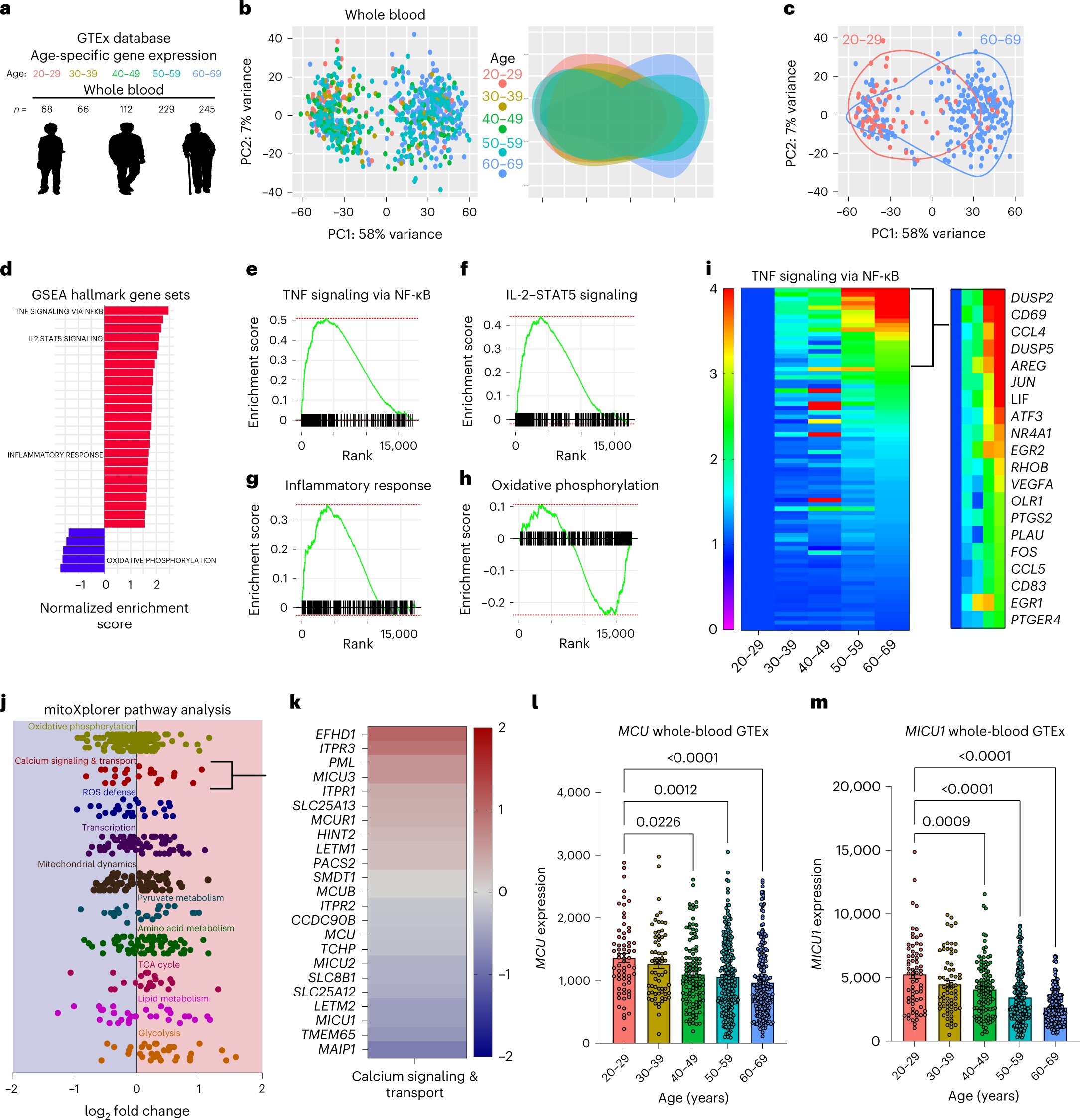
Age-related changes in whole-blood gene expression are associated with increased inflammatory gene transcription and decreased expression of genes encoding mitochondrial Ca2+ transport. Credit: Nature Aging (2023). DOI: 10.1038/s43587-023-00436-8

University of Virginia School of Medicine researchers have discovered a key driver of chronic inflammation that accelerates aging, a finding that could lead to longer, healthier lives and the possible prevention of age-related conditions such as deadly heart disease and devastating brain disorders.

The harmful inflammation is driven by improper calcium signaling in the mitochondria of certain immune cells, researchers found. Mitochondria are the power generators in all cells, and they rely heavily on calcium signaling.

The UVA Health res...

Read More

Comparing Superagers to Typical Older Adults Reveals Significant Lifestyle and Brain Structure Differences

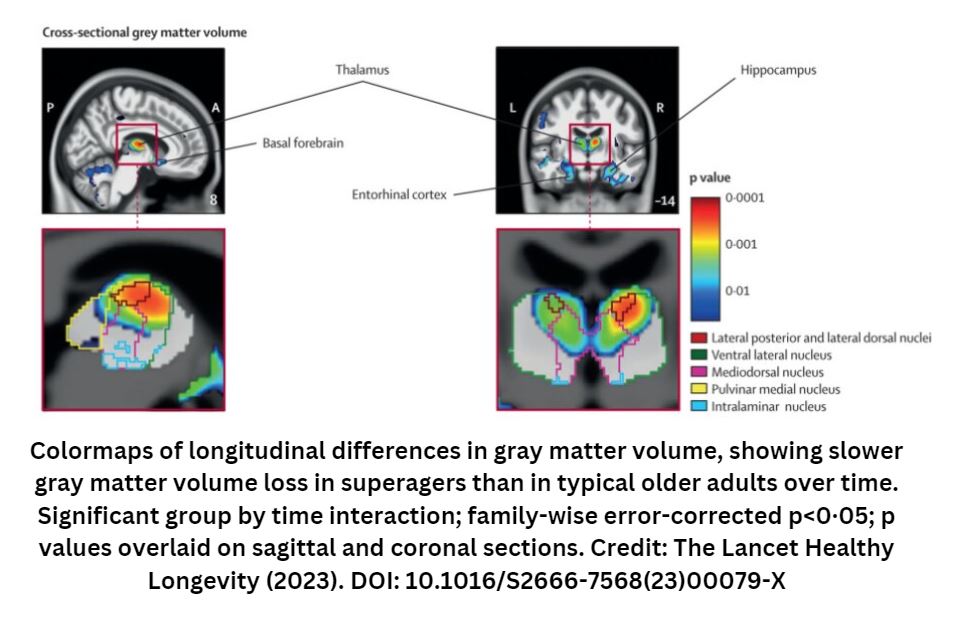
Research led by the Center for Biomedical Technology, Universidad Politécnica de Madrid, Spain, has compared the brains of superagers with those of normal cognitive aged abilities in a paper, “Brain structure and phenotypic profile of superagers compared with age-matched older adults: a longitudinal analysis from the Vallecas Project,” published in The Lancet Healthy Longevity. A Comment published in the same journal issue discusses the work by the team.

Episodic memory, the memory of personal life experiences, is vulnerable to age-related deterioration. Neurodegenerative diseases like Alzheimer’s often lead to severe episodic memory decline.

Some older adults, called superagers, somehow resist age-related memory decline, maintaining episodic memory comparable to healthy indivi...

Read More

Espresso can Prevent Alzheimer’s Protein Clumping in Lab Tests

A cup of espresso.
In an in vitro study, espresso and certain compounds found within it could prevent tau aggregation, which is associated with Alzheimer’s disease.
Alessio Orru/Shutterstock.com

Whether enjoyed on its own or mixed into a latte, Americano or even a martini, espresso provides an ultra-concentrated jolt of caffeine to coffee lovers. But it might do more than just wake you up. Research now published in ACS’ Journal of Agricultural and Food Chemistry shows that, in preliminary in vitro laboratory tests, espresso compounds can inhibit tau protein aggregation — a process that is believed to be involved in the onset of Alzheimer’s disease.

Roughly half of all Americans drink coffee every day, and espresso is a popular way to consume it...

Read More