
Category Health/Medical

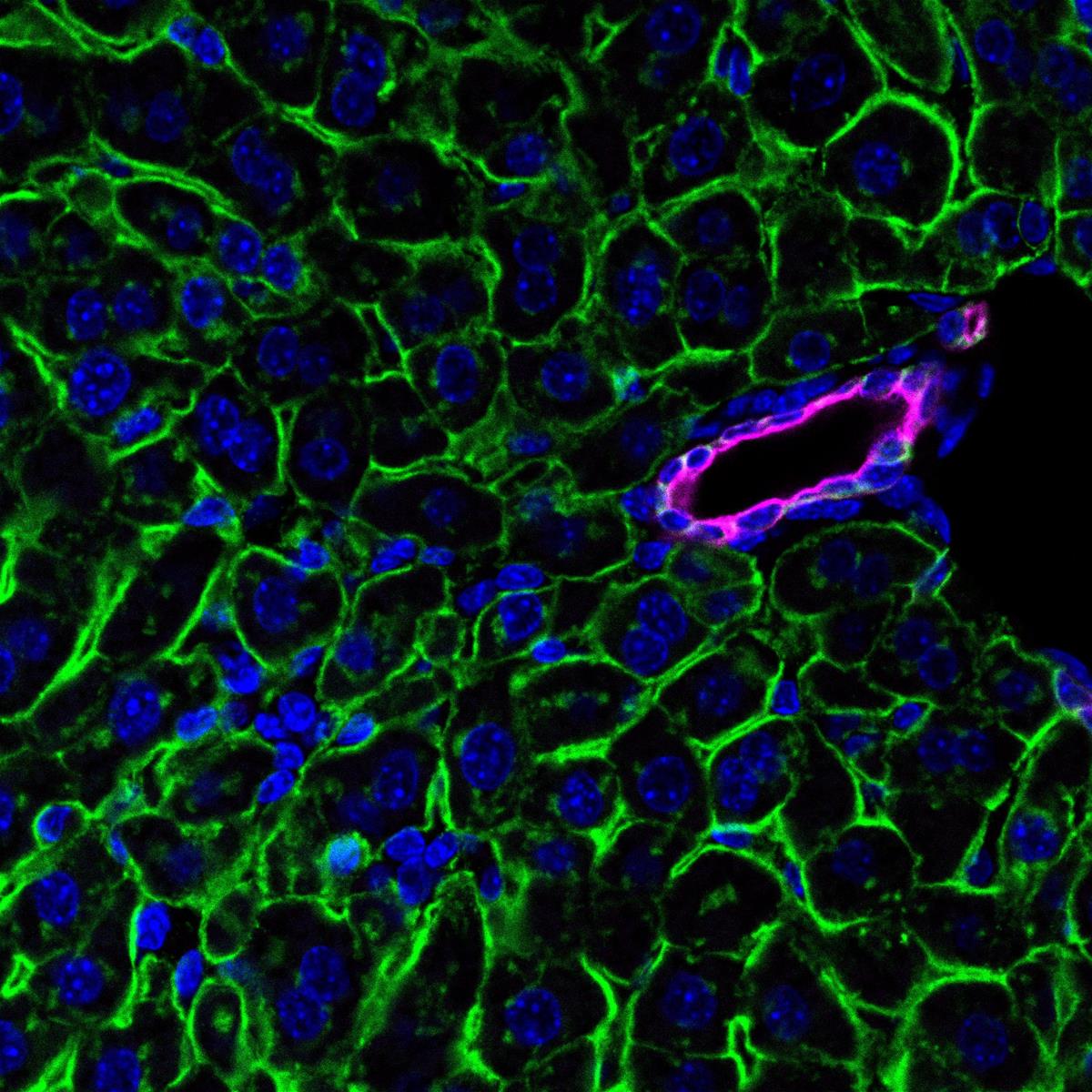
Scientists find that a Special Omega-3 Lipid might Prevent Fatty Liver disease

Detection of the lysolipid transporter Mfsd2a in hepatocytes, stained green, in proximity to a bile duct, stained magenta. (Credit:  Chin Cheen Fei)

Long-running research by Duke-NUS Medical School into the omega-3 transporter protein Mfsd2a has shown that it plays a key role in a specific mechanism that prevents the liver from storing too much fat from food. Published in the Journal of Clinical Investigation, this latest study by Duke-NUS and collaborators from Singapore General Hospital (SGH) signals the possibility that a dietary supplement could be developed to help prevent non-alcoholic fatty liver disease (NAFLD).

Eating too much fatty food increases the risk of many health problems, including cardiovascular disease, obesity, diabetes and NAFLD...

Read More

Cell Protein Discovery points to Healthier Aging

two people with grey hair are walking away from the camera along a sandy track with green vegetation either side
Image: Adobe

Researchers at The University of Queensland have found an anti-ageing function in a protein deep within human cells.

Associate Professor Steven Zuryn and Dr Michael Dai at the Queensland Brain Institute have discovered that a protein called ATSF-1 controls a fine balance between the creation of new mitochondria and the repair of damaged mitochondria.

Mitochondria, with their own DNA, produce energy within cells to power biological functions but the toxic by-products of this process contribute to the rate at which the cell ages.

“In conditions of stress, when mitochondrial DNA has been damaged, the ATSF-1 protein prioritises repair which promotes cellular health and longevity,” Dr Zuryn said.

As an analogy, Dr Zuryn likened the relationship to a race car needing...

Read More

Bot inspired by Baby Turtles can Swim Under the Sand

The robot is equipped with flipper-like appendages that allow it to move under the sand.
The robot is equipped with flipper-like appendages that allow it to move under the sand. 

This robot can swim under the sand and dig itself out too, thanks to two front limbs that mimic the oversized flippers of turtle hatchlings.

It’s the only robot that is able to travel in sand at a depth of 5 inches. It can also travel at a speed of 1.2 millimeters per second-roughly 4 meters, or 13 feet, per hour. This may seem slow but is comparable to other subterranean animals like worms and clams. The robot is equipped with force sensors at the end of its limbs that allow it to detect obstacles while in motion. It can operate untethered and be controlled via WiFi.

Robots that can move through sand face significant challenges like dealing with higher forces than robots that move in air or...

Read More

Researchers Find that Targeting Immune Cells May Help Treat Atrial Fibrillation

New study finds that macrophages and macrophage-produced proteins contribute to heartbeat irregularities. Targeting these cells may therefore represent a promising strategy to treat and prevent AFib.

Current treatments for atrial fibrillation (AFib), a common heart condition characterized by fast and irregular beats that can lead to stroke and heart failure, have multiple side effects and are ineffective for preventing AFib recurrence.

New research led by investigators at Massachusetts General Hospital (MGH) and published in Science reveals that certain immune cells play a major role in the development of AFib. Targeting these cells may therefore represent a promising strategy to treat and prevent AFib.

For the work, senior author Matthias Nahrendorf, MD, PhD, an investigator...

Read More
