
Category Health/Medical

Nanomedicine for Treating Inflammatory Bowel Disease

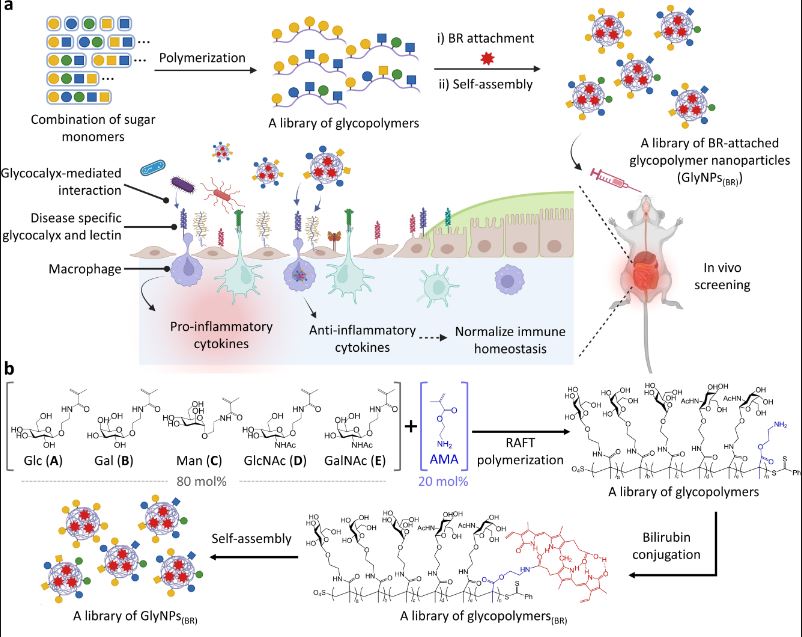
Schematic summary of the overall flow of the study, showing GlyNPs(BR) library synthesis and characterizations of the constructed GlyNP(BR) library.
Schematic summary of the overall flow of the study, showing GlyNPs(BR) library synthesis and characterizations of the constructed GlyNP(BR) library. 

Anti-inflammatory nanoparticles mimic glycocalyx. Chronic inflammatory bowel disease (IBD), such as Crohn’s disease and ulcerative colitis, is on the rise worldwide. The benefits of current medications are limited by problematic side effects. In the journal Angewandte Chemie, a South Korean research team has now introduced a new method of treatment. It is based on nanoparticles that mimic a special carbohydrate layer (glycocalyx) located on inflamed bowel cells, and which trigger anti-inflammatory effects in the diseased sites in the intestine.

Stomach cramps and severe diarrhea, often accompanied by significant weight loss, are some o...

Read More
The Power of Healthy Breast Adipocytes in the Fight Against Breast Cancer

The power of healthy breast adipocytes in the fight against breast cancer
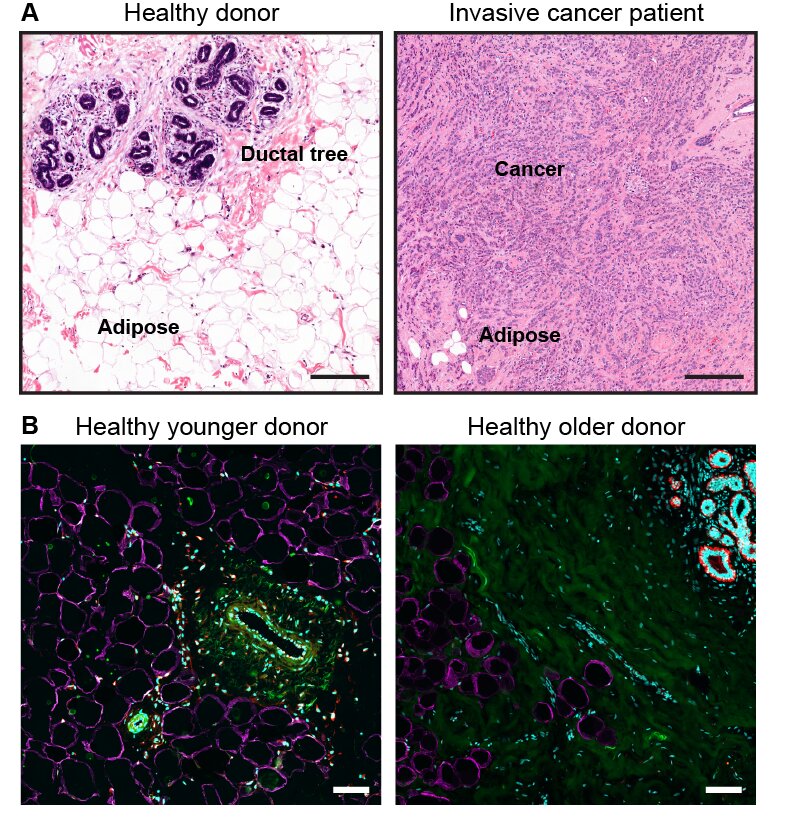
Clinical patient samples from a healthy donor after reduction mammoplasty surgery (left), or suffering from invasive ductal carcinoma (right). Scale bar, 200 μm. B, labeling of IGFBP2 (magenta) in adipocytes in younger (left) or older (right) patient groups after normal reduction mammoplasty. Cell nuclei are given in cyan and extracellular matrix, such as collagen, in green. Scale bar, 100 μm. Credit: University of Turku

Researchers have found a possible explanation as to why higher breast density and older age increases the risk of breast cancer.

In an innovative study, researchers at the Turku Bioscience Centre, InFLAMES Flagship of the University of Turku, and Turku University Hospital, Finland, have made an extraordinary discovery that turns conventional wisdom on its head...

Read More

How the Immune System can Alter our Behavior

A woman looking at tomatoes, nuts, shrimp, and fish
(© stock.adobe.com)

Simply the smell of seafood can make those with an allergy to it violently ill — and therefore more likely to avoid it. The same avoidance behavior is exhibited by people who develop food poisoning after eating a certain meal.

Scientists have long known that the immune system played a key role in our reactions to allergens and pathogens in the environment, but it was unclear whether it played any role in prompting these types of behaviors towards allergic triggers.

According to Yale-led research published July 12 in the journal Nature, it turns out that the immune system plays a crucial role in changing our behaviors.

“We find immune recognition controls behavior, specifically defensive behaviors against toxins that are communicated first through antibodie...

Read More

Dental Lozenge could provide Permanent Treatment for Tooth Sensitivity

Guided by a peptide derived from the protein used to develop teeth, the remineralization process covers sensitive tissue with new mineral microlayers. Credit: ACS Publications. 

Over 30 years of dentistry, Sami Dogan has treated just about every kind of tooth ailment. Cavities are simple to fill. Dental implants have become routine. But there’s one problem, he said, that annoys even the most experienced dentists: hypersensitivity, the painful sensation sparked by contact with hot, cold or acidic food.

“We see patients with hypersensitive teeth, but we can’t really help them,” said Dogan, a professor of restorative dentistry at the University of Washington. “We have all these repair options available in the market, but they’re all transient...

Read More
