Category Health/Medical

Cancers in Distant Organs Alter Liver Function

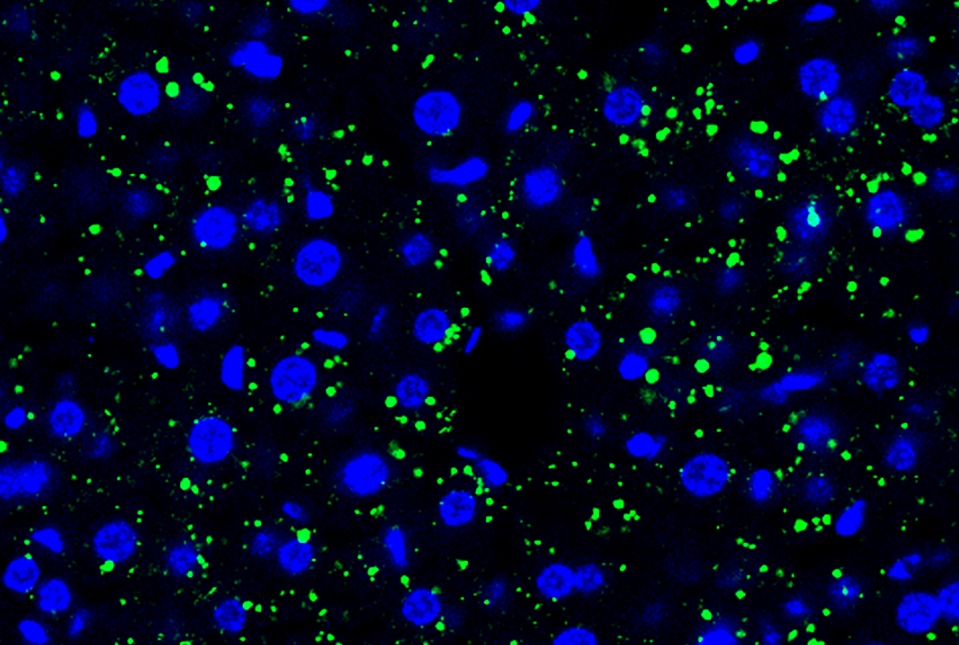
Tumor cell-derived EVPs induced accumulation of lipid droplets in the mouse liver. Green, lipid droplet. Blue, DAPI. Credit: Gang Wang, Jianlong Li, David Lyden.

Cancers often release molecules into the bloodstream that pathologically alter the liver, shifting it to an inflammatory state, causing fat buildup and impairing its normal detoxifying functions, according to a study from investigators at Weill Cornell Medicine. This discovery illuminates one of cancer’s more insidious survival mechanisms and suggests the possibility of new tests and drugs for detecting and reversing this process.

In the study, published May 24 in Nature, the researchers found that a wide variety of tumor types growing outside the liver remotely reprogram the liver to a state resembling fatty liver disease ...

Read More

New study provides Novel Insights into the Cosmic Evolution of Amino Acids

image picture
Image by Triff/Shutterstock

Scientists perform computational simulations for biological molecules detected in meteorites to clarify the origin of life on Earth. All biological amino acids on Earth appear exclusively in their left-handed form, but the reason underlying this observation is elusive. Recently, scientists from Japan uncovered new clues about the cosmic origin of this asymmetry. Based on the optical properties of amino acids found on the Murchison meteorite, they conducted physics-based simulations, revealing that the precursors to the biological amino acids may have determined the amino acid chirality during the early phase of galactic evolution.

If you look at your hands, you will notice that they are mirror images of each other...

Read More

Researchers Map the Brain during Blood Sugar Changes

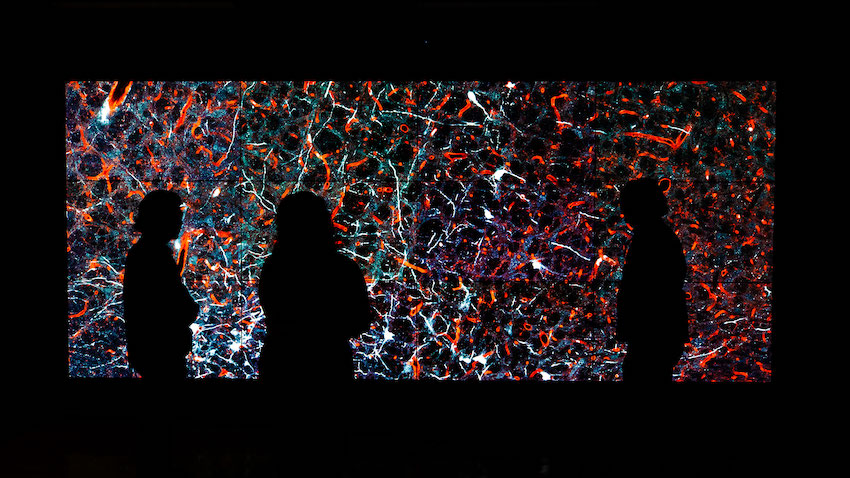
Researchers at UTEP have successfully mapped specific regions in the brain that are activated in association with changes in blood sugar — also known as glucose — providing fundamental location information that could ultimately lead to more targeted therapies for people who struggle with conditions like diabetes.

Researchers at The University of Texas at El Paso have successfully mapped specific regions in the brain that are activated in association with changes in blood sugar—also known as glucose—providing fundamental location information that could ultimately lead to more targeted therapies for people who struggle with conditions like diabetes.

The landmark 13-year study, published in the Journal of Clinical Medicine, describes how the team used careful microscopic analys...

Read More

Oxygen Restriction helps Fast-Aging Lab Mice Live Longer

lab mouse
Credit: Pixabay/CC0 Public Domain

For the first time, researchers have shown that reduced oxygen intake, or “oxygen restriction,” is associated with longer lifespan in lab mice, highlighting its anti-aging potential. Robert Rogers of Massachusetts General Hospital in Boston, US, and colleagues present these findings in a study published May 23rd in the open access journal PLOS Biology.

Research efforts to extend healthy lifespan have identified a number of chemical compounds and other interventions that show promising effects in mammalian lab animals— for instance, the drug metformin or dietary restriction. Oxygen restriction has also been linked to longer lifespan in yeast, nematodes, and fruit flies. However, its effects in mammals have been unknown.

To explore the anti-aging...

Read More