Category Health/Medical

Memories may be stored in the Membranes of your Neurons

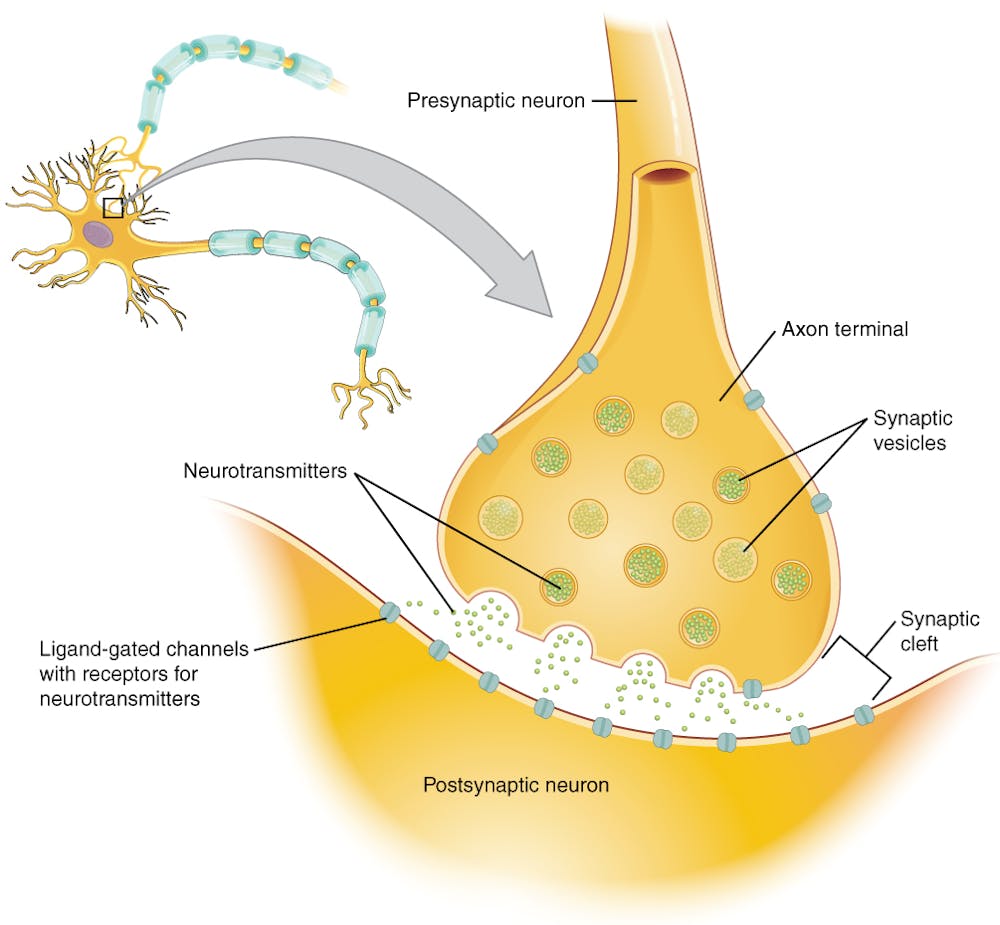
The space between two neurons is called a synapse. OpenStaxCC BY

Your brain is responsible for controlling most of your body’s activities. Its information processing capabilities are what allow you to learn, and it is the central repository of your memories. But how is memory formed, and where is it located in the brain?

Although neuroscientists have identified different regions of the brain where memories are stored, such as the hippocampus in the middle of the brain, the neocortex in the top layer of the brain and the cerebellum at the base of the skull, they have yet to identify the specific molecular structures within those areas involved in memory and learning.

Research from our team of biophysicists, physical chemists and materials scientists suggests that memory might ...

Read More

New study suggests that SARS-CoV-2 might induce Lasting Pain in unique way

COVID-19, the disease resulting from SARS-CoV-2 infection, is associated with highly variable clinical outcomes that range from asymptomatic disease to death. For those with milder infections, COVID-19 can produce respiratory infection symptoms (cough, congestion, fever) and sensory phenotypes such as headache and loss of sense of smell.

In more severe cases, SARS-CoV-2 infection can affect nearly every organ and result in strokes from vascular occlusion, cardiovascular damage and acute renal failure. A substantial number of actively infected patients suffering from both mild and severe infections experience sensory-related symptoms, such as headache, visceral pain, Guillain-Barre syndrome, nerve pain and inflammation...

Read More

Scientists develop Gene Silencing DNA Enzyme that can Target a Single Molecule

UC Irvine scientists develop gene silencing DNA enzyme that can target a single molecule
“The gene silencing Dz 46 enzyme we developed through chemical engineering has the ability to distinguish and cut a single point mutation in an RNA strand,” says John Chaput, UCI professor of pharmaceutical sciences and corresponding author. “When you are talking about precision medicine for patients, it doesn’t get more precise than that.” Steve Zylius / UCI

Researchers from the University of California, Irvine have developed a DNA enzyme—or DNAzyme—that can distinguish between two RNA strands inside a cell and cut the disease-associated strand while leaving the healthy strand intact. This breakthrough “gene silencing” technology could revolutionize the development of DNAzymes for treating cancer, infectious diseases and neurological disorders.

DNAzymes are nucleic ac...

Read More

T cells can Activate Themselves to Fight Tumors

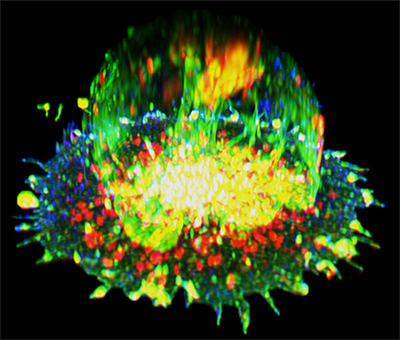
Immunofluorescence imaging captures an auto-signaling T cell
Immunofluorescence imaging captures an auto-signaling T cell. Photo credit: NIAID.

When you need a bit of motivation, it often has to come from within. New research suggests cancer-fighting immune cells have found a way to do just that.

Scientists at University of California San Diego have discovered a property of T cells that could inspire new anti-tumor therapeutics. Through a previously undescribed form of cell auto-signaling, T cells were shown to activate themselves in peripheral tissues, fueling their ability to attack tumors.

The study, published in Immunity, was led by study first author and postdoctoral fellow Yunlong Zhao, Ph.D., and co-senior authors Enfu Hui, Ph.D., professor in the School of Biological Sciences at UC San Diego and Jack D. Bui, MD, Ph.D...

Read More