Category Health/Medical

Running injuries often strike suddenly, not gradually: Study challenges understanding of overuse injuries

running
Credit: RF._.studio _ from Pexels

A new study from Aarhus University turns our understanding of how running injuries occur upside down. The research project, which is the largest of its kind ever conducted, shows that running-related overuse injuries do not develop gradually over time, as previously assumed, but rather suddenly—often during a single training session. The research is published in the British Journal of Sports Medicine.

“Our study marks a paradigm shift in understanding the causes of running-related overuse injuries. We previously believed that injuries develop gradually over time, but it turns out that many injuries occur because runners make training errors in a single training session,” explains Associate Professor Rasmus Ø...

Read More

Metabolic differences in male and female muscles may explain diabetes variations

Focus on muscle metabolism: Sex differences in sport and obesity
Graphical abstract. Credit: Molecular Metabolism (2025). DOI: 10.1016/j.molmet.2025.102185

The skeletal muscles of men and women process glucose and fats in different ways. A study conducted by the University Hospital of Tübingen, the Institute for Diabetes Research and Metabolic Diseases of Helmholtz Munich and the German Center for Diabetes Research (DZD) e.V. provides the first comprehensive molecular analysis of these differences. The results, published in Molecular Metabolism, possibly give an explanation for why metabolic diseases such as diabetes manifest differently in women and men—and why they respond differently to physical activity.

Skeletal muscles are far more than just “movement driving motors...

Read More

Circadian disruption by night light linked to multiple cardiovascular outcomes

realistic image of a person in bed disrupted by artificial night light coming from the street
Credit: AI-generated image

Flinders Health and Medical Research Institute researchers, along with colleagues in the UK and U.S., have linked brighter night-time light exposure to elevated risks of five major cardiovascular diseases.

Circadian rhythms govern fluctuations in blood pressure, heart rate, platelet activation, hormone secretion, and glucose metabolism. Long-term disruption of those rhythms in animal and human studies have produced myocardial fibrosis, hypertension, inflammation, and impaired autonomic balance. Previous research efforts relied largely on satellite-derived estimates or small cohorts using bedroom or wrist light sensors, leaving personal exposure patterns uncharted at population scale.

In the study, “Personal night light exposure predicts incidence of car...

Read More

Antibody sIgM emerges as a key guardian of gut health and metabolism

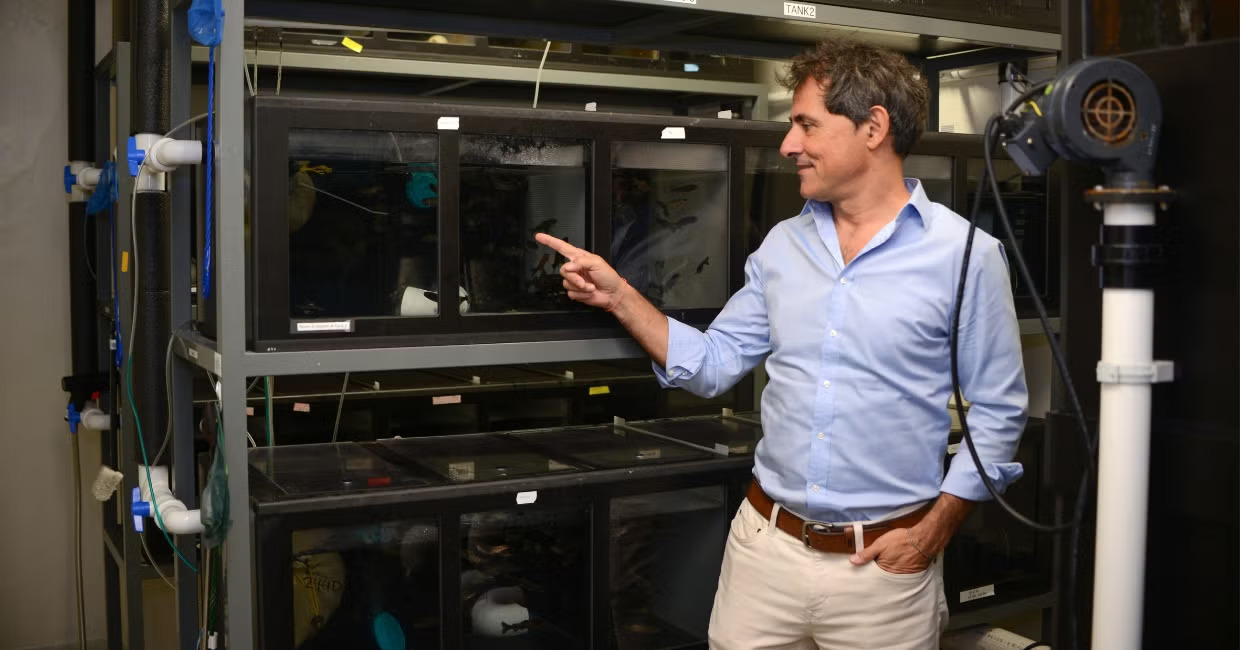
Oriol Sunyer pointing to rainbow trout, the fish species used for the reported study.
Image: Courtesy of Penn Vet

A pioneering new study published in Nature Microbiology, led by J. Oriol Sunyer, professor of immunology and pathobiology at the School of Veterinary Medicine, and a team of researchers at Penn Vet and the University of New Mexico, has uncovered a surprising new player in gut health: an antibody called secretory immunoglobulin M (sIgM).

While another antibody, secretory immunoglobulin A (sIgA), has long been known for helping balance the bacteria in our intestines, this new research shows that sIgM may be just as vital—if not more so—in protecting gut health and maintaining overall well-being.

Secretory immunoglobulins—immunoglobulins found in the mucosal surfaces ...

Read More