Category Health/Medical

Mimicking the benefits of exercise with a single molecule

Mimicking the benefits of exercise with a single molecule

Capital Medical University, in collaboration with the Chinese Academy of Sciences, reports that betaine, a molecule produced in the kidney and enhanced through sustained exercise, operates as a potent inhibitor of inflammatory and aging-related pathways.

Regular physical activity boosts health across cardiovascular, metabolic, and neurological systems. Scientists have traced improvements in immune function, insulin sensitivity, clearing of senescent cells and tissue regeneration to consistent physical activity. Earlier animal studies suggested that long-term exercise can delay aging processes and reduce vulnerability to chronic disease.

Precise molecular explanations for how sustained exercise reshapes human biology remain incomplete...

Read More
Switching on a silent gene revives tissue regeneration in mice

Research led by the National Institute of Biological Sciences in Beijing has discovered that switching on a single dormant gene enables mice to regenerate ear tissue.

Switching on a silent gene revives tissue regeneration in mice

Some vertebrates such as salamanders and fish can regenerate complex tissue structures with precision. A lost limb can be regrown, a damaged heart or eye can be repaired. Salamanders are so remarkable at reconstructing damaged tissues that even a spinal cord injury with severed neural motor connectivity can be restored.

Mammals occasionally showcase the ability to regenerate. Deer antlers and goat horns are examples of living tissue regeneration. Mice can regrow fingertips if they are lost. A healthy human liver can experience up to 70% loss of tissue and regrow to near full size within several weeks.

However, f...

Read More

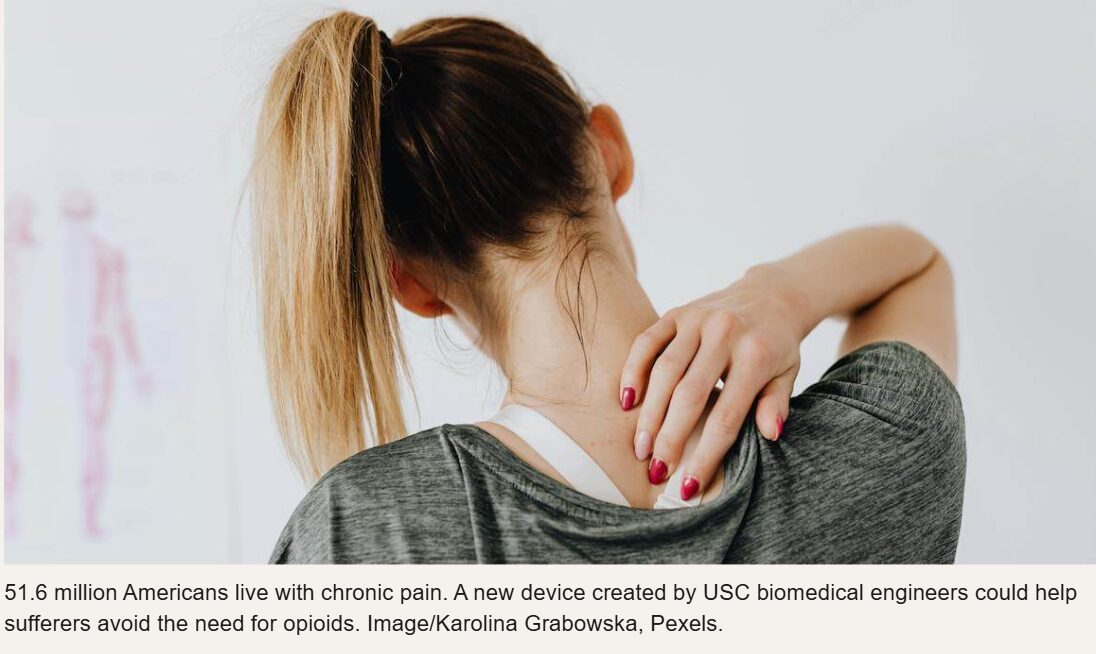
USC’s new AI implant promises drug-free relief for chronic pain

USC researchers have developed a groundbreaking ultrasound device that could reduce our reliance on addictive painkillers. A groundbreaking wireless implant promises real-time, personalized pain relief using AI and ultrasound power no batteries, no wires, and no opioids. Designed by USC and UCLA engineers, it reads brain signals, adapts on the fly, and bends naturally with your spine.

Chronic pain is a debilitating condition that severely impacts quality of life, often leading to reliance on opioid medications with their severe side effects and addiction risks. According to the U.S. Pain Foundation, 51.6 million Americans live with chronic pain. For over 17 million sufferers, their chronic pain is high-impact – frequently limiting their life or work activities.

Current implant...

Read More

New study identifies brain networks underlying psychopathy

A recent study has shed light on the brain structure differences associated with psychopathy—a condition known to be one of the strongest predictors of persistent violent behavior.

The findings are published in the journal European Archives of Psychiatry and Clinical Neuroscience.

Using advanced neuroimaging and the Julich-Brain Atlas, researchers from Forschungszentrum Jülich, RWTH Aachen University, Heinrich-Heine-University Düsseldorf, Georg August University, (Germany) and University of Pennsylvania (U.S.) have identified specific brain networks that appear to be structurally altered in individuals exhibiting psychopathic traits. The Atlas can be freely accessed via the EBRAINS Research Infrastructure.

The study examined structural MRI data from 39 adult male particip...

Read More