Category Health/Medical

Newly discovered ‘Ovoid’ brain cells reshape understanding of how memory works

Meet the newly discovered brain cell that allows you to remember objects

Take a look around your home and you’ll find yourself surrounded by familiar comforts—photos of family and friends on the wall, well-worn sneakers by the door, a shelf adorned with travel mementos. Objects like these are etched into our memory, shaping who we are and helping us navigate environments and daily life with ease. But how do these memories form? And what if we could stop them from slipping away under a devastating condition like Alzheimer’s disease?

Scientists at UBC’s faculty of medicine have just uncovered a crucial piece of the puzzle. In a study published in Nature Communications, the researchers have discovered a new type of brain cell that plays a central role in our ability to remember and recognize objects.

Called “ovoid cells,” these highly-specialized neur...

Read More

Potassium-enriched salt shows promise for cutting recurrent stroke risk in clinical trial

salt
Credit: CC0 Public Domain

Potassium supplements in salt were associated with reduced rates of recurrent stroke and mortality in a large-scale cluster randomized clinical trial involving patients in rural northern China. Findings come from a subgroup (stroke patients) analysis within the original Salt Substitute and Stroke Study (SSaSS), an international study conducted in China.

Stroke ranks among the top causes of death and disability in low- and middle-income countries, and recurrent events remain a major concern. High sodium intake and low potassium intake are considered key risk factors, especially in northern China. In China, stroke recurrence rates are higher than global averages, reaching 17% at one year and 41% over five years.

The SSaSS trial involved 600 villages and 20...

Read More

Novel ‘Living’ biomaterial aims to advance regenerative medicine

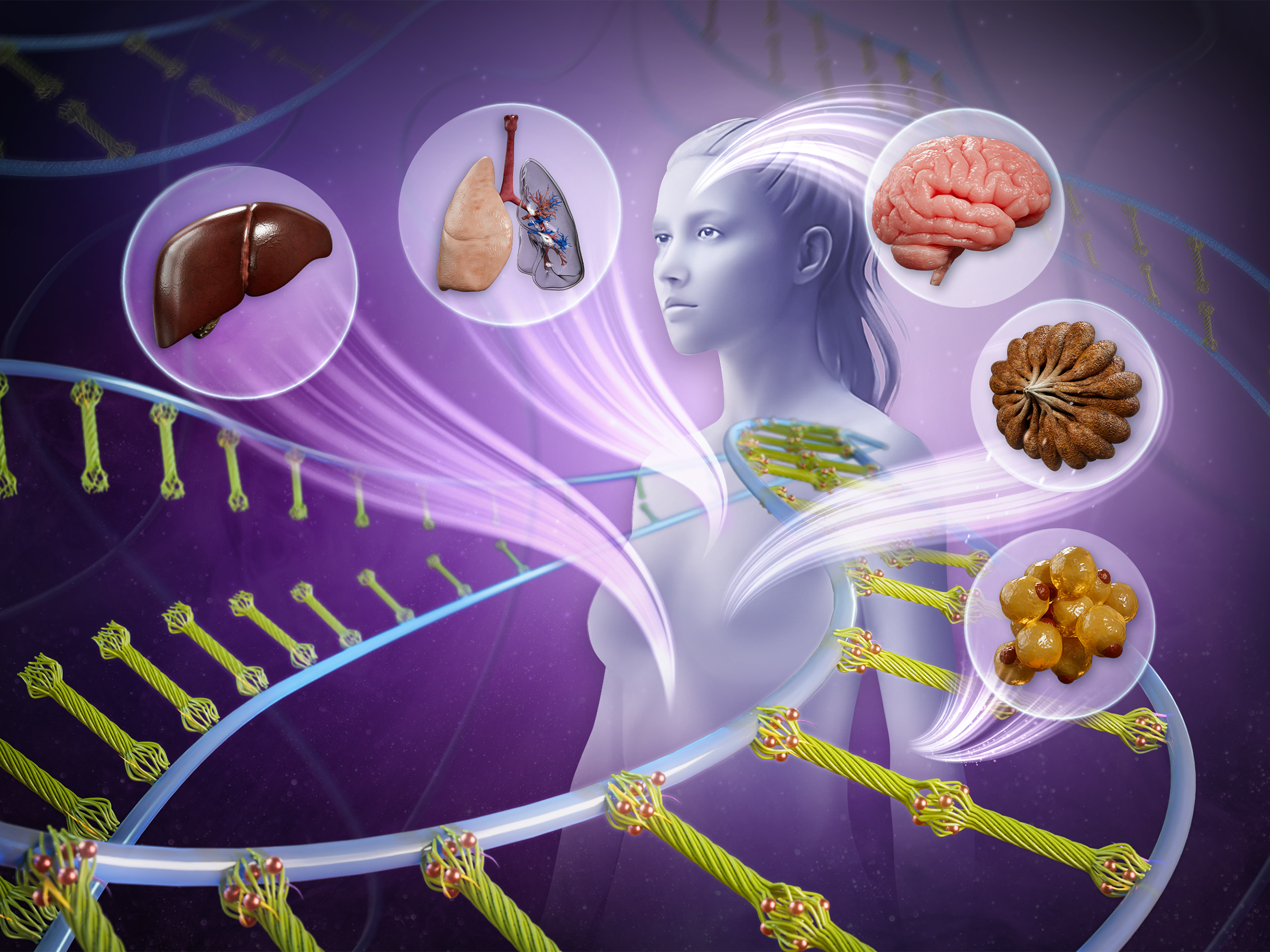
an illustration displaying a human body surrounded by graphical representations regenerative medicine through nanotechnology
A new biomaterial developed by Penn State engineers mimics a key building block of human tissue, extracellular matrices, which act like scaffolding and enable cells to heal after damage. Credit: Sheikhi Research Group/Penn State. All Rights Reserved.

A biomaterial that can mimic certain behaviors within biological tissues could advance regenerative medicine, disease modeling, soft robotics and more, according to researche(rs at Penn State.

Materials created up to this point to mimic tissues and extracellular matrices (ECMs) — the body’s biological scaffolding of proteins and molecules that surrounds and supports tissues and cells — have all had limitations that hamper their practical applications, according to the team...

Read More

Scientists discover brain mechanism that helps overcome fear

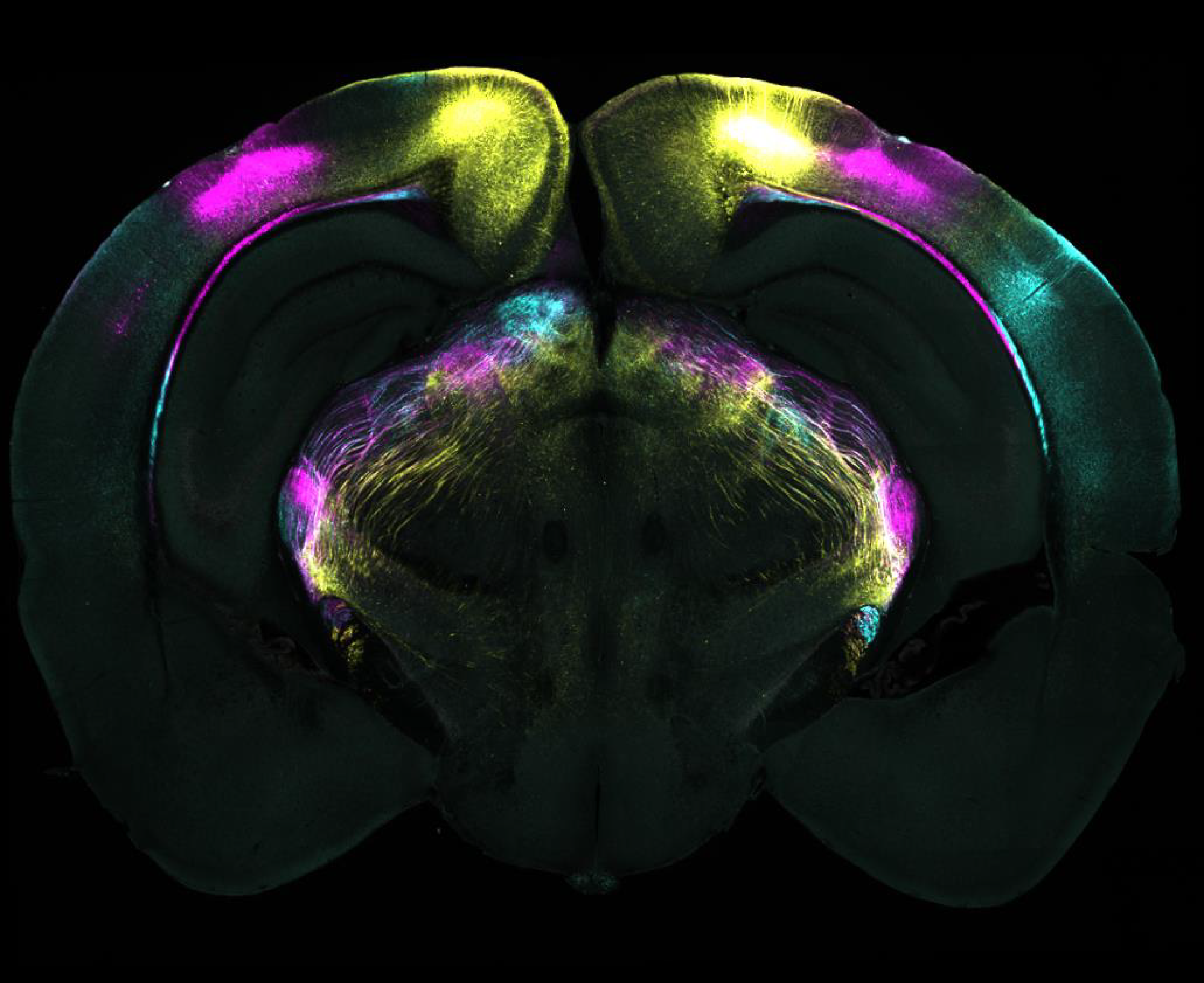
Brain slice showing projections in yellow, pink and blue
Coronal brain slice showing projections from different visual areas in the cerebral cortex to the ventrolateral geniculate nucleus (vLGN). These pathways are part of the circuit identified as mediating the suppression of instinctive fear responses.

Researchers at the Sainsbury Wellcome Center (SWC) at UCL have unveiled the precise brain mechanisms that enable animals to overcome instinctive fears. Published in Science, the study in mice could have implications for developing therapeutics for fear-related disorders such as phobias, anxiety and post-traumatic stress disorder (PTSD).

The research team, led by Dr. Sara Mederos and Professor Sonja Hofer, mapped out how the brain learns to suppress responses to perceived threats that prove harmless over time.

“Humans are born with inst...

Read More