
Category Health/Medical

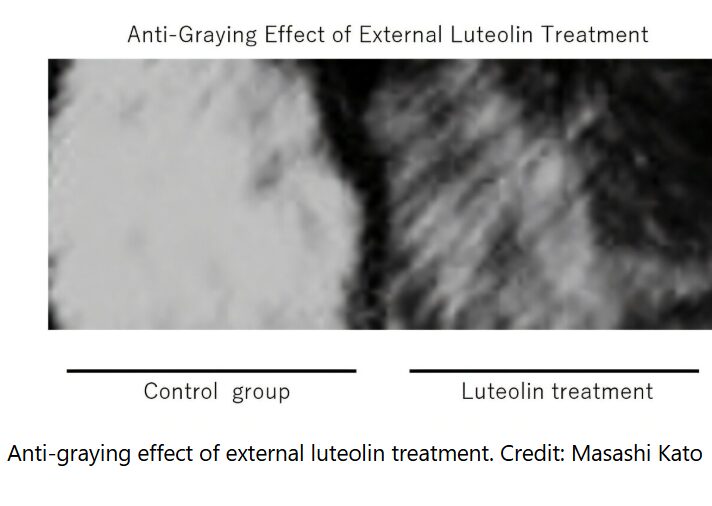
Luteolin, an antioxidant in vegetables, may contribute to the prevention of hair graying

Graying hair is a hallmark of aging, often considered an inevitable part of growing older. However, recent research from Nagoya University in Japan led by Masashi Kato and Takumi Kagawa suggests that an antioxidant might suppress this process. The researchers identified luteolin, an antioxidant found in vegetables including celery, broccoli, carrots, onions, and peppers, as being a potential anti-graying agent. Their findings pave the way for potential applications in human hair care.

The researchers’ study focused on three antioxidants—luteolin, hesperetin, and diosmetin—to assess their anti-graying effects in mice that were bred to go gray like humans...

Read More

COVID-19 linked to increase in biomarkers for abnormal brain proteins

COVID-19 linked to increase in biomarkers for abnormal brain proteins
Study overview. Credit: Nature Medicine (2025). DOI: 10.1038/s41591-024-03426-4

Researchers have uncovered a link between COVID-19 and blood markers linked to faulty proteins in the brain. The analysis, led by researchers at Imperial College London and the UK Dementia Research Institute, found that people who had previously had COVID-19 were more likely to have increased levels of biomarkers linked to faulty amyloid proteins—a known hallmark for Alzheimer’s disease.

On average, the effects were comparable to four years of aging with the greatest effects seen in those hospitalized with severe COVID-19 or with underlying risk factors for dementia such as smoking or high blood pressure.

According to the researchers, the findings suggest that mild or moderate COVID-19 may acceler...

Read More

Delphi experiment tries to equip an AI agent with moral judgment

The Delphi experiment tries to equip an AI agent with moral judgement
Theoretical and computational frameworks of Delphi. Credit: Nature Machine Intelligence (2025). DOI: 10.1038/s42256-024-00969-6.

Advanced artificial intelligence (AI) tools, including LLM-based conversational agents such as ChatGPT, have become increasingly widespread. These tools are now used by countless individuals worldwide for both professional and personal purposes.

Some users are now also asking AI agents to answer everyday questions, some of which could have ethical and moral nuances. Providing these agents with the ability to discern between what is generally considered ‘right’ and ‘wrong’, so that they can be programmed to only provide ethical and morally sound responses, is thus of the utmost importance.

Researchers at the University of Washington, the Allen Institut...

Read More

Synthetic neurons that mimic human processes could lead to smarter robotics

Scientists 'mimic real biological processes' using synthetic neurons
Credit: Proceedings of the National Academy of Sciences (2025). DOI: 10.1073/pnas.2414879122

Artificially engineered biological processes, such as perception systems, remain an elusive target for organic electronics experts due to the reliance of human senses on an adaptive network of sensory neurons, which communicate by firing in response to environmental stimuli.

A new collaboration between Northwestern University and Georgia Tech has unlocked new potential for the field by creating a novel high-performance organic electrochemical neuron (OECN) that responds within the frequency range of human neurons...

Read More
