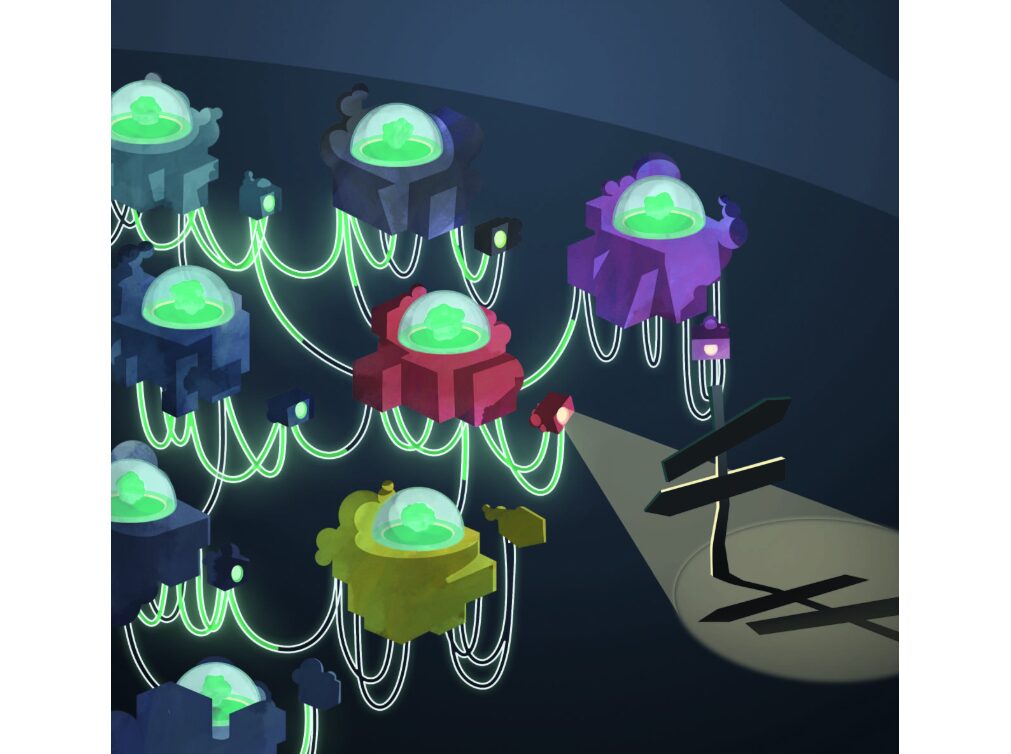
Here, each neuron is represented as spacecrafts, with their pilots in the cockpits depicted in the shape of protein 3D structures. These spacecrafts collectively process and transmit information to the final red neuron to make decisions on space navigation. The wires that connect the neurons, with the green substance inside, indicate the flow of biological information. Credit: Ehmad Chehre
Westlake University in China and the California Institute of Technology have designed a protein-based system inside living cells that can process multiple signals and make decisions based on them.
The researchers have also introduced a unique term, “perceptein,” as a combination of protein and perceptron...
Pain is meant to be a defense mechanism. It creates a strong sensation to get us to respond to a stimulus and prevent ourselves from further harm. But, sometimes injuries, nerve damage, or infections can cause long-lasting, severe bouts of pain that can make daily life unbearable.
What if there was a way to simply turn off pain receptors? UNC School of Medicine researchers Bryan L. Roth, MD, Ph.D., the Michael Hooker Distinguished Professor of Pharmacology, and Grégory Scherrer, PharmD, Ph.D., associate professor of cell biology and physiology and the UNC Neuroscience Center, have just proven that it is possible.
Using a tool designed by Roth in the early 2000s, the labs have created a new system that reduces acute and tissu...
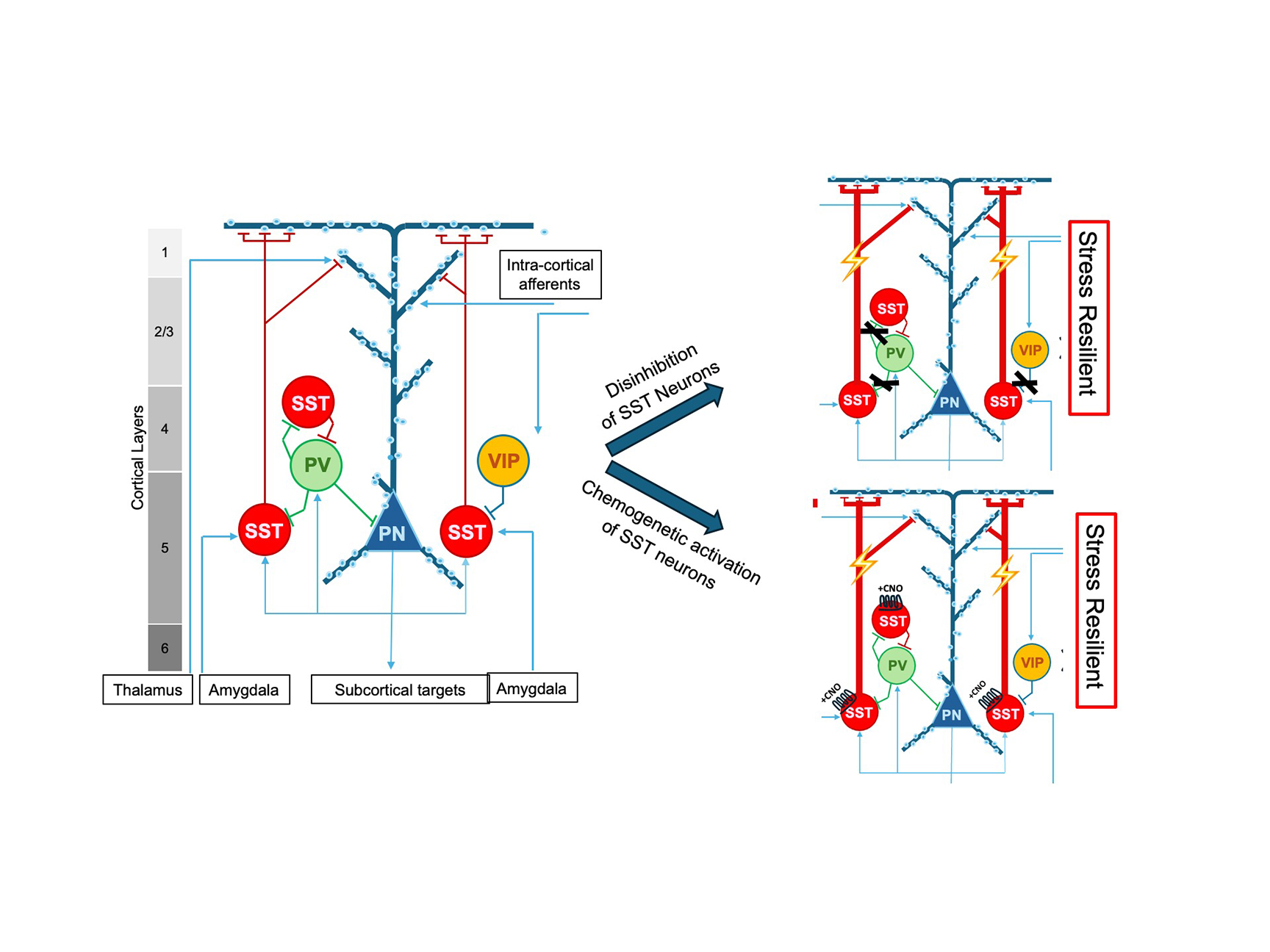
New research finds sex-specific regions of the brain can relieve the detrimental effects of chronic stress in male and female mice. Left: Schematic showing a cortical microcircuit with three types of interneurons expressing somatostatin (SST), parvalbumin (PV) or vasointestinal peptide (VIP) and their distinct patterns of innervation of glutamatergic output neurons (PNs), with thin lines representing axons that send chemical signals and the thicker lines of PNs representing dendrites that receive information. There is selective innervation of the distal ends of PN dendrites by axons of SST neurons...Read More
Microbes living in our guts help us digest food by reshaping the bile acids that our livers produce for breaking down fats. It turns out that two of these microbially-modified bile acids may affect our risk—in opposite directions—for developing colon cancer.
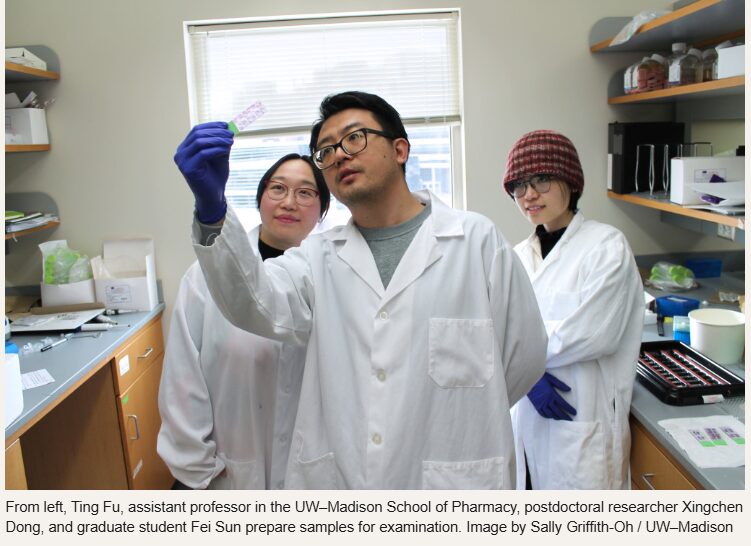
The link between these bile acids and colon cancer risk was recently uncovered as University of Wisconsin–Madison scientists sought to better understand the relationship between gut microbes and our bodies.
In many ways, that relationship revolves around a specific protein called the farnesoid X receptor, or FXR, which helps maintain a healthy gut through its intimate relationship with bile acids...







Recent Comments