Category Health/Medical

Gut Instincts: Intestinal Nutrient Sensors

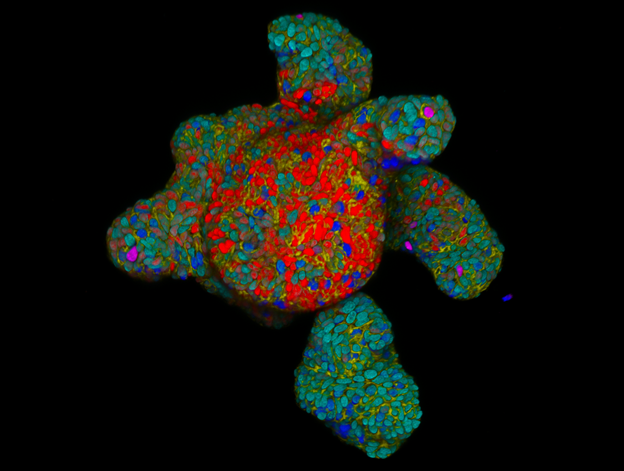
A human intestinal organoid, displaying typical ‘budding crypts’ and a central ‘villus-like’ domain. The main intestinal cell types are shown in green, blue, red and purple. Membranes are yellow and nuclei cyan. Credit: Ninouk Akkerman, Yannik Bollen and Jannika Finger, Institute of Human Biology

A multi-institutional group of researchers led by the Hubrecht Institute and Roche’s Institute of Human Biology has developed strategies to identify regulators of intestinal hormone secretion. In response to incoming food, these hormones are secreted by rare hormone producing cells in the gut and play key roles in managing digestion and appetite. The team has developed new tools to identify potential ‘nutrient sensors’ on these hormone producing cells and study their function...

Read More

Neuroscientists Discover a Mechanism that can Reactivate Dormant Neural Stem Cells

Image of a single quiescent neural stem cell with its hallmark cellular protrusion extending from the cell body from Drosophila larval brains six hours after larval hatching, with the membrane in orange and nuclear marker in blue. Credit: Mahekta R Gujar

An international team of neuroscientists, led by Duke-NUS Medical School, have uncovered a mechanism that controls the reactivation of neural stem cells, which are crucial for repairing and regenerating brain cells.

The research, published in Nature Communications, offers exciting potential for advancing our understanding and treatment of common neurodegenerative diseases like Alzheimer’s and Parkinson’s disease.

Neural stem cells are the source of the brain’s primary functional cells...

Read More

Scientists discover Unexpected Link between Genes involved in Human Brain Evolution and Developmental Disorders

Scientists discover unexpected link between genes involved in human brain evolution and developmental disorders
A dendrite—an extension of a neuron—from a 12-month-old human cerebral cortex neuron, grown from human stem cells and transplanted into a mouse cerebral cortex. Two human-specific genes, SRGAP2B and SRGAP2C, were turned off, causing the neuron’s synapses to mature faster. The number of small protrusions on the dendrite, called dendritic spines, resembles what is typically seen in a five to ten-year-old child. Credit: Baptiste Libé-Philippot, 2024

The human brain’s remarkably prolonged development is unique among mammals and is thought to contribute to our advanced learning abilities. Disruptions in this process may explain certain neurodevelopmental diseases.

Now, a team of researchers led by Prof...

Read More

Chronic Stress Accelerates Colorectal Cancer Progression by Disrupting the Balance of Gut Microbiota, study shows

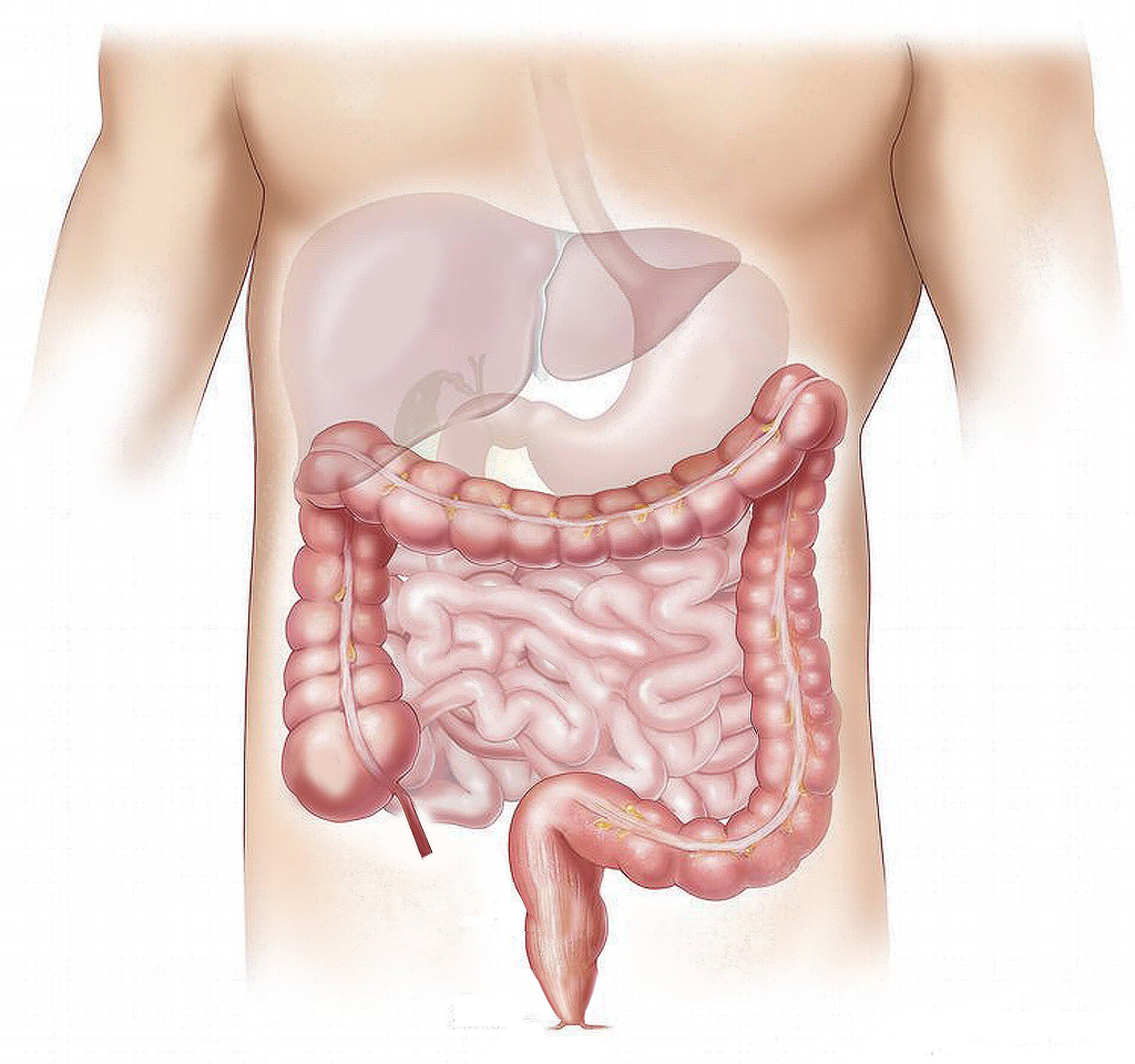
intestine
Credit: CC0 Public Domain

Cutting-edge research has uncovered how chronic stress disrupts the balance of gut microbiota to speed up the progression of colorectal cancer (CRC), opening new avenues for CRC prevention and treatment.

By eliminating certain gut bacteria and inducing stress, researchers were able to conclude a relationship between stress and gut microbiota in the progression of CRC, identifying a particular bacterial species as a potential therapeutic target.

Presenting the study at UEG Week 2024, lead researcher Dr...

Read More