Category Health/Medical

Thaumatin: Natural Sweetener with Anti-Inflammatory Potential

Phil Richter sits in front of a sterile workbench and holds a Multipette in his right hand. He has short brown hair, wears glasses and looks into the camera. He is wearing a white coat and gloves.
PhD student Phil Richter working in the lab, photo: G. Olias / Leibniz-LSB@TUM

A new study by the Leibniz Institute for Food Systems Biology at the Technical University of Munich shows for the first time that bitter tasting protein fragments (peptides) are produced in the stomach during the digestion of the natural sweetener thaumatin. In a cellular test system, the peptides are able to stimulate the acid secretion of human stomach cells and influence inflammatory reactions. “Our research helps to elucidate the health effects of the plant protein, which is widely used as a sweetener,” says Veronika Somoza, head of the study and director of the Leibniz Institute.

Veronika Somoza’s team is researching, among other things, how bitter-tasting food compounds influence the metabolism of s...

Read More
Researchers Discover New Bacterium that Causes Gut Immunodeficiency

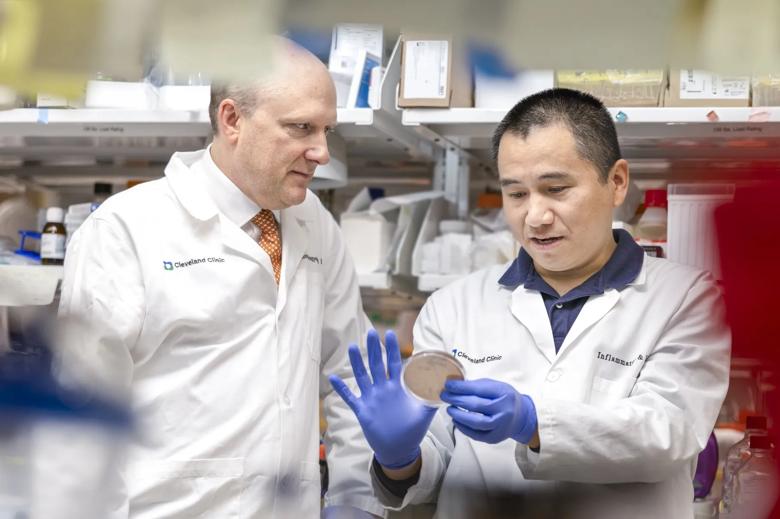
Thaddeus Stappenbeck, M.D., Ph.D., (left) and Qiuhe Lu, Ph.D., in the lab.

Cleveland Clinic researchers have discovered a new bacterium that weakens the immune system in the gut, potentially contributing to certain inflammatory and infectious gut diseases.

The team identified the bacterium, Tomasiella immunophila (T. immunophila), which plays a key role in breaking down a crucial immune component of the gut’s multi-faceted protective immune barrier.

Identifying this bacterium is the first step to developing new treatments for a variety of inflammatory and infectious gut diseases...

Read More

Circadian Disruption, Gut Microbiome Changes linked to Colorectal Cancer Progression

Circadian disruption, gut microbiome changes linked to colorectal cancer progression
Clock disruption and cancer alter microbial structure. Credit: Science Advances (2024). DOI: 10.1126/sciadv.ado1458

Research from the University of California, Irvine has revealed how disruption of the circadian clock, the body’s internal, 24-hour biological pacemaker, may accelerate the progression of colorectal cancer by affecting the gut microbiome and intestinal barrier function. This discovery offers new avenues for prevention and treatment strategies.

The study, published online today in the journal Science Advances, offers a more comprehensive understanding of how important changes occur in the function and composition of the gut microbiome when the circadian clock is disturbed in the presence of colorectal cancer.

“There is an alarming rise in early-onset colorectal can...

Read More

AI could Predict Breast Cancer risk via ‘Zombie cells’

breast cancer
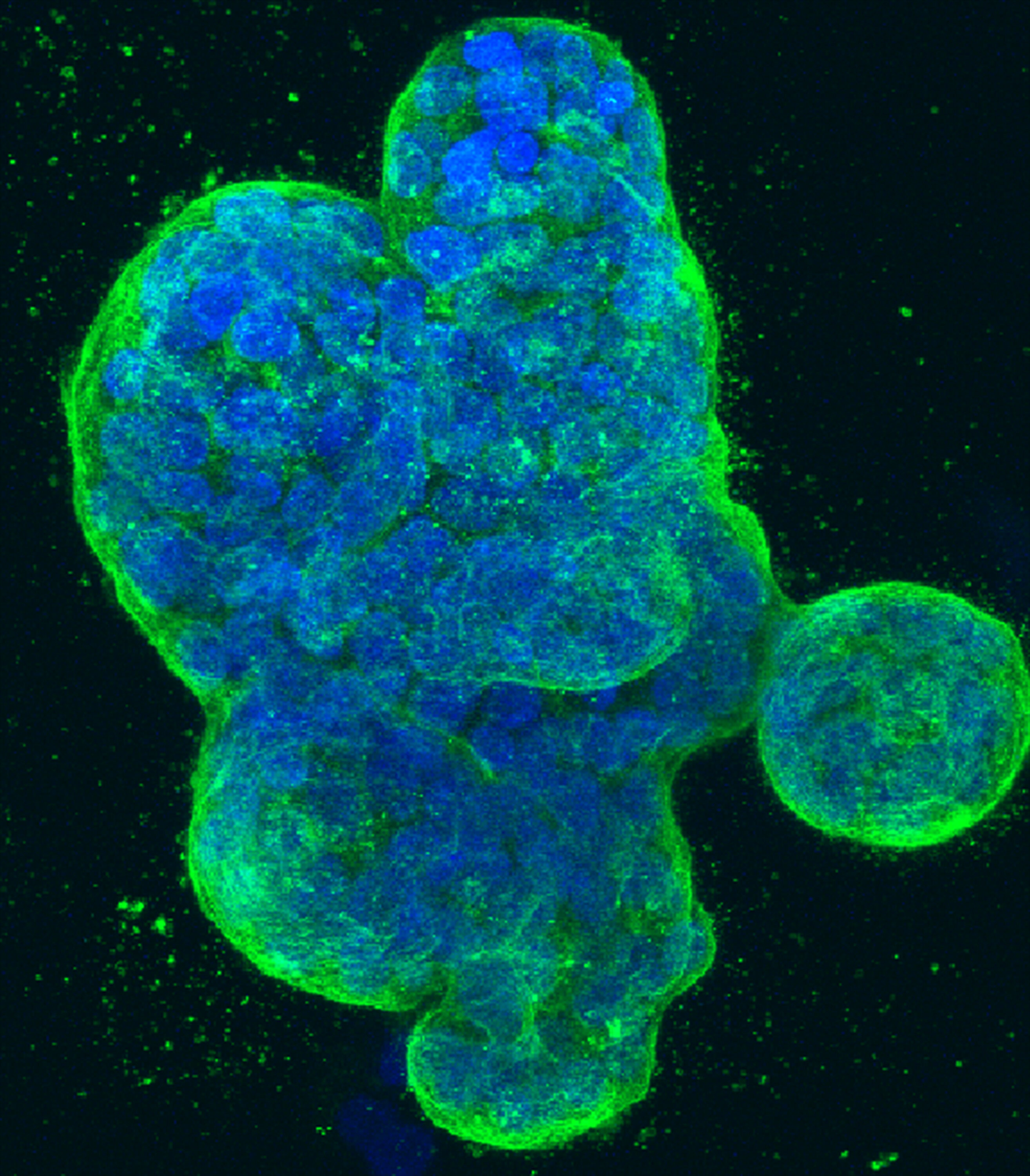
Three-dimensional culture of human breast cancer cells, with DNA stained blue and a protein in the cell surface membrane stained green. Credit: NCI Center for Cancer Research, National Cancer Institute, National Institutes of Health

Women worldwide could see better treatment with new AI technology, which enables better detection of damaged cells and more precisely predicts the risk of getting breast cancer, shows new research from the University of Copenhagen.

Breast cancer is one of the most common types of cancer. In 2022, the disease caused 670,000 deaths worldwide. Now, a new study from the University of Copenhagen shows that AI can help women with improved treatment by scanning for irregular-looking cells to give better risk assessment.

The study, published in The Lancet Dig...

Read More