Category Uncategorized

Evidence of Geothermal Activity within Icy Dwarf Planets

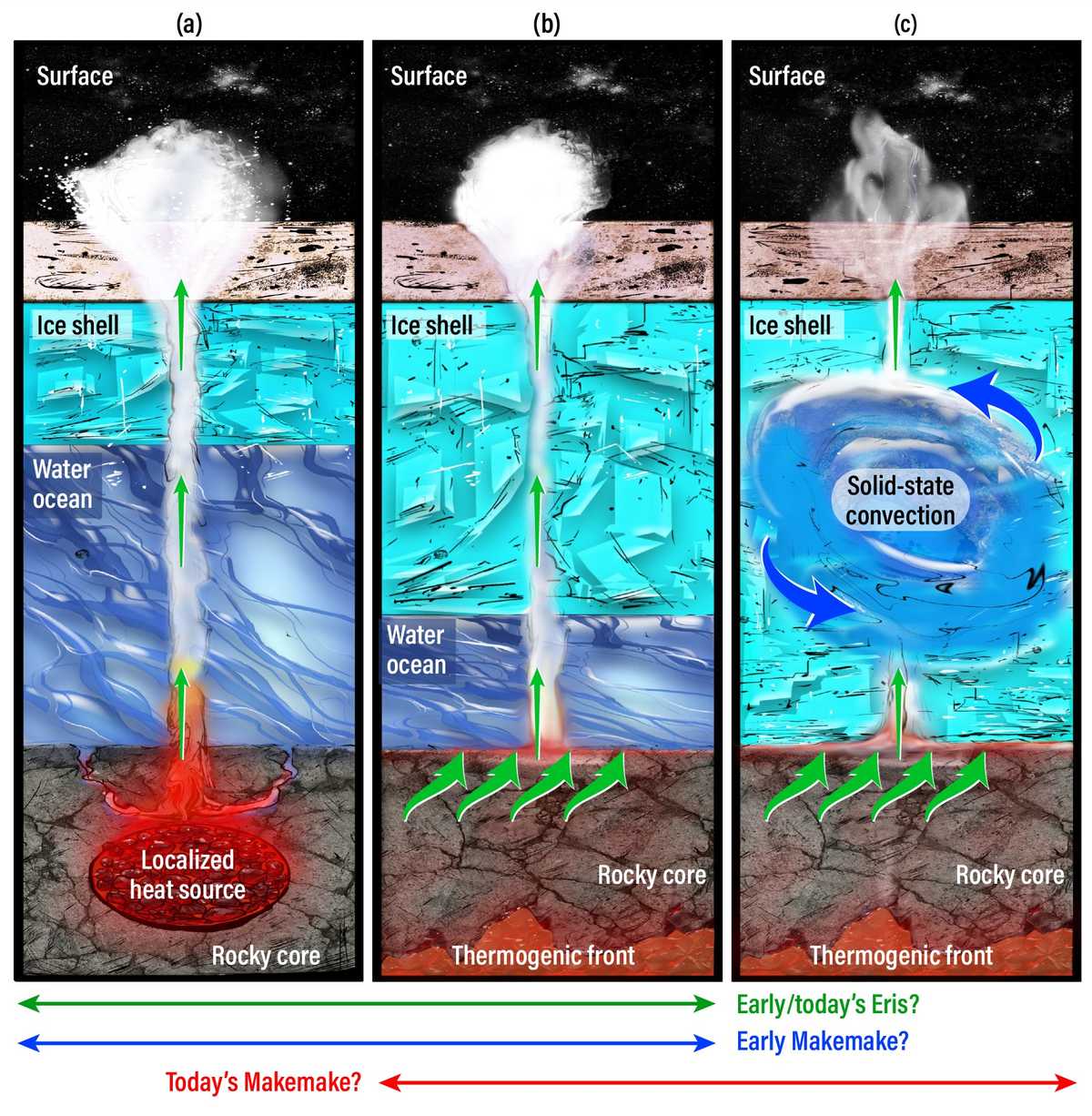
Illustration points to three possibilities of subsurface geothermal processes that could explain how methane ended up on the surfaces of Eris and Makemake
ERIS AND MAKEMAKE INTERNAL PROCESSES

Webb telescope observes potentially young Methane deposits on surfaces of Eris, Makemake. A team co-led by Southwest Research Institute found evidence for hydrothermal or metamorphic activity within the icy dwarf planets Eris and Makemake, located in the Kuiper Belt. Methane detected on their surfaces has the tell-tale signs of warm or even hot geochemistry in their rocky cores, which is markedly different than the signature of methane from a comet.

“We see some interesting signs of hot times in cool places,” said SwRI’s Dr. Christopher Glein, an expert in planetary geochemistry and lead author of a paper about this discovery.

The Kuiper Belt is a vast donut-shaped region of icy bodies beyond the orbit of Neptune at the edge of the solar syste...

Read More
Programming Cells to Organize their Molecules may open the door to New Treatments

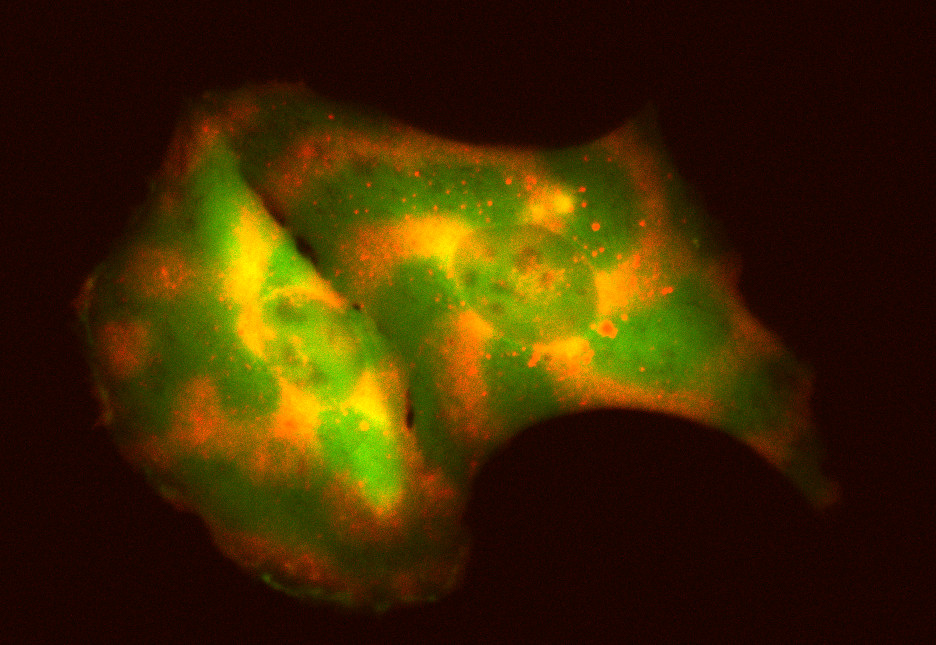
Spirals of green, yellow and orange depict various proteins moving in waves in a cell on a black background.
The Coyle Lab tested their tool in human cells by programming multiple proteins, each represented by a different color, to move in various wave patterns. The tool they developed allows researchers to essentially program molecules to move around a cell to specific locations over time. University of Wisconsin–Madison

Researchers can engineer cells to express new genes and produce specific proteins, giving the cells new parts to work with. But, it’s much harder to provide cells with instructions on how to organize and use those new parts. Now, new tools from University of Wisconsin–Madison researchers offer an innovative way around this problem.

Their research is published in the journal Cell.

Everything a cell does depends on how molecules are organized within the cell...

Read More

Altermagnetism Experimentally Demonstrated

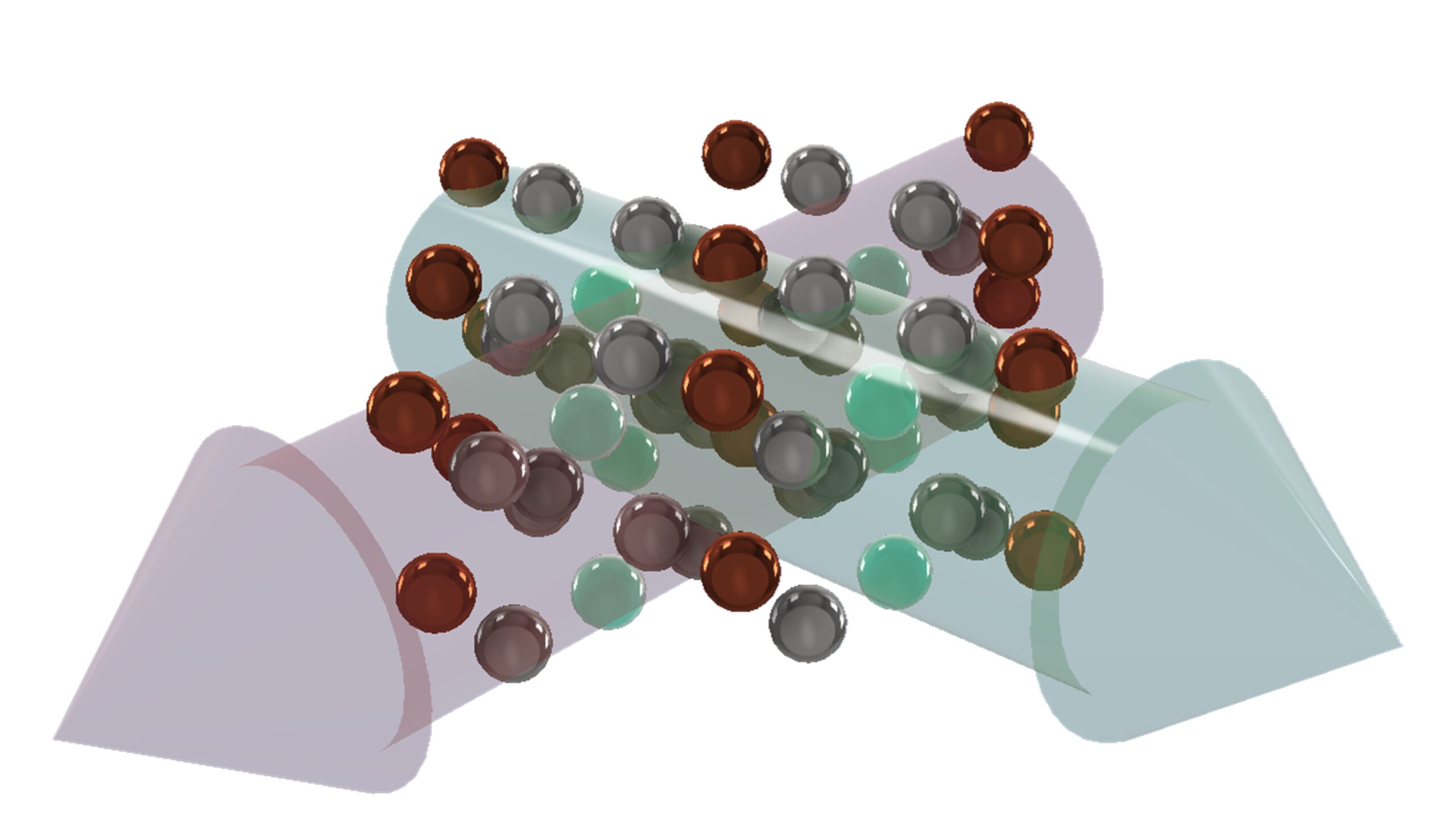
The direction of an electron spin is determined by the direction of motion of electrons. (ill.: Hans-Joachim Elmers)

Researchers have been able to visualize the third class of magnetism, called altermagnetism, in action. Ferromagnetism and antiferromagnetism have long been known to scientists as two classes of magnetic order of materials. Back in 2019, researchers at Johannes Gutenberg University Mainz (JGU) postulated a third class of magnetism, called altermagnetism. This altermagnetism has been the subject of heated debate among experts ever since, with some expressing doubts about its existence...

Read More

Scientists Map the Largest Magnetic fields in Galaxy Clusters using Synchrotron Intensity Gradient

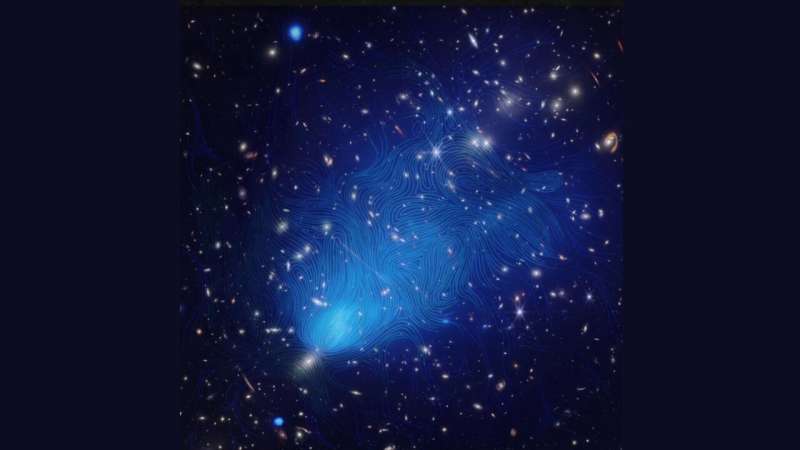
Scientists have mapped the largest magnetic fields in galaxy clusters using synchrotron intensity gradient
A high-resolution image of the magnetic field in the El Gordo cluster, including the Chandra X-ray image (blue part of the image), the NASA JWST infrared image (background galaxies of the image), and the measured magnetic fields (streamlines). Credits: Chandra X-ray: NASA/CXC/Rutgers; JWST infrared: NASA/ESA/CSA; Magnetic field lines: Yue Hu.

In a new study, scientists have mapped magnetic fields in galaxy clusters, revealing the impact of galactic mergers on magnetic-field structures and challenging previous assumptions about the efficiency of turbulent dynamo processes in the amplification of these fields.

Galaxy clusters are large, gravitationally bound systems containing numerous galaxies, hot gas, and dark matter...

Read More