Category Uncategorized

New research shows Quasars can be Buried in their Host Galaxies

New research shows quasars can be buried in their host galaxies

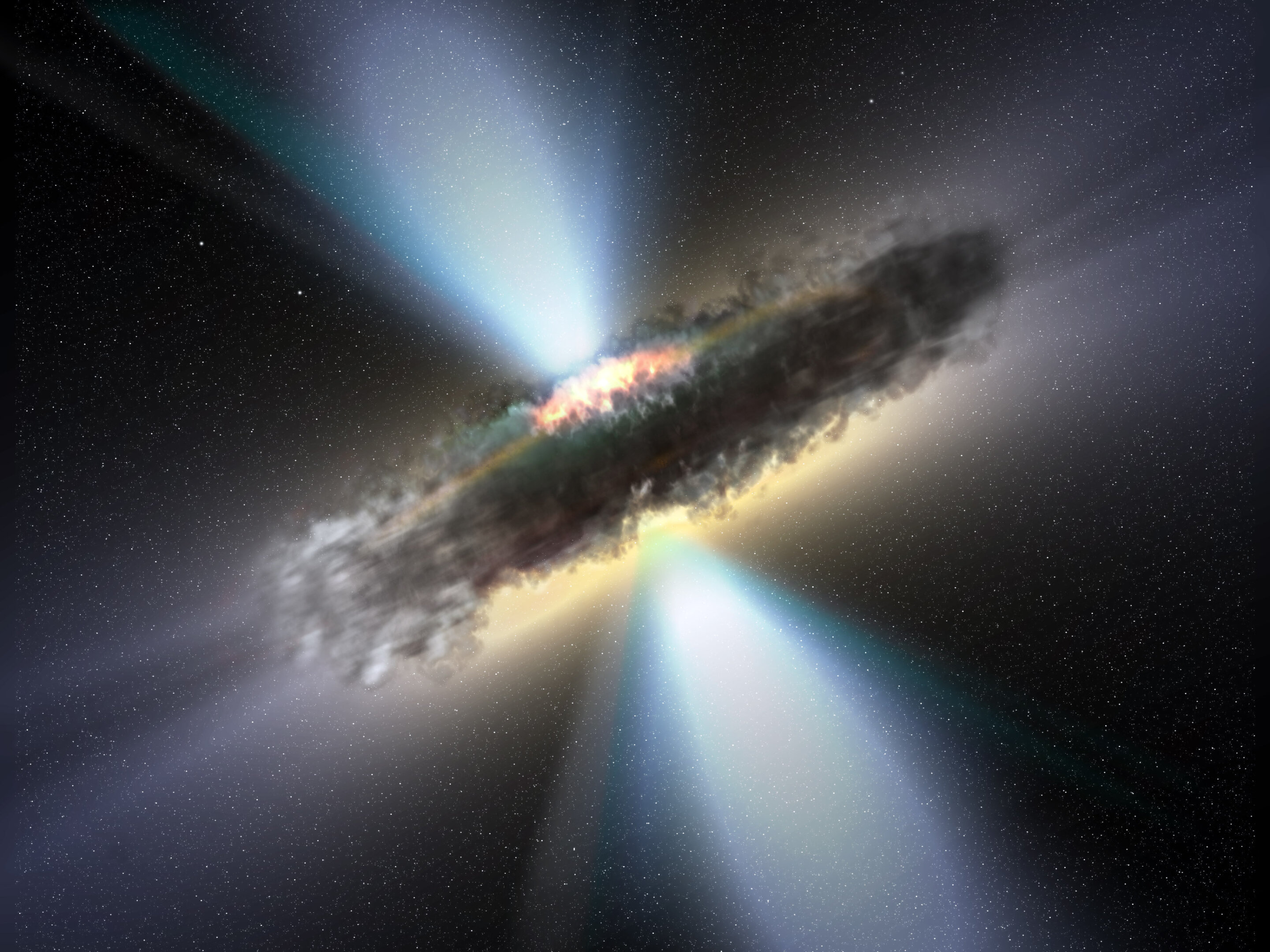
Artistic illustration of the thick dust torus thought to surround supermassive black holes and their accretion disks. [ESA / V. Beckmann (NASA-GSFC)] Credit: Durham University

A new study reveals that supermassive black holes at the centers of galaxies, known as quasars, can sometimes be obscured by dense clouds of gas and dust in their host galaxies.

Artistic illustration of the thick dust torus thought to surround supermassive black holes and their accretion disks. [ESA / V. Beckmann (NASA-GSFC)] Credit: Durham University

This challenges the prevailing idea that quasars are only obscured by donut-shaped rings of dust in the close vicinity of the black hole.

Quasars are extremely bright objects powered by black holes gorging on surrounding material...

Read More
Boosting Weak Immune System: Scientists find an unusual weapon against Virus

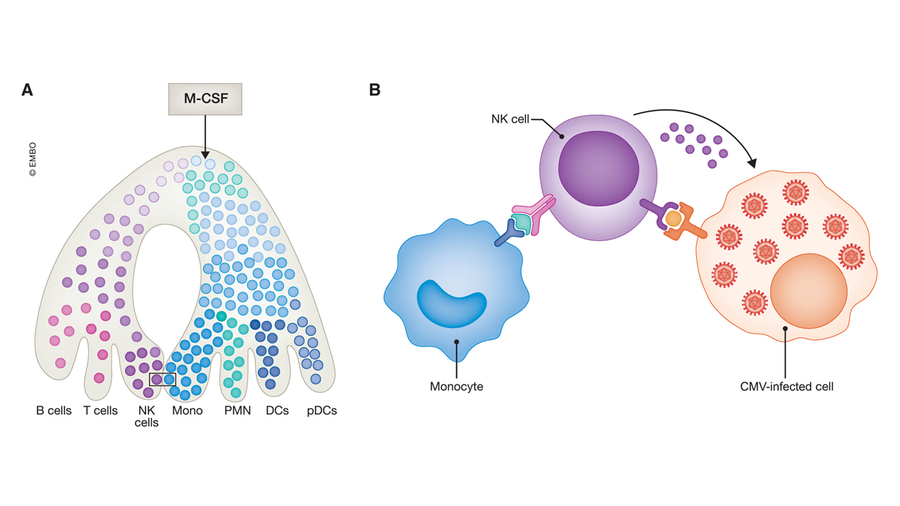
An overview of how the method proposed by the Sieweke group boosts weak immune system. (A) M-CSF cytokine works in the bone marrow to promote generation of monocytes and macrophages, without disturbing the formation of other immune cells; (B) Monocytes and macrophages activate natural killer cells to enable them to target virus-infected cells and kill them through cell–cell contact and the release of toxic agents.

Infections with cytomegalovirus (CMV) are extremely common and often pose no major threat to the vast majority of people. They can however be deadly for people whose immune system is weakened, e.g., after bone marrow transplantation. Current treatments against CMV infections are very limited and can have severe side effects. Researchers led by Prof...

Read More

Dopamine control: Turning off One Ion Channel made Mice Smarter. Turning Off another made them more Motivated.

A graphic illustration of two ion channels in the brain that control dopamine release.

A mosaic expression of two ion channels in dopamine neurons of a mouse’s brain. Researchers have found a way to control dopamine release. Larry Zweifel

Researchers have identified two ion channel switches that regulate the release of dopamine in the brain, a first step that might one day lead to therapeutics for a wide range of diseases and disorders that currently have few solutions.

The switches help regulate learning and motivational state in mice. Humans also have hundreds of these channels, which govern many chemical and hormonal processes that influence behavior and mood. The University of Washington School of Medicine research team hopes to identify drugs to target these channels. Those drug candidates could then be tested in clinical trials.

“The ability to precisely mani...

Read More

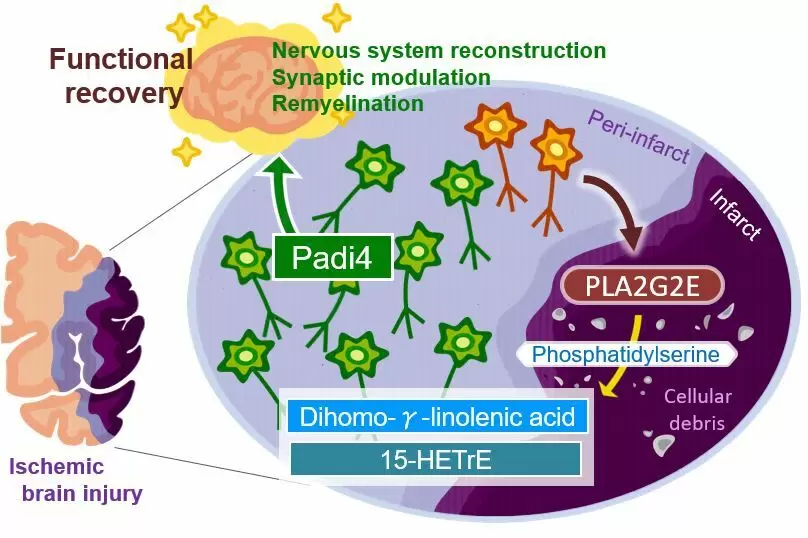
A New Mechanism Encouraging the Brain to Self-Repair After an Ischemic Stroke

Lipid metabolism triggering brain-autonomous neural repair after ischemic stroke
The neurons around an injured brain region will play major roles in promoting functional recovery through nervous system development, synapse organization, and remyelination; however, the molecular mechanisms triggering such a broad range of neural repair after brain injury remained unknown. Our study demonstrated that the secretion of PLA2G2E from perilesional neurons with ischemic stress generated DGLA and 15-HETrE, which triggered these recovery processes through the neuronal Padi4-dependent induction of cluster formation associated with neural repair after ischemic brain injury.

Partial recovery after ischemic stroke is possible, but the mechanisms involved in this process remain unclear...

Read More