
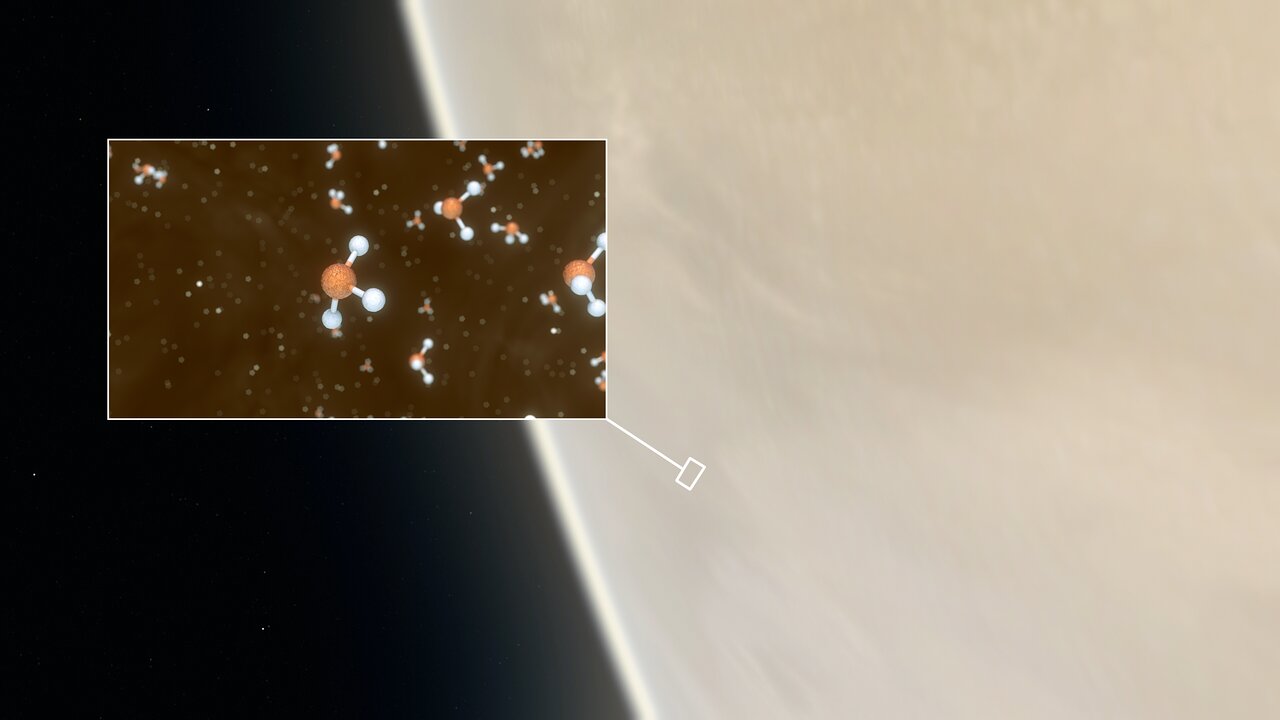
An international team of astronomers today announced the discovery of a rare molecule – phosphine – in the clouds of Venus. On Earth, this gas is only made industrially or by microbes that thrive in oxygen-free environments...
Read More


September 15, 2020,
 Uncategorized
An international team of astronomers today announced the discovery of a rare molecule – phosphine – in the clouds of Venus. On Earth, this gas is only made industrially or by microbes that thrive in oxygen-free environments...
Read More
September 14, 2020,
Uncategorized
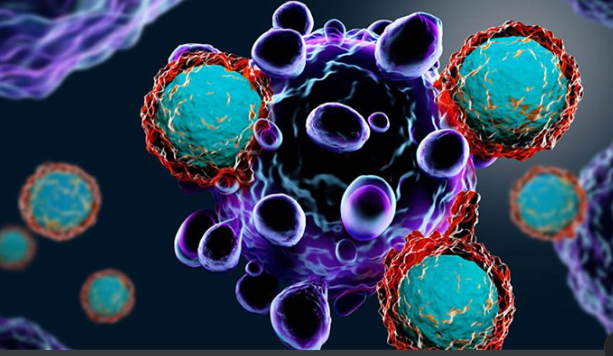
Sophie Lucas (University of Louvain de Duve Institute) and her team succeeded in neutralising a molecule that blocks the immune system against cancer. UCLouvain scientists discovered that this new immunotherapy increases the action of another well-known but not always effective immunotherapy, and that it makes tumour regression possible. This very promising discovery in the fight against cancer is published in the journal Nature Communications.
Cancer immunotherapy is the manipulation of the immune responses naturally present in the human body to fight cancer. Often, these immune responses are blocked by cells or molecules that prevent them from killing cancer cells, and the tumour is able to establish itself and grow.
In 2004, Sophie Lucas, researcher at the University of Louva...
Read More
September 14, 2020,
Uncategorized

Researchers have developed a new compact and ultrafast, high-power yellow laser. The tunable laser exhibits excellent beam quality and helps fill the need for a practical yellow light source emitting ultrafast pulses of light.
“The yellow-orange spectral range is highly absorbed by hemoglobin in the blood, making lasers with these wavelengths particularly useful for biomedical applications, dermatology treatments and eye surgery,” said research team member Anirban Ghosh from the Photonic Sciences Lab at the Physical Research Laboratory in India...
Read More
September 13, 2020,
Uncategorized
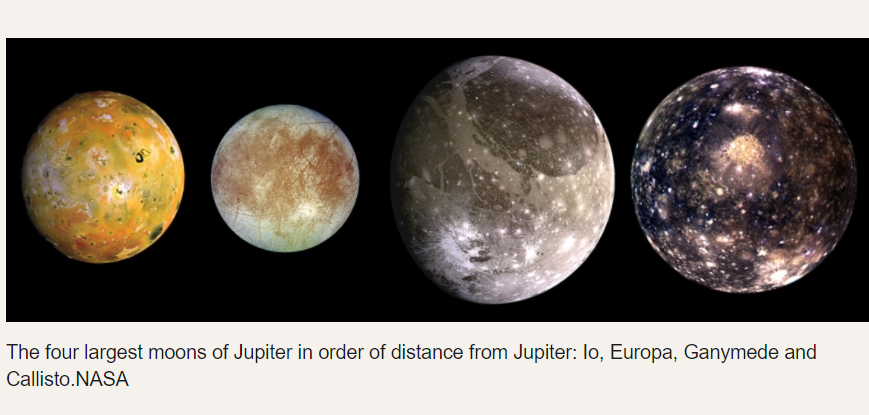
Jupiter’s moons are hotter than they should be, for being so far from the sun. In a process called tidal heating, gravitational tugs from Jupiter’s moons and the planet itself stretch and squish the moons enough to warm them. As a result, some of the icy moons contain interiors warm enough to host oceans of liquid water, and in the case of the rocky moon Io, tidal heating melts rock into magma.
Researchers previously believed that the gas giant Jupiter was responsible for most of the tidal heating associated with the liquid interiors of the moons, but a new study published in Geophysical Research Letters found that moon-moon interactions may be more responsible for the heating than Jupiter alone.
“It’s surprising because the moons are so much smaller than Jupiter...
Read More

Recent Comments