AI model uses glucose spikes to reveal hidden diabetes risk before symptoms appear

AI model detects hidden diabetes risk by reading glucose spikes
Multimodal data collection in PROGRESS. Credit: Nature Medicine (2025). DOI: 10.1038/s41591-025-03849-7

To diagnose either type 2 diabetes or pre-diabetes, clinicians typically rely on a lab value known as HbA1c. This test captures a person’s average blood glucose levels over the previous few months. But HbA1c cannot predict who is at highest risk of progressing from healthy to prediabetic, or from prediabetic to full-blown diabetes.

Now, scientists at Scripps Research have discovered that artificial intelligence can use a combination of other data—including real-time glucose levels from wearable monitors—to provide a more nuanced view of diabetes risk.

The new model, described in Nature Medicine, uses continuous glucose monitor (CGM) data alongside gut microbiome, diet, ph...

Read More
Freestanding hafnium zirconium oxide membranes can enable advanced 2D transistors

A strategy to integrate hafnium zirconium oxide membranes into 2D transistors as high-k dielectrics
Fabrication and characterization of ferroelectric freestanding HZO membranes. Credit: Nature Electronics (2025). DOI: 10.1038/s41928-025-01398-y

To further reduce the size of electronic devices, while also improving their performance and energy efficiency, electronics engineers have been trying to identify alternative materials that outperform silicon and other conventional semiconductors. Two-dimensional (2D) semiconductors, materials that are just a few atoms thick and have a tunable electrical conductivity, are among the most promising candidates for the fabrication of smaller and better performing devices.

Past studies showed that these materials could be used to fabricate miniaturized transistors, electronic components that amplify or switch electrical signals, particularly f...

Read More

Unlocking the secrets of our galaxy’s heart using magnetic fields

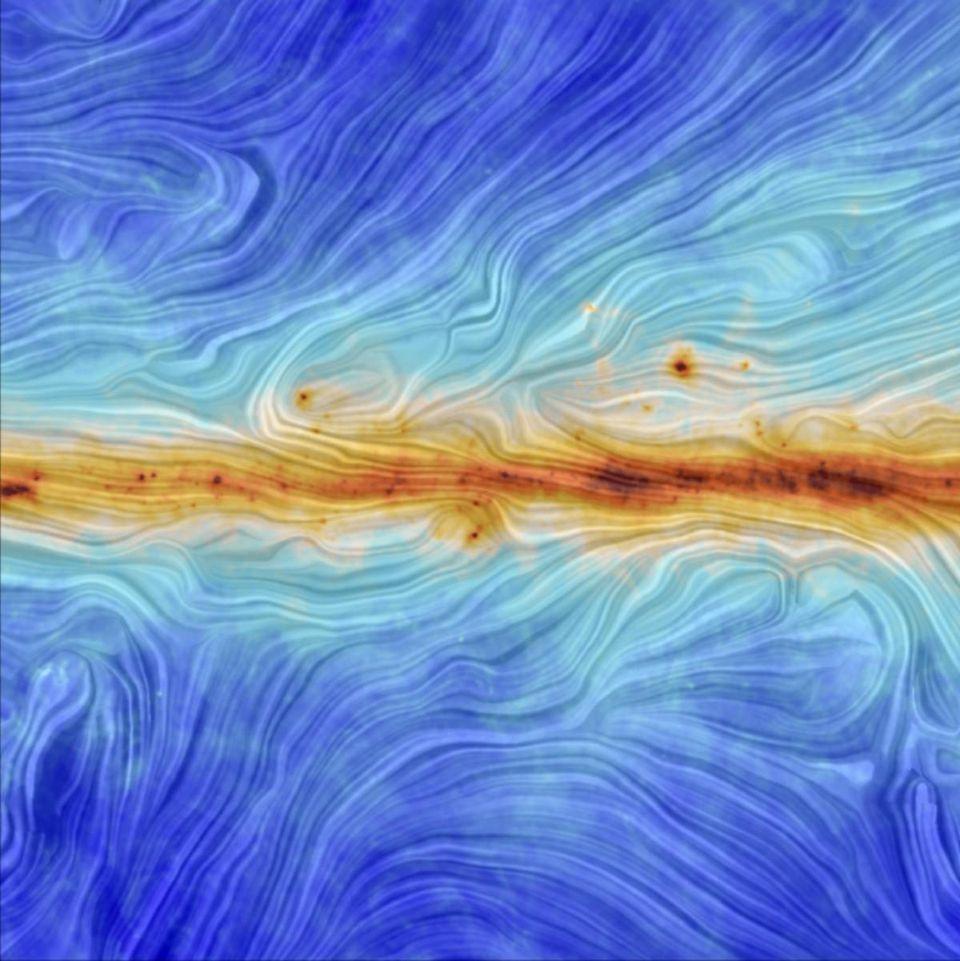
The dust in the Milky Way, shown in darker and redder colours, are regions where new star formation is taking place. These dusty regions are correlated with the magnetic fields present in our galaxy, and the background light gets polarised in a measurable way as a result. (Credit : NASA/ESA)

Deep in the heart of our galaxy lies one of the most chaotic and mysterious regions in space. Now, scientists have created the first detailed map of magnetic fields in this turbulent zone, providing crucial insights into how stars form and evolve in extreme environments.

The research, led by University of Chicago Ph.D. student Roy Zhao, focused on a region called Sagittarius C, located in the c near the center of the Milky Way...

Read More

Sleep disruption damages blood vessels in brain and may increase dementia risk: study

A new study reveals that fragmented sleep causes cellular damage to the brain’s blood vessels, providing further evidence to suggest that sleep disruption predisposes the brain to dementia.

The research, published in the journal Brain, is the first to offer cellular and molecular evidence that sleep disruption directly causes damage to brain blood vessels and blood flow.

“We found that individuals who had more fragmented sleep, such as sleeping restlessly and waking up a lot at night, had a change in their balance of pericytes—a brain blood vessel cell that plays an important role in regulating brain blood flow and the entry and exit of substances between the blood and the brain,” said Andrew Lim, principal investigator of the study and a sleep neurologist and scientist at Sunny...

Read More