Cosmic baby steps: For the first time, astronomers witness the dawn of a new solar system

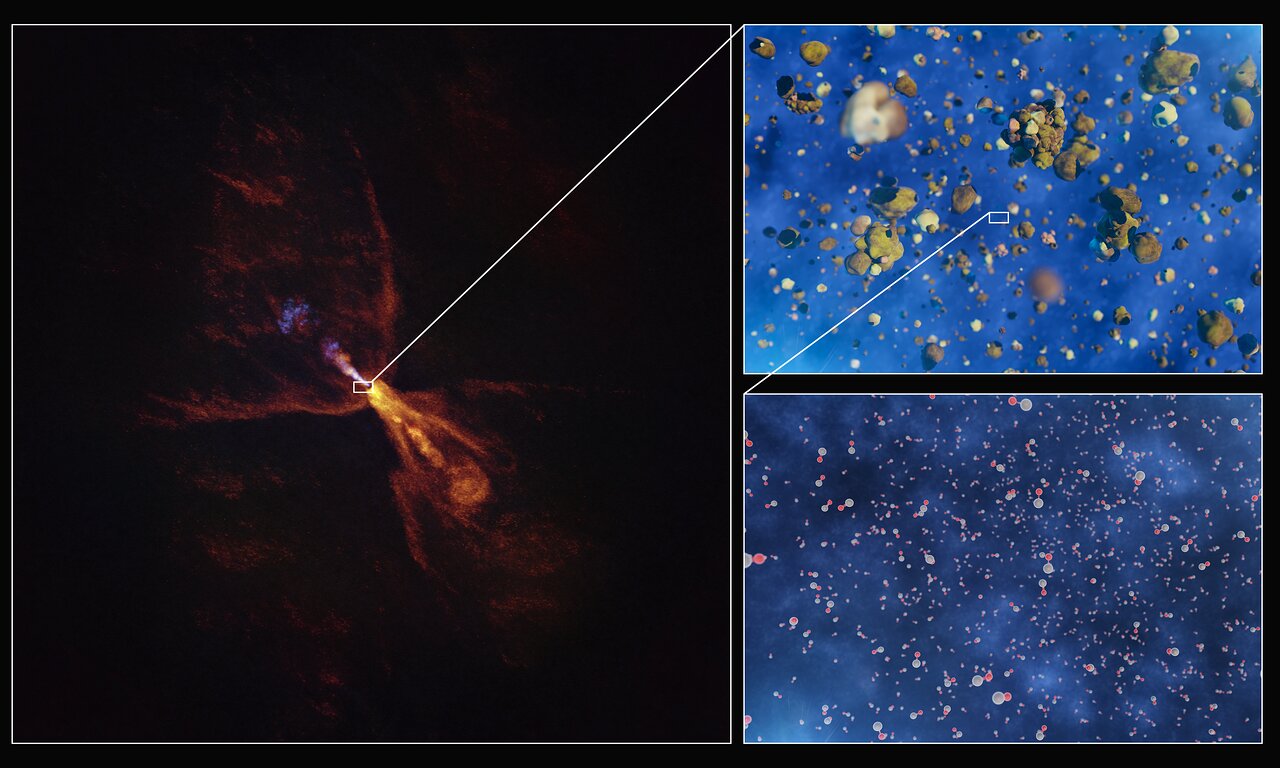
Formation of silicates around the baby star HOPS-315

For the first time, international researchers have pinpointed the moment when planets began to form around a star beyond the sun. Using the ALMA telescope, in which the European Southern Observatory (ESO) is a partner, and the James Webb Space Telescope, they have observed the creation of the first specks of planet-forming material—hot minerals just beginning to solidify. This finding marks the first time a planetary system has been identified at such an early stage in its formation and opens a window to the past of our own solar system.

“For the first time, we have identified the earliest moment when planet formation is initiated around a star other than our sun,” says Melissa McClure, a professor at Leiden University in the Netherlands and lead author of the new study, publishe...

Read More

Want to boost your brain as you age? Music might be the answer


An older violinist stands in silhouette, while her younger self plays within, symbolizing how lifelong musical training preserves youth-like brain function. Just as melodies transcend time, playing music holds back age-related neural upregulation, supporting better speech perception in older musicians. Credit: Mohan Yuan (CC-BY 4.0, creativecommons.org/licenses/by/4.0/)

Long-term musical training may mitigate the age-related decline in speech perception by enhancing cognitive reserve, according to a study published in PLOS Biology by Claude Alain from the Baycrest Academy for Research and Education, Canada, and Yi Du from the Chinese Academy of Sciences.

Normal aging is typically associated with declines in sensory and cognitive functions...

Read More

NVIDIA’s new AI tool enables precise editing of 3D scenes and photorealistic images

NVIDIA develops new AI tool to infer attributes of 3D scenes and generate photorealistic images based on specific inputs
Image showing examples of DiffusionRenderer’s geometry estimates and photorealistic images with specific lighting conditions generated by the model. Credit: Liang et al, NVIDIA

Over the past years, computer scientists have introduced increasingly sophisticated generative AI models that can produce personalized content following specific inputs or instructions. While image generation models are now widely used, many of them are unpredictable and precisely controlling the images they create remains a challenge.

In a recent paper presented at this year’s Conference on Computer Vision and Pattern Recognition (CVPR 2025), held in Nashville, June 11–15, researchers at NVIDIA introduced DiffusionRenderer, a new machine learning approach that could advance the generation and editing of imag...

Read More

Is Earth inside a huge void? ‘Sound of Big Bang’ hints so

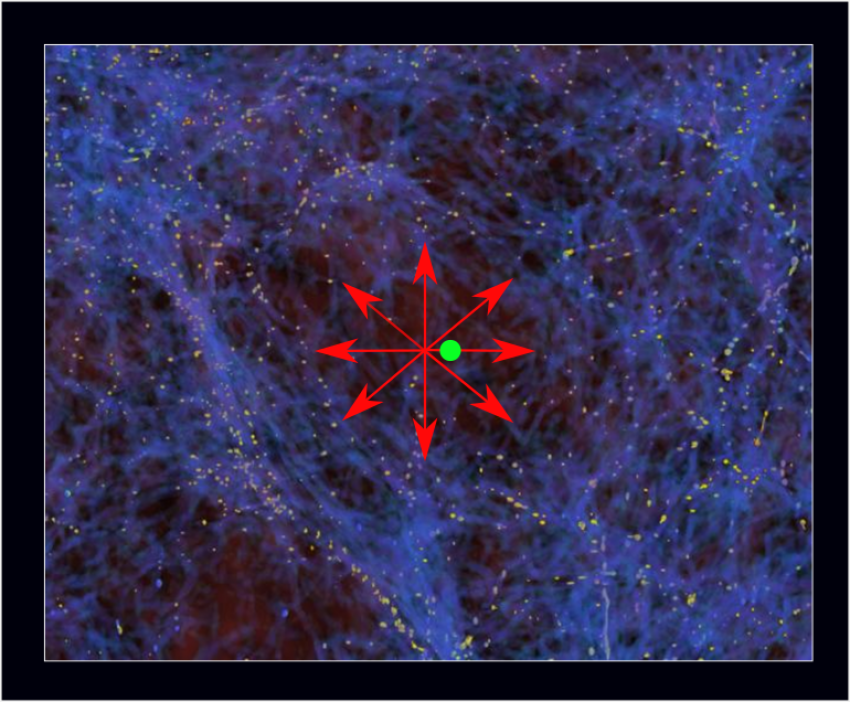
If we are located in a region with below-average density such as the green dot, then matter would flow away from us due to stronger gravity from the surrounding denser regions, as shown by the red arrows.
Credit
Moritz Haslbauer and Zarija Lukic
Licence type
Attribution (CC BY 4.0)

Earth and our entire Milky Way galaxy may sit inside a mysterious giant hole which makes the cosmos expand faster here than in neighbouring regions of the universe, astronomers say.

Their theory is a potential solution to the ‘Hubble tension’ and could help confirm the true age of our universe, which is estimated to be around 13.8 billion years old.

The latest research – shared at the Royal Astronomical Society’s National Astronomy Meeting (NAM) in Durham – shows that sound waves from the early universe, &...

Read More