






A new way to wobble: Scientists uncover mechanism that causes formation of planets

An artist’s concept of a supermassive black
An artist’s concept of a supermassive black hole surrounded by an accretion disk. (Illustration courtesy of NASA)

Instead of a tempest in a teapot, imagine the cosmos in a canister. Scientists have performed experiments using nested, spinning cylinders to confirm that an uneven wobble in a ring of electrically conductive fluid like liquid metal or plasma causes particles on the inside of the ring to drift inward. Since revolving rings of plasma also occur around stars and black holes, these new findings imply that the wobbles can cause matter in those rings to fall toward the central mass and form planets.

The scientists found that the wobble could grow in a new, unexpected way...

Read More
Circadian disruption by night light linked to multiple cardiovascular outcomes

realistic image of a person in bed disrupted by artificial night light coming from the street
Credit: AI-generated image

Flinders Health and Medical Research Institute researchers, along with colleagues in the UK and U.S., have linked brighter night-time light exposure to elevated risks of five major cardiovascular diseases.

Circadian rhythms govern fluctuations in blood pressure, heart rate, platelet activation, hormone secretion, and glucose metabolism. Long-term disruption of those rhythms in animal and human studies have produced myocardial fibrosis, hypertension, inflammation, and impaired autonomic balance. Previous research efforts relied largely on satellite-derived estimates or small cohorts using bedroom or wrist light sensors, leaving personal exposure patterns uncharted at population scale.

In the study, “Personal night light exposure predicts incidence of car...

Read More

Scientists use lightning to make ammonia out of thin air

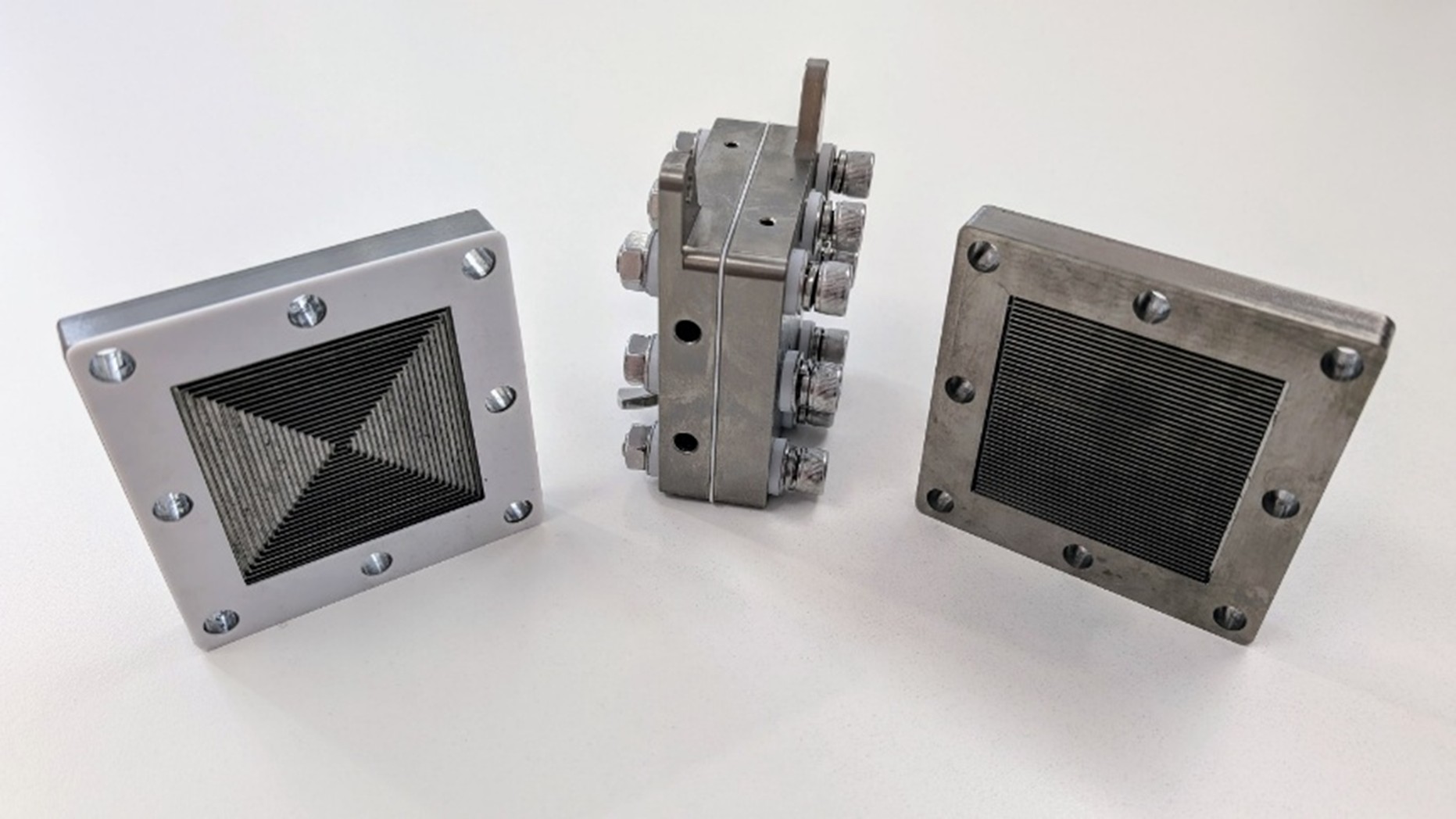
Electrolyser, the key equipment used for the conversion to ammonia
The membrane-based electrolyser, key to where the conversion to gaseous ammonia happens. Credit. PJ Cullen

University of Sydney researchers have harnessed human-made lightning to develop a more efficient method of generating ammonia—one of the world’s most important chemicals. Ammonia is also the main ingredient of fertilizers that account for almost half of all global food production.

The research was published in Angewandte Chemie International edition.

The team have successfully developed a more straightforward method to produce ammonia (NH3) in gas form. Previous efforts by other laboratories produced ammonia in a solution (ammonium, NH4+), which requires more energy and processes to transform it into the final gas product.

The current method to generate ammonia, the Hab...

Read More

Why is there no life on Mars? Rover finds a clue

Despite brief oases, Mars was likely doomed to be a desert planet, a new study suggests
Despite brief oases, Mars was likely doomed to be a desert planet, a new study suggests.

Why is Mars barren and uninhabitable, while life has always thrived here on our relatively similar planet Earth?

A discovery made by a NASA rover has offered a clue for this mystery, new research said Wednesday, suggesting that while rivers once sporadically flowed on Mars, it was doomed to mostly be a desert planet.

Mars is thought to currently have all the necessary ingredients for life except for perhaps the most important one: liquid water.

However, the red surface is carved out by ancient rivers and lakes, showing that water once flowed on our nearest neighbor.

There are currently several rovers searching Mars for signs of life that could have existed back in those more habitable t...

Read More
