






Clingy planets can trigger their own doom, Cheops and TESS suggest

How planets orbiting close to their host stars can cause their own downfall by triggering flares

Astronomers using the European Space Agency’s Cheops mission have caught an exoplanet that seems to be triggering flares of radiation from the star it orbits. These tremendous explosions are blasting away the planet’s wispy atmosphere, causing it to shrink every year.

This is the first-ever evidence of a “planet with a death wish.” Though it was theorized to be possible since the nineties, the flares seen in this research are around 100 times more energetic than expected.

The work is published in the journal Nature.

This planet’s star makes our sun look sleepy
Thanks to telescopes like the NASA/ESA/CSA James Webb Space Telescope and NASA’s Transiting Exoplanet Survey Satellite (TESS...

Read More

RisingAttacK: New technique can make AI ‘see’ whatever you want

AI eye
Credit: AI-generated image

Researchers have demonstrated a new way of attacking artificial intelligence computer vision systems, allowing them to control what the AI “sees.” The research shows that the new technique, called RisingAttacK, is effective at manipulating all of the most widely used AI computer vision systems.

At issue are so-called “adversarial attacks,” in which someone manipulates the data being fed into an AI system to control what the system sees, or does not see, in an image. For example, someone might manipulate an AI’s ability to detect traffic signals, pedestrians or other cars—which would cause problems for autonomous vehicles. Or a hacker could install code on an X-ray machine that causes an AI system to make inaccurate diagnoses.

“We wanted to find an eff...

Read More

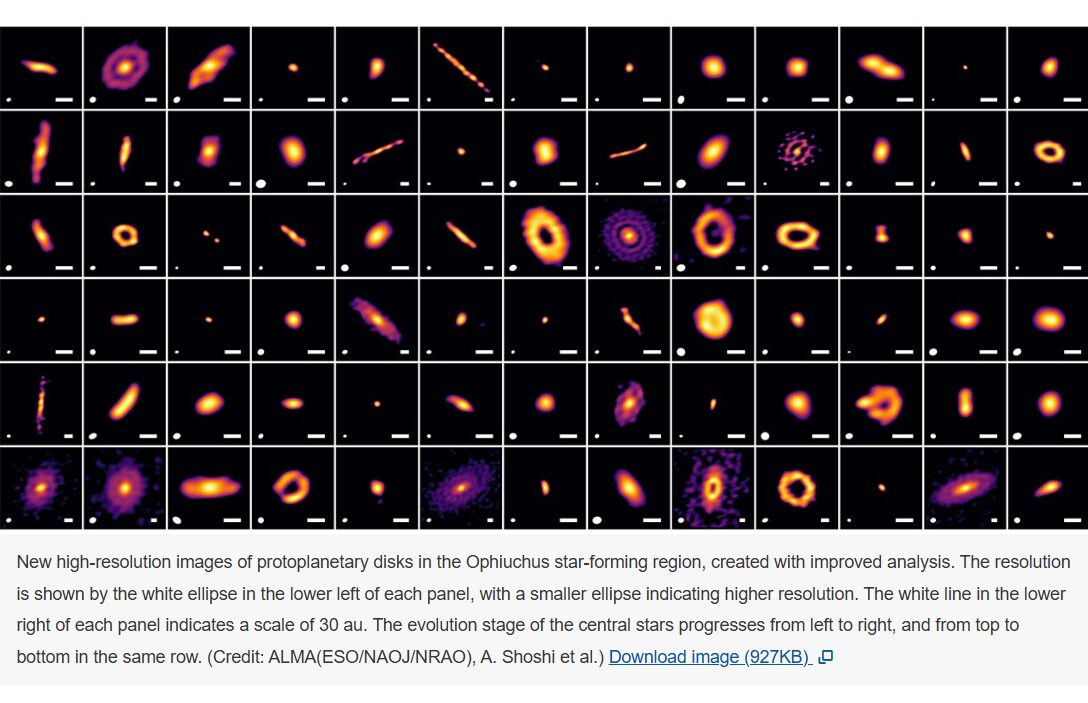
Planets may start forming before stars even finish growing

New high-resolution images of protoplanetary disks in the Ophiuchus star-forming region, created with improved analysis. The resolution is shown by the white ellipse in the lower left of each panel, with a smaller ellipse indicating higher resolution. The white line in the lower right of each panel indicates a scale of 30 au. The evolution stage of the central stars progresses from left to right, and from top to bottom in the same row. (Credit: ALMA(ESO/NAOJ/NRAO), A. Shoshi et al.)

In a stellar nursery 460 light-years away, astronomers sharpened old ALMA data and spotted crisp rings and spirals swirling around 27 infant stars—evidence that planets start taking shape just a few hundred thousand years after their suns ignite, far earlier than anyone expected.

Signs of planet fo...

Read More

Switching on a silent gene revives tissue regeneration in mice

Research led by the National Institute of Biological Sciences in Beijing has discovered that switching on a single dormant gene enables mice to regenerate ear tissue.

Switching on a silent gene revives tissue regeneration in mice

Some vertebrates such as salamanders and fish can regenerate complex tissue structures with precision. A lost limb can be regrown, a damaged heart or eye can be repaired. Salamanders are so remarkable at reconstructing damaged tissues that even a spinal cord injury with severed neural motor connectivity can be restored.

Mammals occasionally showcase the ability to regenerate. Deer antlers and goat horns are examples of living tissue regeneration. Mice can regrow fingertips if they are lost. A healthy human liver can experience up to 70% loss of tissue and regrow to near full size within several weeks.

However, f...

Read More
