






Entropy engineering opens new avenue for robust quantum anomalous Hall effect in 2D magnets

New design concept proposed for robust quantum anomalous Hall effect via entropy engineering in 2D magnets

A research team from the University of Wollongong’s (UOW) Institute for Superconducting and Electronic Materials (ISEM) has addressed a 40-year-old quantum puzzle, unlocking a new pathway to creating nextgeneration electronic devices that operate without losing energy or wasting electricity.

Published in Advanced Materials, the study is the work of UOW researchers led by Distinguished Professor Xiaolin Wang and Dr. M Nadeem, with Ph.D. candidate Syeda Amina Shabbir and Dr. Frank Fei Yun.

It introduces a new design concept to realize the elusive and highly sought-after quantum anomalous Hall (QAH) effect.

The field of quantum materials could cut global energy consumption and transform everyday life for people around the world.

Using a technique called entropy engineering, t...

Read More
Growing evidence for evolving dark energy could inspire a new model of the universe

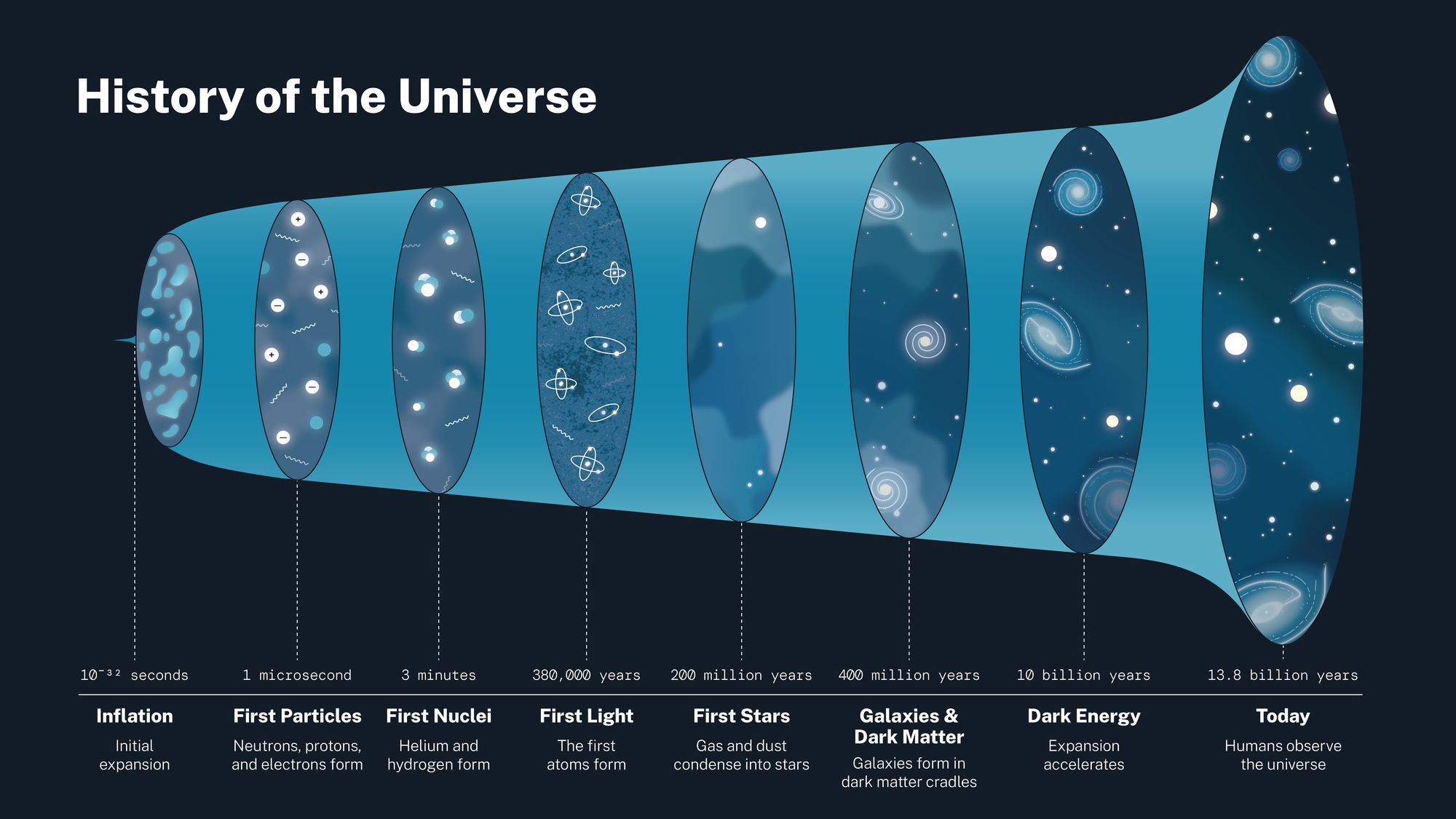
Big bang expansion
The Big Bang started around 13.8 billion years ago. Diagram: NASA

The birth, growth and future of our universe are eternally fascinating. In the last decades, telescopes have been able to observe the skies with unprecedented precision and sensitivity.

Our research team on the South Pole Telescope is studying how the universe evolved and has changed over time. We have just released two years’ worth of mapping of the infant universe over 1/25th of the sky.

These observations have sharpened our understanding of the nature of dark energy and the rate at which the universe is expanding.

What is the current theory of how our universe began?
Our current model for the early universe is known as the “hot Big Bang.”

It describes the first stage of our universe as a primordial fireball...

Read More

USC’s new AI implant promises drug-free relief for chronic pain

USC researchers have developed a groundbreaking ultrasound device that could reduce our reliance on addictive painkillers. A groundbreaking wireless implant promises real-time, personalized pain relief using AI and ultrasound power no batteries, no wires, and no opioids. Designed by USC and UCLA engineers, it reads brain signals, adapts on the fly, and bends naturally with your spine.

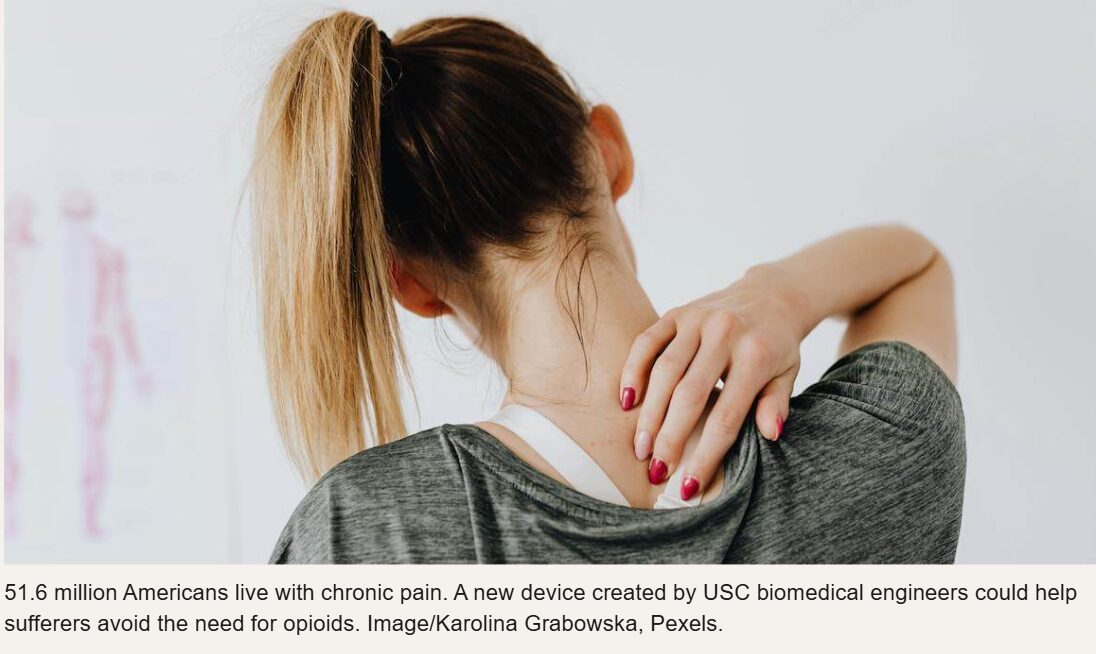
Chronic pain is a debilitating condition that severely impacts quality of life, often leading to reliance on opioid medications with their severe side effects and addiction risks. According to the U.S. Pain Foundation, 51.6 million Americans live with chronic pain. For over 17 million sufferers, their chronic pain is high-impact – frequently limiting their life or work activities.

Current implant...

Read More

This triple-layer sunlight catalyst supercharges green hydrogen by 800%

The material can effectively capture the sunlight so that the energy therein can be used for hydrogen production through the photochemical water splitting reaction.Photographer:Olov Planthaber

Researchers in Sweden have developed a powerful new material that dramatically boosts the ability to create hydrogen fuel from water using sunlight, making the process eight times more effective than before. This breakthrough could be key to fueling heavy transport like ships and planes with clean, renewable energy.

The chemical reaction to produce hydrogen from water is several times more effective when using a combination of new materials in three layers, according to researchers at Linköping University in Sweden...

Read More
