Twisting light for memory: New chiral photonic device enables real-time control of light polarization and data storage

As fast as modern electronics have become, they could be much faster if their operations were based on light, rather than electricity. Fiber optic cables already transport information at the speed of light; to do computations on that information without translating it back to electric signals will require a host of new optical components.

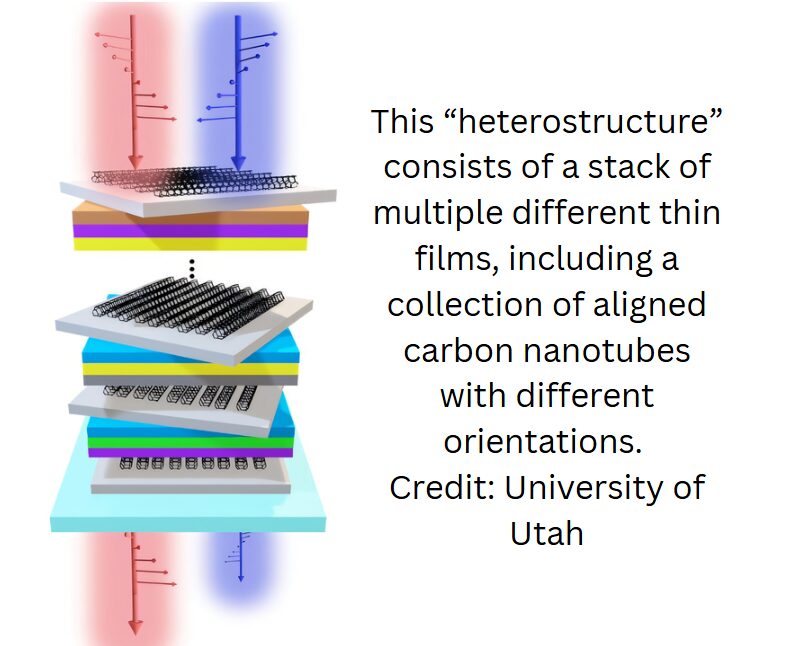
Researchers at the John and Marcia Price College of Engineering have now developed such a device: one that can be adjusted on the fly to give light different degrees of circular polarization. Because information can be stored in this chiral property of light, the researchers’ device could serve as a multifunctional, reconfigurable component of an optical computing system.

Led by Weilu Gao, assistant professor in the Department of Electrical & C...

Read More

Observing one-dimensional anyons: Exotic quasiparticles in the coldest corners of the universe

Illustration with balls and arrows and a ring
Researchers inject an impurity into a one-dimensional ultracold gas, thereby generating a quasiparticle with exotic properties.

Scientists led by Hanns-Christoph Nägerl have observed anyons — quasiparticles that differ from the familiar fermions and bosons — in a one-dimensional quantum system for the first time. The results, published in Nature, may contribute to a better understanding of quantum matter and its potential applications.

Nature categorizes particles into two fundamental types: fermions and bosons. While matter-building particles such as quarks and electrons belong to the fermion family, bosons typically serve as force carriers — examples include photons, which mediate electromagnetic interactions, and gluons, which govern nuclear forces...

Read More

How coffee affects a sleeping brain

How does coffee affect a sleeping brain?
Brain activity patterns during sleep (NREM and REM), comparing caffeine versus placebo effects on periodic neural oscillations (after removing aperiodic spectral components). Credit: Communications Biology (2025). DOI: 10.1038/s42003-025-08090-z

Caffeine is not only found in coffee, but also in tea, chocolate, energy drinks and many soft drinks, making it one of the most widely consumed psychoactive substances in the world.

In a study published in Communications Biology, a team of researchers from Université de Montréal shed new light on how caffeine can modify sleep and influence the brain’s recovery—both physical and cognitive—overnight.

The research was led by Philipp Thölke, a research trainee at UdeM’s Cognitive and Computational Neuroscience Laboratory (CoCo Lab), a...

Read More

‘Intercrystals’ pave the way for greener electronics and quantum technologies

An intercrystal formed by overlaying twisted graphene on hexagonal boron nitride.
Andrei Lab

Rutgers University–New Brunswick researchers have discovered a new class of materials—called intercrystals—with unique electronic properties that could power future technologies.

Intercrystals exhibit newly discovered forms of electronic properties that could pave the way for advancements in more efficient electronic components, quantum computing and environmentally friendly materials, the scientists said.

As described in a report in the science journal Nature Materials, the scientists stacked two ultrathin layers of graphene, each a one-atom-thick sheet of carbon atoms arranged in a hexagonal grid...

Read More