






AI outperforms humans in emotional intelligence tests, study finds

AI outperforms humans in emotional intelligence tests
Credit: AI-generated image

Is artificial intelligence (AI) capable of suggesting appropriate behavior in emotionally charged situations? A team from the University of Geneva (UNIGE) and the University of Bern (UniBE) put six generative AIs—including ChatGPT—to the test using emotional intelligence (EI) assessments typically designed for humans.

The outcome: these AIs outperformed average human performance and were even able to generate new tests in record time. These findings open up new possibilities for AI in education, coaching, and conflict management. The study is published in Communications Psychology.

Large language models (LLMs) are artificial intelligence (AI) systems capable of processing, interpreting and generating human language...

Read More
Why are some rocks on the moon highly magnetic?

The moon
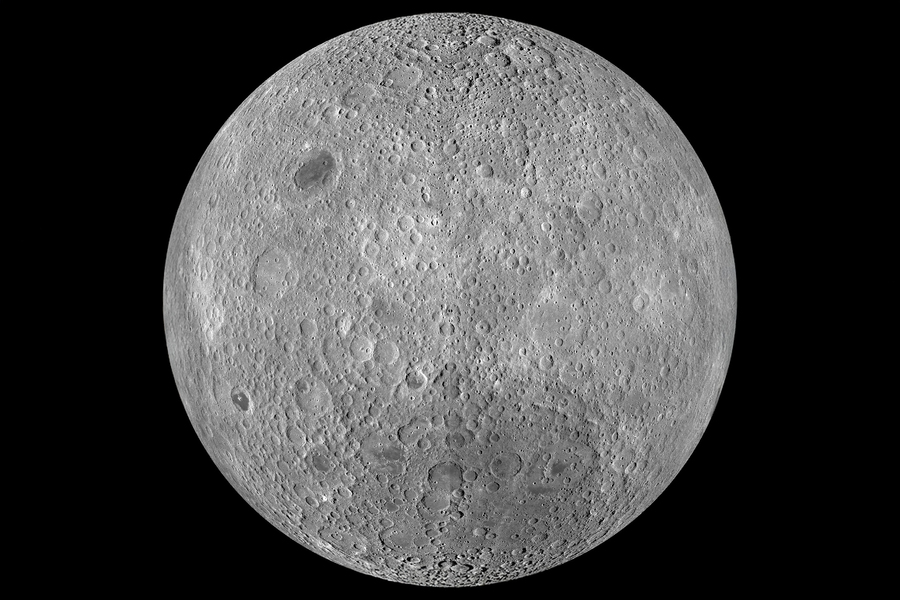
An image of the lunar far side.
Credits:Credit: NASA/GSFC/Arizona State University

Why are some rocks on the moon highly magnetic?

A large impact could have briefly amplified the moon’s weak magnetic field, creating a momentary spike that was recorded in some lunar rocks. Scientists may have solved the mystery of why the moon shows ancient signs of magnetism although it has no magnetic field today. An impact, such as from a large asteroid, could have generated a cloud of ionized particles that briefly enveloped the moon and amplified its weak magnetic field.

Where did the moon’s magnetism go? Scientists have puzzled over this question for decades, ever since orbiting spacecraft picked up signs of a high magnetic field in lunar surface rocks...

Read More

Diamond nanoparticles get a quantum upgrade with shell inspired by TV technology

New biosensor solves old quantum riddle
By encasing a diamond nanoparticle with a specially engineered shell—a technique inspired by QLED televisions—the team created a quantum biosensor ideal for a living cell. Credit: Jason Smith

Putting hypersensitive quantum sensors in a living cell is a promising path for tracking cell growth and diagnosing diseases—even cancers—in their early stages.

Many of the best, most powerful quantum sensors can be created in small bits of diamond, but that leads to a separate issue: It’s hard to stick a diamond in a cell and get it to work.

“All kinds of those processes that you really need to probe on a molecular level, you cannot use something very big. You have to go inside the cell...

Read More

Detecting the primordial black holes that could be today’s dark matter

Detecting the primordial black holes that could be today's dark matter

Besides particles like sterile neutrinos, axions and weakly interacting massive particles (WIMPs), a leading candidate for the cold dark matter of the universe are primordial black holes—black holes created from extremely dense conglomerations of subatomic particles in the first seconds after the Big Bang.

Primordial black holes (PBHs) are classically stable, but as shown by Stephen Hawking in 1975, they can evaporate via quantum effects, radiating nearly like a blackbody. Thus, they have a lifetime; it’s proportional to the cube of their initial mass. As it’s been 13.8 billion years since the Big Bang, only PBHs with an initial mass of a trillion kilograms or more should have survived to today.

However, it has been suggested that the lifetime of a black hole might be consider...

Read More
