






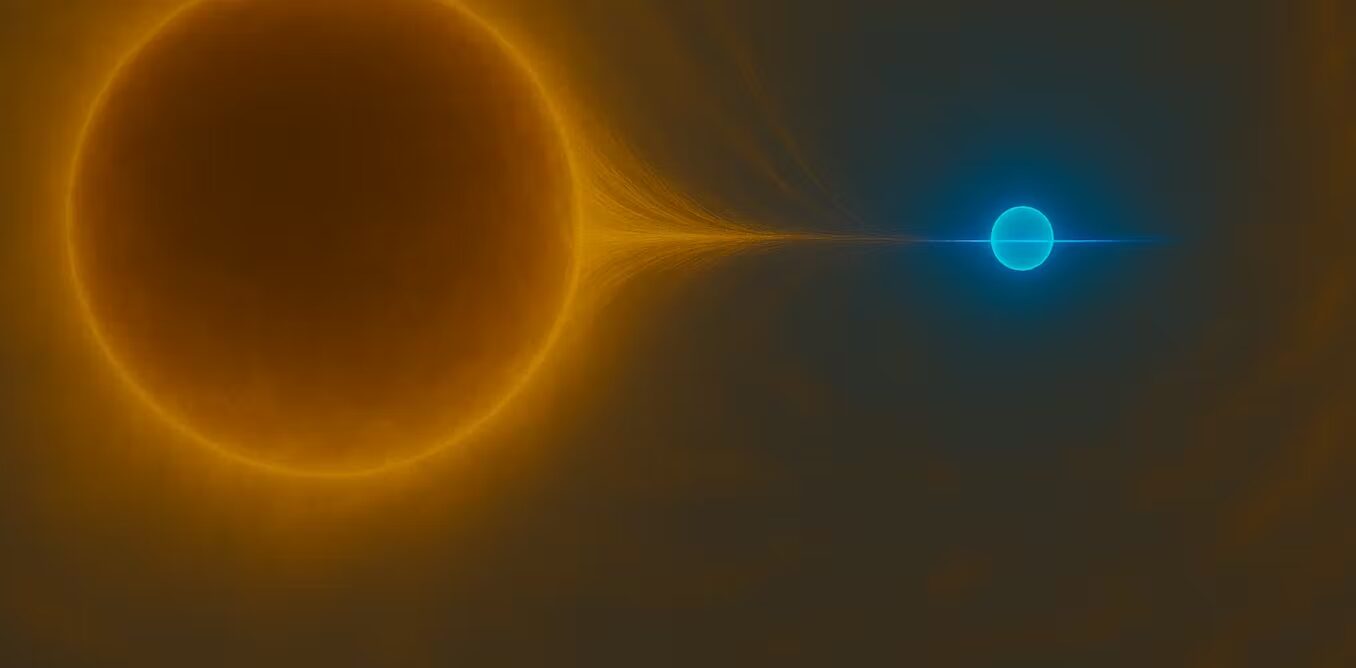
A giant star is changing before our eyes and astronomers are watching in real time

For decades, astronomers have been watching WOH G64, an enormous heavyweight star in the Large Magellanic Cloud, a galaxy visible with the naked eye from the Southern Hemisphere. This star is more than 1,500 times larger than the sun and emitting over 100,000 times more energy. For a long time, red supergiant WOH G64 looked like a star steadily reaching the end of its life, shedding material and swelling in size as it began to run out of fuel.

Astronomers didn’t think its final demise would happen anytime soon, because no one has ever seen a known red supergiant die. But in recent years, astronomers—including our team working with the Southern African Large Telescope (SALT)—discovered that this star has started to change, growing dimmer than before and seemingly warmer...

Read More

Genetic study shows that anxiety disorders have many causes

Genetic study shows: Anxiety disorders have many causes
Manhattan plot of the main ANX GWAS showing 58 GWS loci. Credit: Nature Genetics (2026). DOI: 10.1038/s41588-025-02485-8

About 1 in 4 people suffer from an anxiety disorder at some point in their lives. These include panic disorder with sudden, severe anxiety attacks; generalized anxiety disorder, in which sufferers worry about everyday things over a longer period of time that is difficult to control; and phobias of specific objects or situations. Despite their widespread prevalence, the biological basis of anxiety is still poorly understood.

More light is now being shed on the subject by an international research team that has conducted the largest genetic study on anxiety disorders to date...

Read More

Batteries from rust? Carbon spheres filled with iron oxide deliver high storage capacity

Batteries from rust? Carbon spheres filled with iron oxide deliver high storage capacity
Credit: Chemistry of Materials (2026). DOI: 10.1021/acs.chemmater.5c02442

Conventional lithium-ion batteries contain problematic substances such as nickel and cobalt, and the solvents used to coat the electrode materials are also toxic. Materials scientists at Saarland University are therefore working to develop environmentally friendly alternatives. By introducing finely dispersed iron oxide into tiny, highly porous, hollow carbon spheres developed by Professor Michael Elsaesser at the University of Salzburg, the Saarbrücken team has achieved some very promising results: higher storage capacities using materials that are both readily available and environmentally far less problematic. These results have now been published in Chemistry of Materials.

Anyone who has ever been to Sa...

Read More

Dark matter, not a black hole, could power Milky Way’s heart

'Dark matter, not a black hole, could power Milky Way's heart'
Artistic representation of the Milky Way, where the innermost stars move at near relativistic speeds (defined as velocities that constitute a significant fraction of the speed of light, typically considered to be 10% or more) around a dense core of dark matter, with no black hole at the centre. At greater distances, the halo part of the same invisible dark matter distribution continues to shape the motions of stars in the outskirts of our galaxy, tracing the characteristic rotation curve. Credit: Valentina Crespi et al. License type Attribution (CC BY 4.0)

Our Milky Way galaxy may not have a supermassive black hole at its center but rather an enormous clump of mysterious dark matter exerting the same gravitational influence, astronomers say...

Read More
