






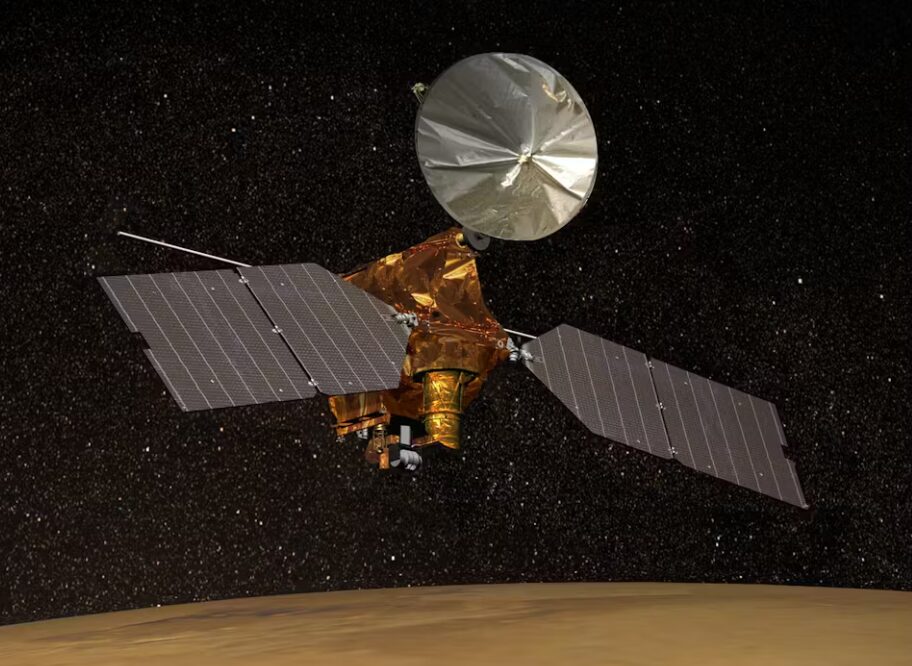
Spacecraft can ‘brake’ in space using drag − advancing craft agility, space safety and planetary missions

When you put your hand out the window of a moving car, you feel a force pushing against you called drag. This force opposes a moving vehicle, and it’s part of the reason why your car naturally slows to a stop if you take your foot off the gas pedal. But drag doesn’t just slow down cars.

Aerospace engineers are working on using the drag force in space to develop more fuel-efficient spacecraft and missions, deorbit spacecraft without creating as much space junk, and even place probes in orbit around other planets.

Space is not a complete vacuum − at least not all of it. Earth’s atmosphere gets thinner with altitude, but it has enough air to impart a force of drag on orbiting spacecraft, even up to about 620 miles (1,000 kilometers).

As an aerospace engineering professor, I st...

Read More
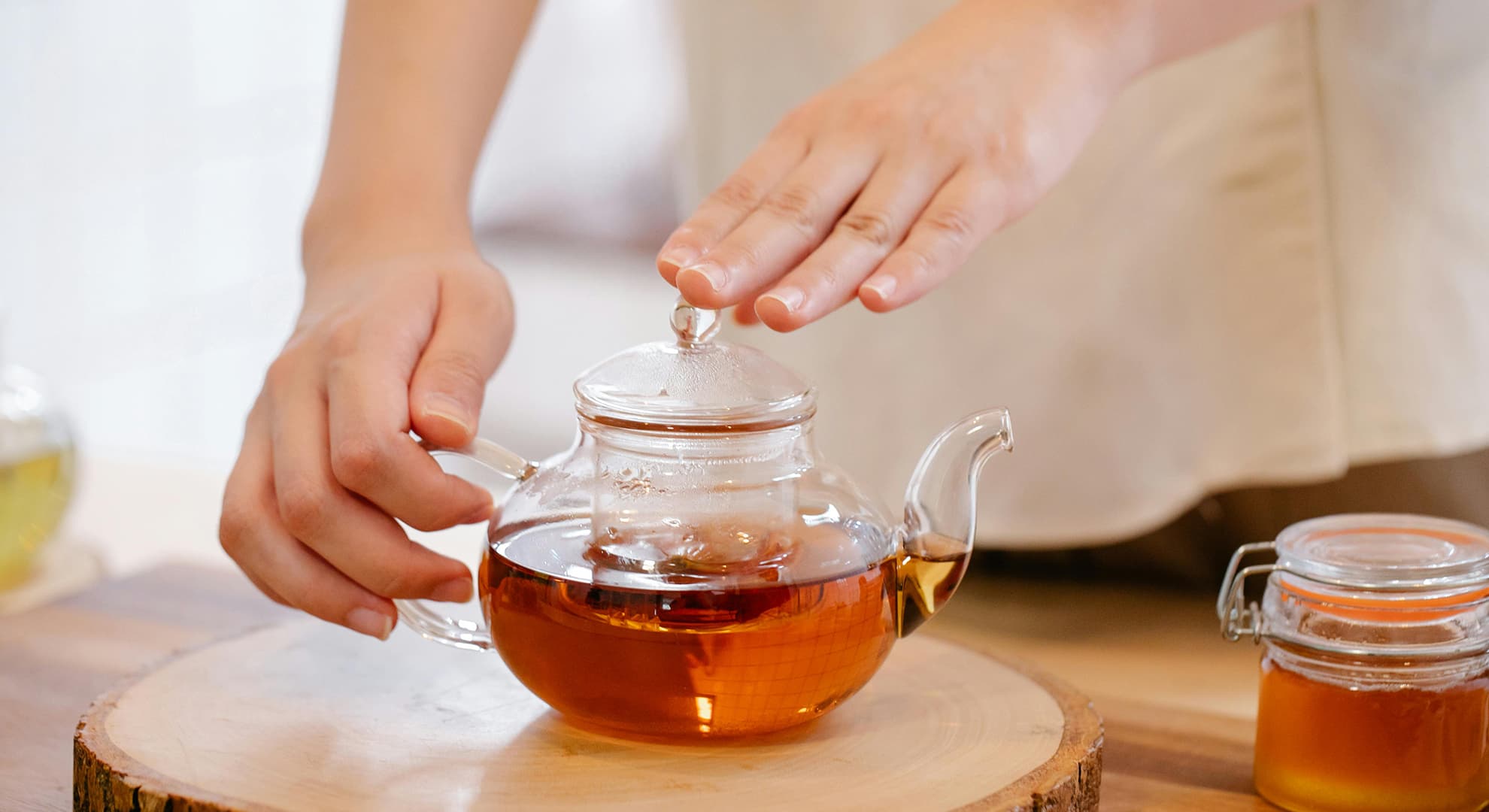

Black tea and berries could contribute to healthier aging

Hand holding a glass teapot with black tea.
People who consume more flavonoids tend to age better.

Higher intakes of black tea, berries, citrus fruits and apples could help to promote healthy ageing, new research has found.

This study conducted by researchers from Edith Cowan University, Queen’s University Belfast and Harvard T.H. Chan School of Public Health, found that foods rich in flavonoids could help to lower the risk of key components of unhealthy ageing, including frailty, impaired physical function and poor mental health.

“The goal of medical research is not just to help people live longer but to ensure they stay healthy for as long as possible,” ECU Adjunct Lecturer Dr Nicola Bondonno said.

“We know from previous research that people who have a higher flavonoid intake tend to live longer, and they are also les...

Read More

Text-to-video AI blossoms with new metamorphic video capabilities

GIF of two vases filled with dandelions blossoming to illustrate text-to-video artificial intelligence advances.
MIGHTY MORPHING: “MagicTime is a step toward AI that can better simulate the physical, chemical, biological, or social properties of the world around us,” says computer science PhD student Jinfa Huang. (University of Rochester GIF created using MagicTime)

Using time-lapse videos as training data, computer scientists have developed video generators that simulate the physical world more accurately. While text-to-video artificial intelligence models like OpenAI’s Sora are rapidly metamorphosing in front of our eyes, they have struggled to produce metamorphic videos. Simulating a tree sprouting or a flower blooming is harder for AI systems than generating other types of videos because it requires the knowledge of the physical world and can vary widely.

But now, these models have ta...

Read More

A snapshot of relativistic motion: Special relativity made visible

[Translate to English:] Visualisierung des Terrell-Penrose-Effekts

In 1959, physicists James Terrell and Roger Penrose (Nobel laureate in 2020) independently concluded that fast-moving objects should appear rotated. However, this effect has never been demonstrated. Now, scientists have succeeded for the first time in reproducing the effect using laser pulses and precision cameras — at an effective speed of light of 2 meters per second.

When an object moves extremely fast — close to the speed of light — certain basic assumptions that we take for granted no longer apply. This is the central consequence of Albert Einstein’s special theory of relativity. The object then has a different length than when it is at rest, and time passes differently for the object than it does in the laboratory. All this has been repeatedly confirmed in experiments.

How...

Read More
