






Astronomers Find Far-flung “Super Earths” Are Not Farfetched

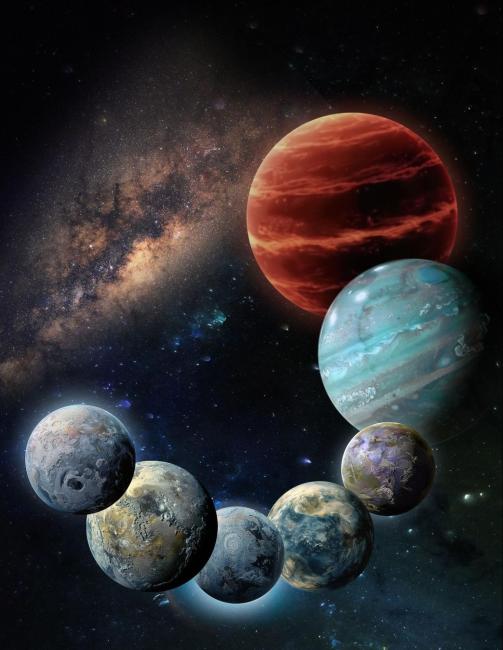
This artist's concept illustrates the results of a new study that measured the masses of many planets relative to the stars that host them
Caption: This artist’s concept illustrates the results of a new study that measured the masses of many planets relative to the stars that host them, leading to new information about populations of planets in the direction of the bulge of the Milky Way. This study, published in the journal Science, shows that super-Earths are common and places them in context with gas giant planets.

Credit: Westlake University

A new study shows that planets bigger than Earth and smaller than Neptune are common outside the Solar System.

An international team including astronomers from the Center for Astrophysics | Harvard & Smithsonian (CfA) has announced the discovery of a planet about twice the size of Earth orbiting its star farther out than Saturn is to the sun.

These results are another examp...

Read More

B cells found to be crucial for long-term vaccine protection, new study shows

Photo of a man getting a vaccine

The new findings could help improve vaccine effectiveness in some immunocompromised patients. Researchers at the University of Colorado Anschutz Medical Campus have uncovered a critical, previously underappreciated role for B cells in vaccine protection. Best known for producing antibodies, B cells also guide other immune cells, specifically CD8 T cells, teaching them how to mount lasting defenses after vaccination.

The study was recently published in The Journal of Clinical Investigation.

“Think of CD8 T cells as rookie firefighters,” said lead author Jared Klarquist, PhD, assistant research professor of immunology and microbiology at the University of Colorado School of Medicine. “B cells teach the class on pacing. Without them, the rookies rush in, fight hard, and quit...

Read More

Material? Robot? It’s a metabot

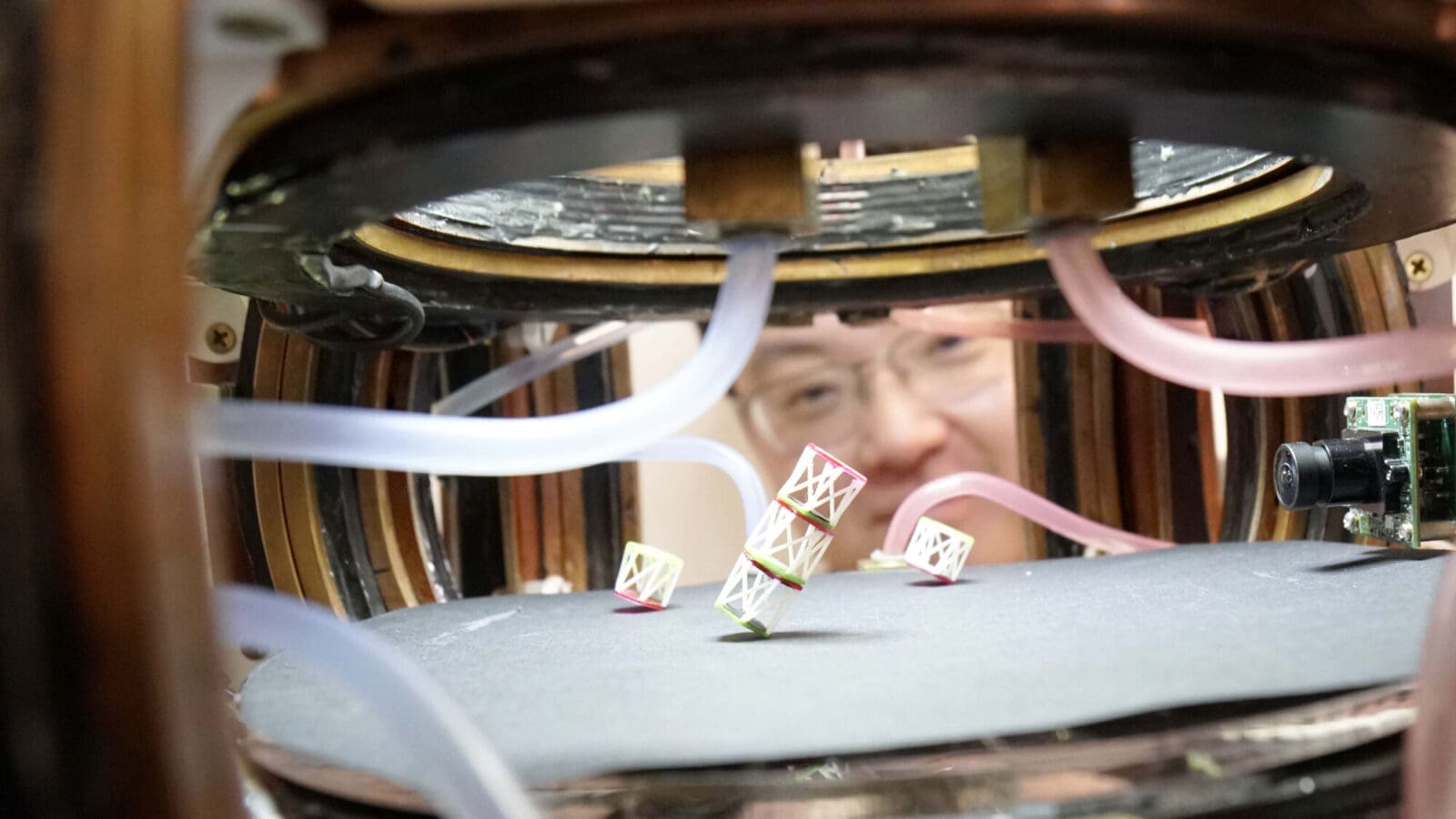
A researcher observes a metabot inside a magnetic chamber

In an experiment reminiscent of the Transformers movie franchise, engineers at Princeton University have created a type of material that can expand, assume new shapes, move and follow electromagnetic commands like a remotely controlled robot even though it lacks any motor or internal gears.

“You can transform between a material and a robot, and it is controllable with an external magnetic field,” said researcher Glaucio Paulino, the Margareta Engman Augustine Professor of Engineering at Princeton.

In an article published April 23 in the journal Nature, the researchers describe how they drew inspiration from the folding art of origami to create a structure that blurs the lines between robotics and materials...

Read More

Innovative approaches advance search for ice on the moon

An artist rendering of what a future cosmic ray radar instrument could look like, attached to a satellite orbiting the Moon. Credit: Christian Miki, Department of Physics, UH Manoa.

Scientists and space explorers have been on the hunt to determine where and how much ice is present on the Moon. Water ice would be an important resource at a future lunar base, as it could be used to support humans or be broken down to hydrogen and oxygen, key components of rocket fuel. University of Hawai’i at Manoa researchers are using two innovative approaches to advance the search for ice on the Moon.

ShadowCam scouts for surface ice

Water ice was previously detected in the permanently shaded regions of the Moon’s north and south poles by Shuai Li, assistant researcher at the Hawai’i Institute o...

Read More
