






A protective immune system cell disappears from a key form of fat, but only in those who are obese

A protective immune system cell disappears from a key form of fat, but only in those who are obese
Loss of Srebf2 alters VAT Treg subset composition. Credit: Science Immunology (2025). DOI: 10.1126/sciimmunol.adl4909

The mammalian immune system is an evolutionary wonder. It’s capable of recognizing and destroying cancer cells, and it can deploy armies of antibodies against viruses, bacteria, parasites and fungi.

Among the lesser-spotlighted roles of the immune system is how a particular T cell helps maintain homeostasis—fostering a balanced and stable metabolic environment—in fat cells. It’s a role that has captured the investigatory eye of an elite team of immunologists.

Having a stronger understanding of the dynamic metabolic activities and signaling pathways in fat tissue can aid new strategies to treat obesity, a major global health concern...

Read More
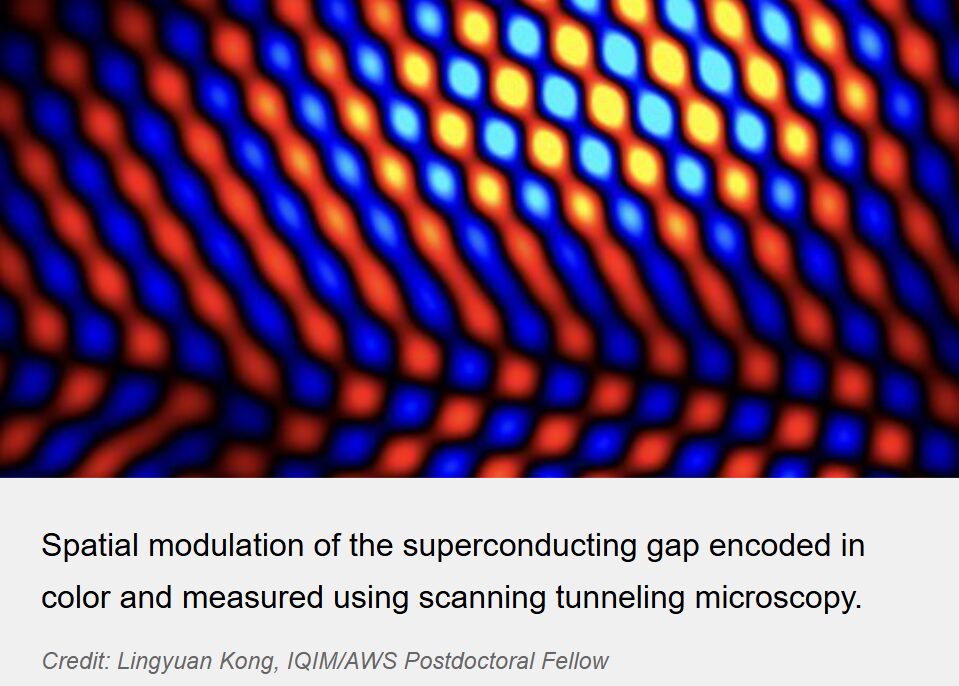
New superconducting state discovered: Cooper-pair density modulation

Superconductivity is a quantum physical state in which a metal is able to conduct electricity perfectly without any resistance. In its most familiar application, it enables powerful magnets in MRI machines to create the magnetic fields that allow doctors to see inside our bodies. Thus far, materials can only achieve superconductivity at extremely low temperatures, near absolute zero (a few tens of Kelvin or colder).

But physicists dream of superconductive materials that might one day operate at room temperature. Such materials could open entirely new possibilities in areas such as quantum computing, the energy sector, and medical technologies.

“Understanding the mechanisms leading to the formation of superconductivity and discovering exotic new superconducting phases is not only...

Read More

Scalable nanotechnology-based lightsails developed for next-generation space exploration

Researchers at TU Delft and Brown University have developed scalable nanotechnology-based lightsails that could support future advances in space exploration and experimental physics. Their research, published in Nature Communications, introduces new materials and production methods to create the thinnest large-scale reflectors ever made.

Lightsails are ultra-thin, reflective structures that use laser-driven radiation pressure to propel spacecraft at high speeds. Unlike conventional nanotechnology, which miniaturizes devices in all dimensions, lightsails follow a different approach. They are nanoscale in thickness—about 1/1000th the thickness of a human hair—but can extend to sheets with large dimensions.

Fabricating a lightsail as envisioned for the Breakthrough Starshot Ini...

Read More

A safe nuclear battery that could last a lifetime

A safe nuclear battery that could last a lifetime
A small dye-sensitized betavoltaic cell has radiocarbon on both the cathode and anode, which increases its energy-conversion efficiency. Credit: Su-Il In

Sometimes cell phones die sooner than expected or electric vehicles don’t have enough charge to reach their destination. The rechargeable lithium-ion (Li-ion) batteries in these and other devices typically last hours or days between charging. However, with repeated use, batteries degrade and need to be recharged more frequently.

Now, researchers are considering radiocarbon as a source for safe, small and affordable nuclear batteries that could last decades or longer without charging.

Su-il In, a professor at Daegu Gyeongbuk Institute of Science & Technology, presents his results at the spring meeting of the American Chemical Soc...

Read More
