






Soft robotic hand ‘sees’ around corners to achieve human-like touch

A soft robotic hand designed to achieve human-like touch
Illustration comparing the FlexiRay sensor with human hand perception modalities and its application scenarios. It introduces the design inspiration, working principle, and layered structure. Credit: Nature Communications (2025). DOI: 10.1038/s41467-025-67148-y.

To reliably complete household chores, assemble products and tackle other manual tasks, robots should be able to adapt their manipulation strategies based on the objects they are working with, similarly to how humans leverage information they gain via the sense of touch. While humans attain tactile information via nerves in their skin and muscles, robots rely on sensors, devices that sense their surroundings and pick up specific physical signals.

Most robotic hands and grippers developed so far rely on visual-tactile senso...

Read More
Experiments bring Enceladus’ subsurface ocean into the lab

Experiments bring Enceladus' subsurface ocean into the lab
Plumes erupt from Enceladus’ southern polar regions. Credit: NASA/JPL-Caltech

Through new experiments, researchers in Japan and Germany have recreated the chemical conditions found in the subsurface ocean of Saturn’s moon, Enceladus. Published in Icarus, the results show that these conditions can readily produce many of the organic compounds observed by the Cassini mission, strengthening evidence that the distant world could harbor the molecular building blocks of life.

Beneath its thick outer shell of ice, astronomers widely predict that Saturn’s sixth largest moon hosts an ocean of liquid water in its south polar region...

Read More

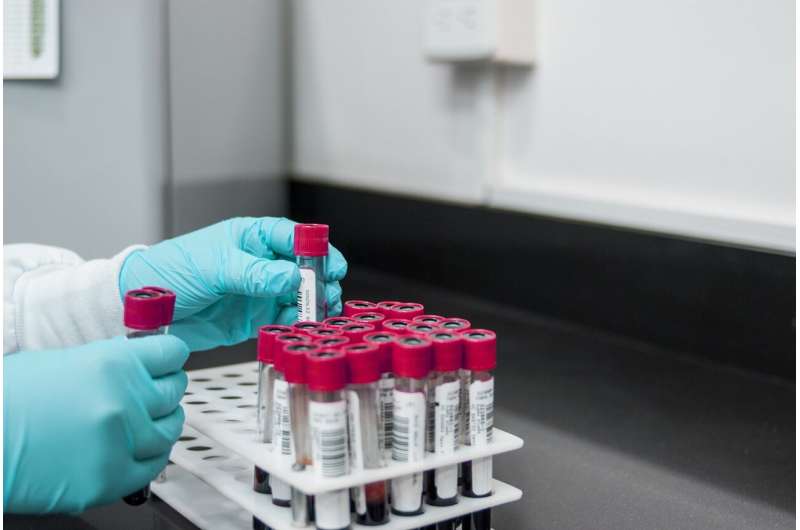
A simple blood test could change how Alzheimer’s is diagnosed

blood test
Credit: Pixabay/CC0 Public Domain

A blood test, combined with an ultrathin material derived from graphite, could significantly advance efforts to detect Alzheimer’s disease at its very earliest stage, even before symptoms appear.

Alzheimer’s disease is the most common form of dementia. For millions of Europeans—and the health services that care for them—it is a ticking time bomb, with still no cure. But EU researchers are developing a simple tool to enable much earlier detection, potentially decades before symptoms appear.

Early detection matters because treatment is most effective when started as soon as possible. This gives people a better chance to slow the progression of the disease and plan for the future...

Read More

New memristor training method slashes AI energy use by six orders of magnitude

New memristor training method slashes AI energy use by six orders of magnitude
The implementation of SRNet ×2 on memristor hardware. Credit: Nature Communications (2025). DOI: 10.1038/s41467-025-66240-7

In a Nature Communications study, researchers from China have developed an error-aware probabilistic update (EaPU) method that aligns memristor hardware’s noisy updates with neural network training, slashing energy use by nearly six orders of magnitude versus GPUs while boosting accuracy on vision tasks. The study validates EaPU on 180 nm memristor arrays and large-scale simulations.

Analog in-memory computing with memristors promises to overcome digital chips’ energy bottlenecks by performing matrix operations via physical laws. Memristors are devices that combine memory and processing like brain synapses.

Inference on these systems works well, as shown ...

Read More
