






New evidence suggests Einstein’s cosmic constant may be wrong

Dark energy may be evolving—hinting that the universe’s ultimate destiny could be far stranger than we ever imagined. Astronomers are rethinking one of cosmology’s biggest mysteries: dark energy. New findings show that evolving dark energy models, tied to ultra-light axion particles, may better fit the universe’s expansion history than Einstein’s constant model. The results suggest dark energy’s density could be slowly declining, altering the fate of the cosmos and fueling excitement that we may be witnessing the universe’s next great revelation.

Dark energy, the mysterious force thought to drive the universe’s accelerating expansion, remains one of the deepest puzzles in modern physics...

Read More
Reactivating a fetal gene enables adult heart cells to regenerate after injury

Researchers reactivate a gene found to repair heart injury, offering hope for new therapies
Translational roadmap and mechanistic model of CCNA2 gene therapy for cardiac regeneration. Credit: npj Regenerative Medicine (2025). DOI: 10.1038/s41536-025-00438-7

Around the globe, heart disease remains one of the top causes of death. Once patients begin to suffer from serious heart problems, like heart attacks and heart failure, the heart muscles become damaged and are difficult to treat and repair. Although many therapies have been developed to treat symptoms, full recovery to a pre-disease state has been essentially impossible. This is due to a lack of regeneration ability in adult human heart cells. Studies using stem cells or progenitor cells for repair have demonstrated limited efficacy in clinical trials, thus far.

However, there may be new hope for these patients...

Read More

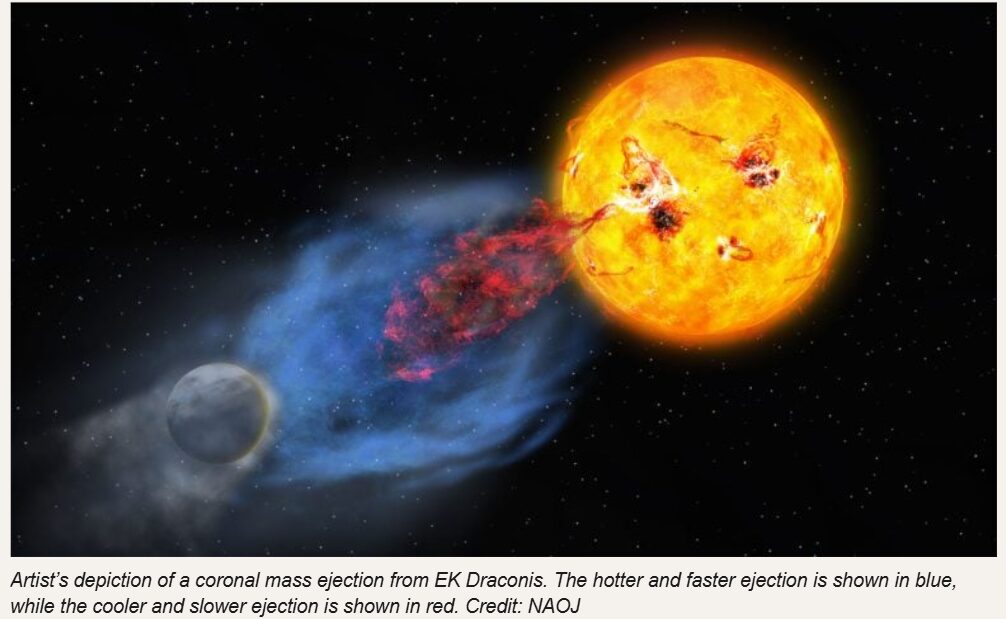
First Glimpse of a “Young Sun” Super-Eruption Captured by Astronomers

A young Sun’s violent plasma eruptions may have helped ignite the spark of life on Earth. Astronomers observed a massive, multi-temperature plasma eruption from a young Sun-like star, revealing how early solar explosions could shape planets. These fierce events may have influenced the atmosphere and life-forming chemistry of the early Earth.

Although we rarely notice from Earth, the Sun is continuously hurling enormous clouds of charged plasma into space. These events, known as coronal mass ejections (CMEs), often occur alongside sudden bursts of light called solar flares. When particularly strong, CMEs can stretch far enough to disturb Earth’s magnetic field, producing dazzling auroras and sometimes triggering geomagnetic storms that disrupt satellites or even power grids.

Sc...

Read More

A scalpel that can diagnose? Scientists unveil a ‘Lab-on-a-Scalpel’ for real-time surgical insights

A Scalpel That Can Diagnose? Scientists Unveil a 'Lab-on-a-Scalpel' for Real-Time Surgical Insights
Lab-on-a-Scalpel. Credit: Analytical Chemistry (2025). DOI: 10.1021/acs.analchem.5c00599

Imagine a surgeon in the middle of a complex operation, able to get instant biochemical feedback not from a lab down the hall, but from the very tool in their hand. This vision is now one step closer to reality thanks to researchers at the University of Chemistry and Technology, Prague (UCT Prague).

The team, led by Professor Zdeněk Sofer, has developed and validated a “Lab-on-a-Scalpel” concept, a surgical tool with an integrated diagnostic sensor. They published their findings in the journal Analytical Chemistry.

This innovation addresses a critical challenge in surgery: the time lag between sample collection and lab results...

Read More
