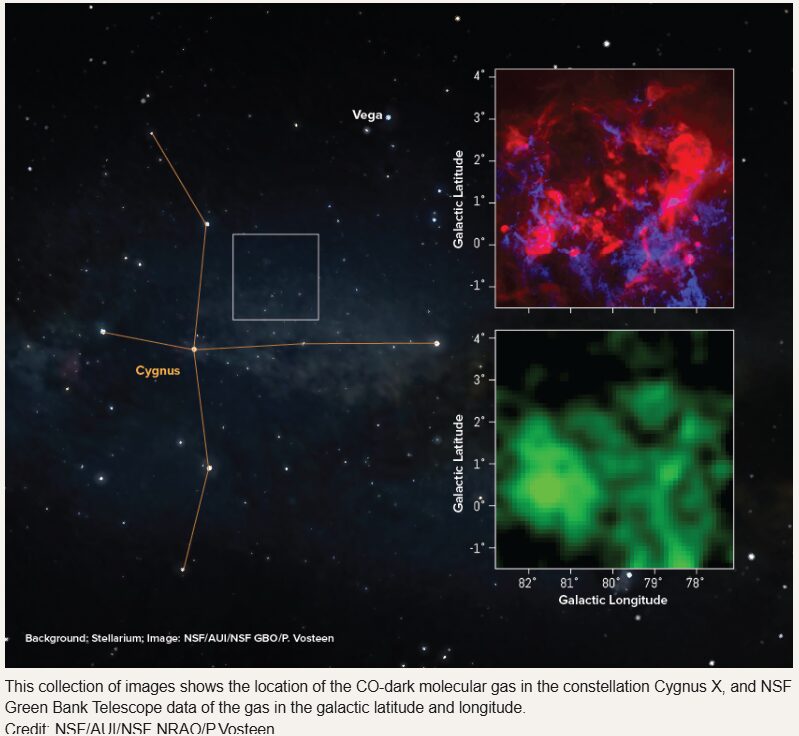
Astronomers expose CO-dark molecular gas, previously invisible to telescopes

An international team of astronomers has created the first-ever large-scale maps of a mysterious form of matter, known as CO-dark molecular gas, in one of our Milky Way’s most active star-forming neighborhoods, CygnusX. Their findings, using the Green Bank Telescope (GBT), are providing crucial new clues about how stars formed in the Milky Way.

For decades, scientists have known that most new stars are born inside clouds of cold molecular hydrogen gas. Much of this molecular hydrogen is invisible to most telescopes—it doesn’t give off light that can easily be detected.

Traditionally, astronomers have hunted for these clouds by looking for carbon monoxide (CO), a molecule that acts like a flashing sign for star-building regions...

Read More

Gum disease associated with changes in the brain, increased stroke risk

dental health
Credit: Pixabay/CC0 Public Domain

Adults with gum disease may be more likely to have signs of damage to the brain’s white matter, called white matter hyperintensities, than people without gum disease, according to a study published in Neurology Open Access.

White matter refers to nerve fibers that help different parts of the brain communicate. Damage to this tissue can affect memory, thinking, balance and coordination and has been linked to higher stroke risk.

White matter hyperintensities are bright spots that appear on brain scans that are thought to reflect damaged white matter tissue. While the study found an association, it does not prove that gum disease causes white matter damage.

“This study shows a link between gum disease and white matter hyperintensities, suggesting...

Read More

Physicists discover strange spinning crystals that behave like living matter

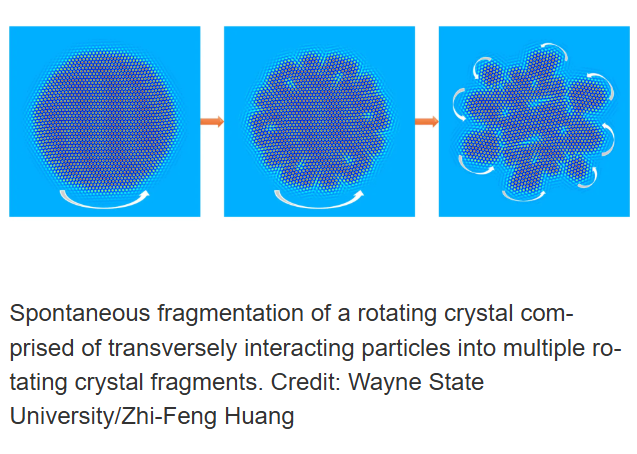
Spinning crystals that twist, shatter, and rebuild themselves may hold the key to next-generation materials.. Physicists have uncovered the fascinating world of “rotating crystals” — solids made of spinning particles that behave in strange, almost living ways. These odd materials can twist instead of stretch, shatter into fragments, and even reassemble themselves.

It may sound unbelievable, but crystals made of rotating particles are real. A group of physicists from Aachen, Düsseldorf, Mainz, and Wayne State University (Detroit, USA) has explored these unusual materials and their remarkable behavior. These crystals can easily split into separate fragments, form unusual grain boundaries, and display controllable structural defects...

Read More

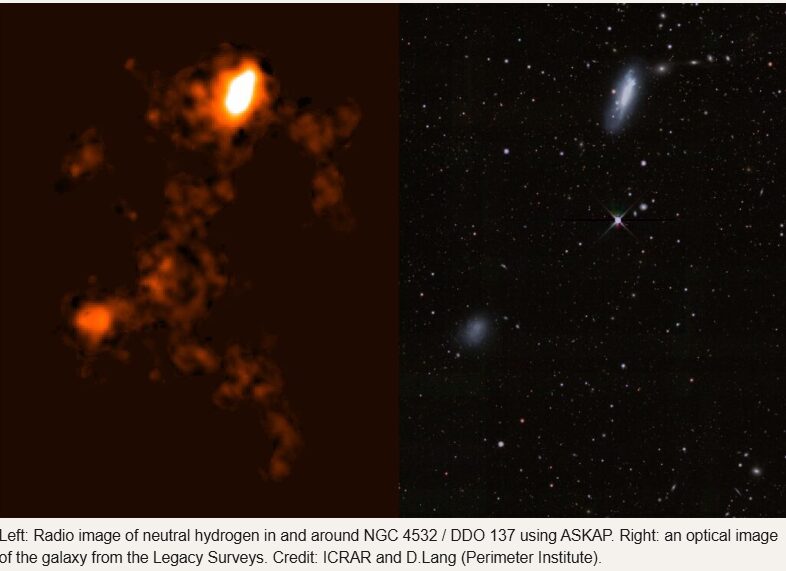
Astronomers discover a gigantic bridge of gas connecting two galaxies

Astronomers have made a groundbreaking discovery of a colossal bridge of neutral hydrogen gas linking two dwarf galaxies. Scientists at The University of Western Australia’s node of the International Centre for Radio Astronomy Research (ICRAR) have made a remarkable discovery: a massive structure stretching about 185,000 light-years between two galaxies, NGC 4532 and DDO 137, located some 53 million light-years from Earth.

According to a study published in the Monthly Notices of the Royal Astronomical Society, the team also detected a huge tail of gas extending another 1.6 million light-years beyond the bridge, making it the largest feature of its kind ever recorded.

Lead researcher Professor Lister Staveley-Smith from ICRAR UWA explained that the finding provides an important n...

Read More