






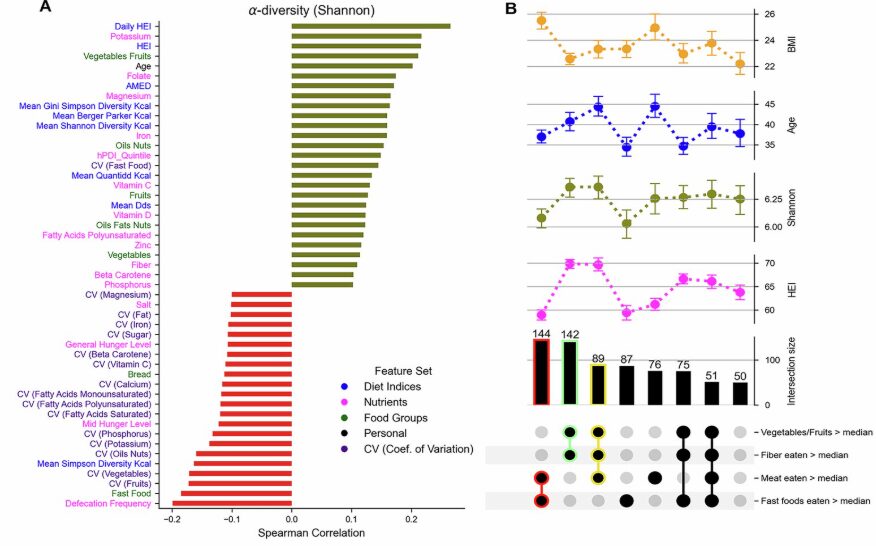
AI nutrition study finds ‘five everyday’ may keep the doctor away

Alpha diversity comparison across physiological and dietary factors and demographic differences with respect to subsets of individuals differing by their median nutritional intake (g/day). Credit: Nature Communications (2025). DOI: 10.1038/s41467-025-63799-z

In a new study using AI and machine learning, EPFL researchers have found that it’s not only what we eat, but how consistently we eat it that plays a crucial role in gut health.

The gut microbiota is the community of microorganisms, including bacteria, viruses, fungi and other microbes, that lives in our digestive systems—some of these microbes are helpful and others can be harmful.

Many previous studies have shown that what we eat has an impact on our gut microbiota...

Read More
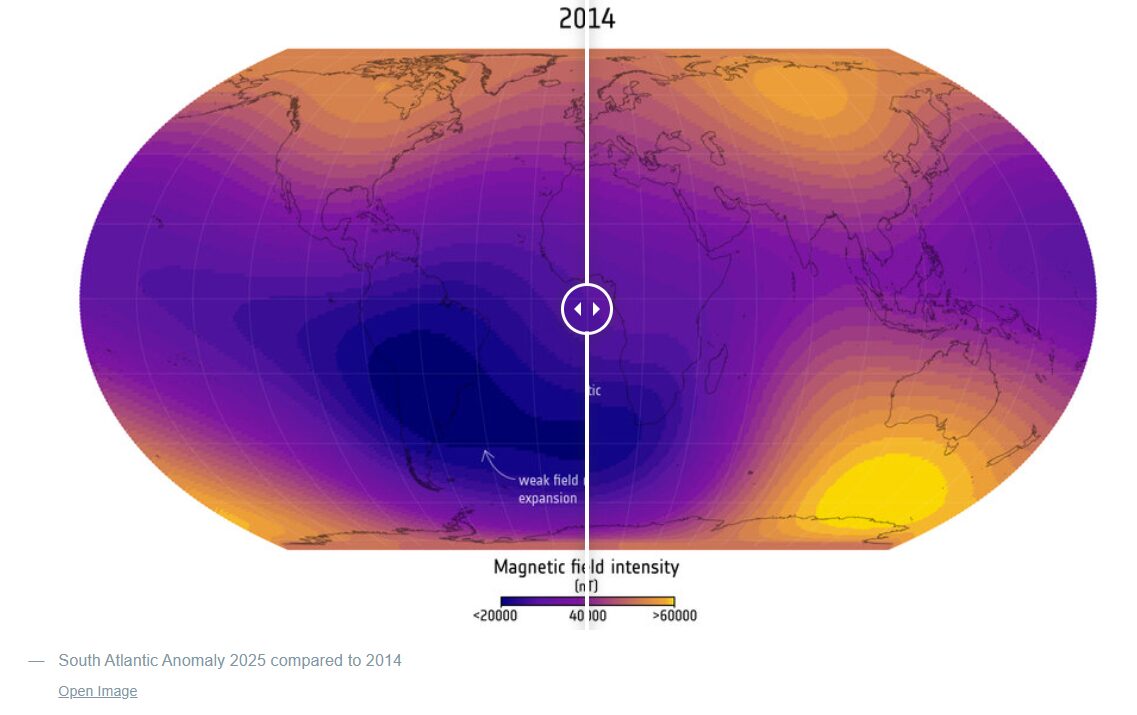
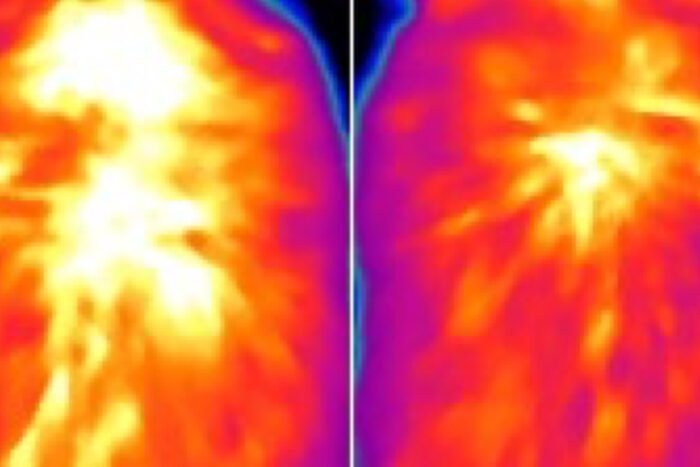
Swarm reveals growing weakspot in Earth’s magnetic field

Using 11 years of magnetic field measurements from the European Space Agency’s Swarm satellite constellation, scientists have discovered that the weak region in Earth’s magnetic field over the South Atlantic—known as the South Atlantic Anomaly—has expanded by an area nearly half the size of continental Europe since 2014.

Earth’s magnetic field is vital to life on our planet. It is a complex and dynamic force that protects us from cosmic radiation and charged particles from the sun.

It is largely generated by a global ocean of molten, swirling liquid iron that makes up the outer core around 3000 km beneath our feet...

Read More

A hidden “backup heater” that helps burn fat and boost metabolism

Weisensee Lab

Scientists at Washington University School of Medicine in St. Louis have uncovered a new way that brown fat, a type of fat that burns energy, can boost the body’s metabolism. This process allows cells to consume more fuel and generate heat, improving overall metabolic health. Conducted in mice, the research points to new possibilities for using brown fat to address metabolic conditions such as insulin resistance and obesity.

The findings were published Sept. 17 in Nature.

Brown fat is unique because it turns energy (calories) from food into heat. Unlike white fat, which stores energy, or muscle, which uses it immediately, brown fat helps keep the body warm in cold environments...

Read More

Biohybrid leaf mimics photosynthesis to turn CO₂ and sunlight into useful chemicals

Solar-powered method lights the way to a 'de-fossilized' chemical industry
Semi-artificial organic photocathode (Front view). Credit: Celine Yeung

Researchers have demonstrated a new and sustainable way to make the chemicals that are the basis of thousands of products—from plastics to cosmetics—we use every day.

Hundreds of thousands of chemicals are manufactured by the chemical industry, which transforms raw materials—usually fossil fuels—into useful end products. Due to its size and its use of fossil fuel feedstocks, the chemical industry is responsible for roughly 6% of global carbon emissions.

But researchers led by the University of Cambridge are developing new methods that could one day lead to the “de-fossilization” of this important sector.

They have developed a hybrid device that combines light-harvesting organic polymers with bacter...

Read More
