Black holes might hold the key to a 60-year cosmic mystery

Could black holes help explain high-energy cosmic radiation?

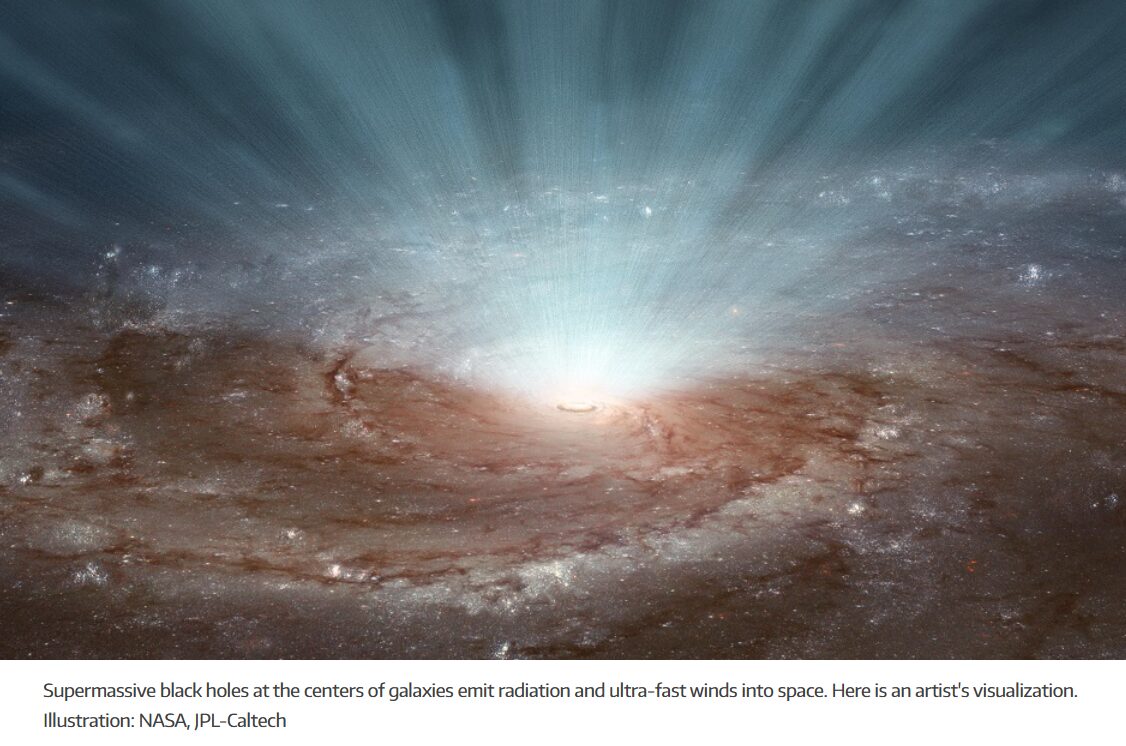
Scientists may have finally uncovered the mystery behind ultra-high-energy cosmic rays — the most powerful particles known in the universe. A team from NTNU suggests that colossal winds from supermassive black holes could be accelerating these particles to unimaginable speeds. These winds, moving at half the speed of light, might not only shape entire galaxies but also fling atomic nuclei across the cosmos with incredible energy.

The universe is full of different types of radiation and particles that can be observed here on Earth. This includes photons across the entire range of the electromagnetic spectrum, from the lowest radio frequencies all the way to the highest-energy gamma rays...

Read More
Novel antibiotic targets IBD—and AI predicted how it would work before scientists could prove it

Two researchers pose in a university laboratory.
McMaster graduate student Denise Catacutan (left) and assistant professor Jon Stokes (right) have discovered a new antibiotic — and they leveraged cutting-edge AI to determine how it works.

Researchers at McMaster University and the Massachusetts Institute of Technology (MIT) have made two scientific breakthroughs at once: they not only discovered a brand-new antibiotic that targets inflammatory bowel diseases (IBD), but also successfully used a new type of AI to predict exactly how the drug works. To their knowledge, this is a global first for the AI.

Detailed in the journal Nature Microbiology, the discovery unveils a promising new treatment option for millions of people affected by Crohn’s disease and other related conditions, while also showcasing important new applications fo...

Read More

Solar energy is now the world’s cheapest source of power, study finds

energy
Credit: Unsplash/CC0 Public Domain

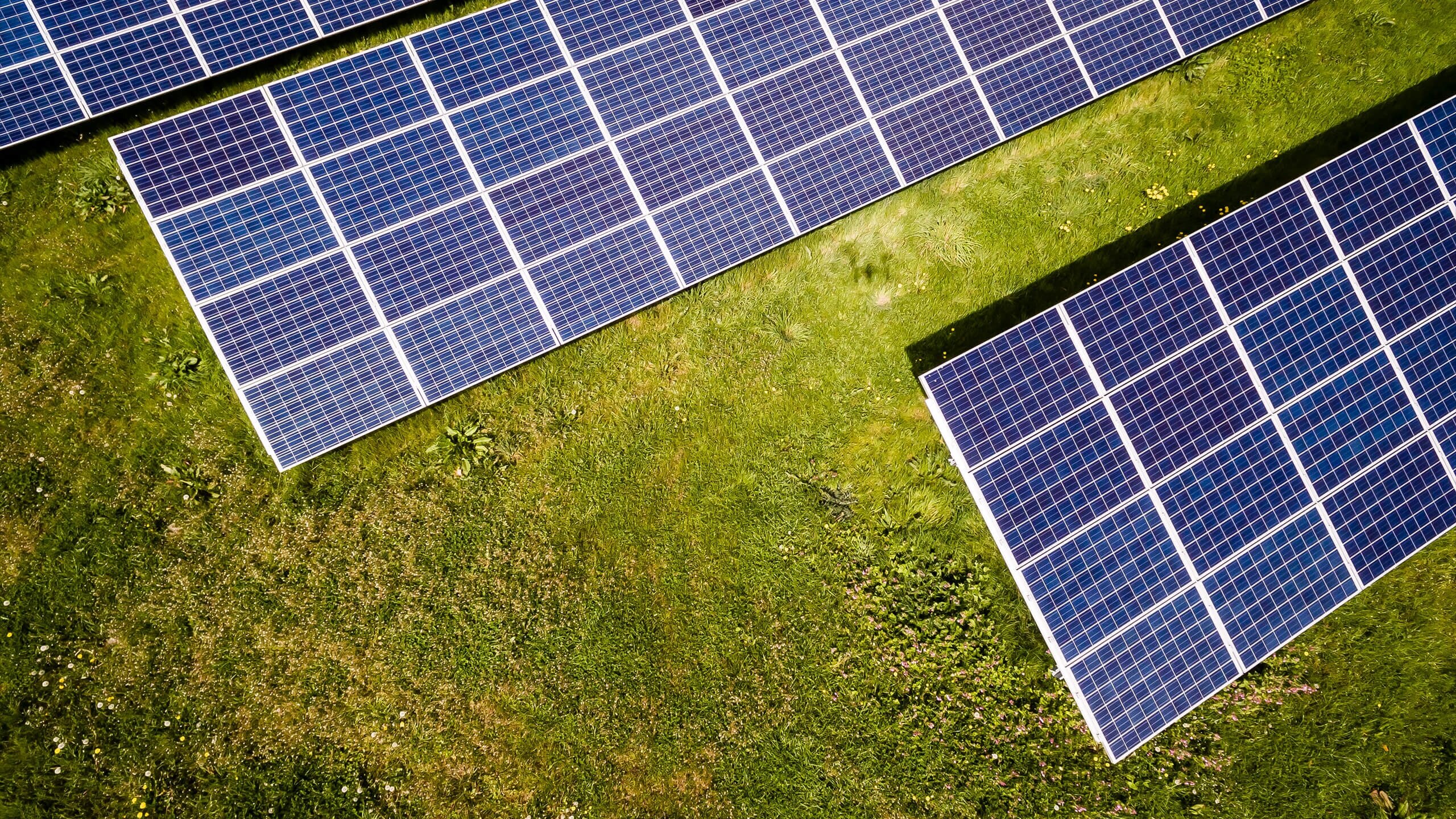
Solar energy is now so cost-effective that, in the sunniest countries, it costs as little as £0.02 to produce one unit of power, making it cheaper than electricity generated from coal, gas or wind, according to a new study from the University of Surrey.

In a study accepted for publication in Energy and Environment Materials, researchers from Surrey’s Advanced Technology Institute (ATI) argue that solar photovoltaic (PV) technology is now the key driver of the world’s transition to clean, renewable power.

Professor Ravi Silva, co-author of the study and Director of the ATI at the University of Surrey, said, “Even here in the U.K., a country that sits 50 degrees north of the equator, solar is the cheapest option for large-scale energy generation.

Read More

VERITAS observations explore a unique microquasar

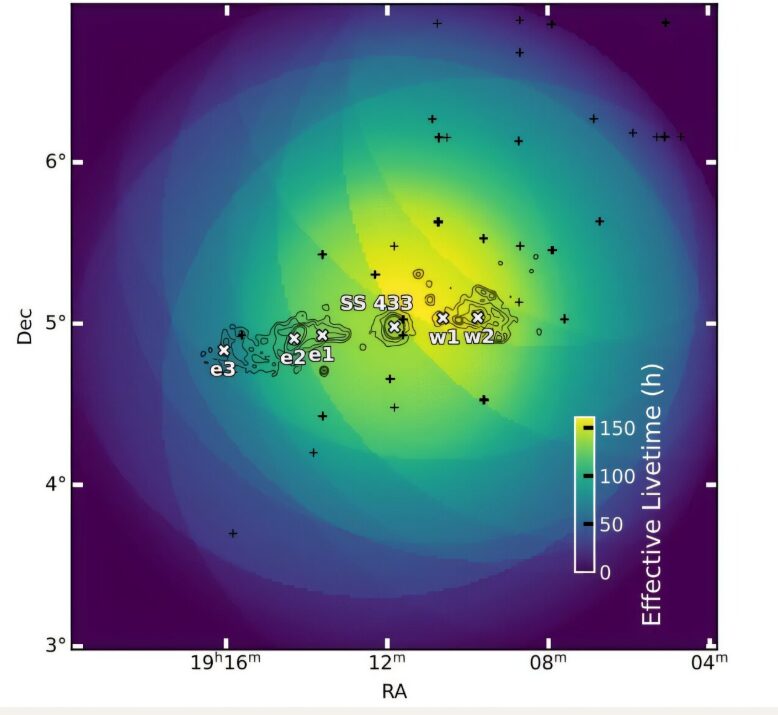
SS 433 region acceptance corrected livetime map: Computed by dividing the exposure map by the VERITAS on axis effective area evaluated at an energy of 1 TeV. The map is overlaid by black X-ray contours. The VERITAS observation pointings are indicated by black markers and SS 433, the eastern and western jet emission regions are indicated by white crosses. Credit: arXiv (2025). DOI: 10.48550/arxiv.2509.21063

Using the Very Energetic Radiation Imaging Telescope Array System (VERITAS), German astronomers have observed a unique microquasar known as SS 433. Results of the observational campaign, published Sept. 25 on the arXiv pre-print server, could help us better understand the nature and behavior of this peculiar object.

Quasars, or quasi-stellar objects (QSOs), are active galactic n...

Read More