Astronomers pinpoint the location of the brightest fast radio burst to date

Artist’s rendition of CHIME/FRB and its Outriggers localizing FRB 20250316A/ RBFLOAT.
Artist’s rendition of CHIME/FRB and its Outriggers localizing FRB 20250316A/ RBFLOAT. Inset: The host galaxy (NGC 4141) as imaged by MMT Observatory (PI: Yuxin (Vic) Dong), illustrating the location of the FRB within a spiral arm of NGC 4141.Photo credit: Daniëlle Futselaar/MMT Observatory.

An international collaboration of astronomers, including researchers from the University of Toronto, have detected the brightest Fast Radio Burst (FRB) to date—and have been able to pinpoint its location in a nearby galaxy by using a network of radio telescopes.

FRBs are extremely energetic flashes from distant sources from across the universe that are caused by extreme astrophysical phenomena...

Read More
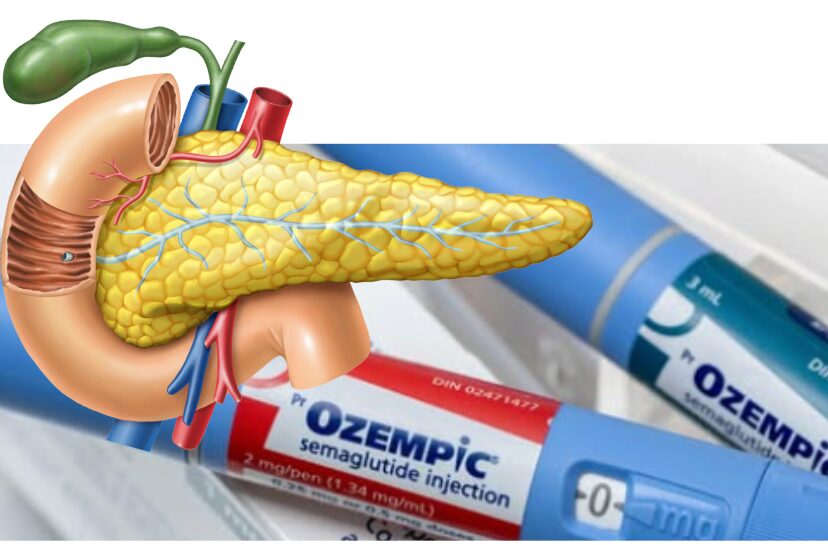
Your pancreas may be making its own version of Ozempic

Alpha cells in the pancreas can produce GLP1, not just glucagon, offering a surprising backup system for blood sugar control.

Duke University scientists have discovered that pancreatic alpha cells, long believed to only produce glucagon, actually generate powerful amounts of GLP-1 — the same hormone mimicked by popular diabetes drugs like semaglutide (Ozempic and Wegovy). Even more surprisingly, when glucagon production is blocked, alpha cells “switch gears” and boost GLP-1 output, enhancing insulin release and blood sugar control.

A new study from Duke University School of Medicine is challenging long-standing views on blood sugar regulation — and pointing to a surprising new ally in the fight against type 2 diabetes.

Published Sept...

Read More

Chandra finds black hole that’s growing at 2.4 times the Eddington limit

An artist's concept of a supermassive black hole, a surrounding disk of material falling towards the black hole and a jet containing particles moving away at close to the speed of light. This black hole represents a recently-discovered quasar powered by a black hole. New Chandra observations indicate that the black hole is growing at a rate that exceeds the usual limit for black holes, called the Eddington Limit. Credit: NASA/CXC/SAO/M. Weiss
An artist’s concept of a supermassive black hole, a surrounding disk of material falling towards the black hole and a jet containing particles moving away at close to the speed of light. This black hole represents a recently-discovered quasar powered by a black hole. New Chandra observations indicate that the black hole is growing at a rate that exceeds the usual limit for black holes, called the Eddington Limit. Credit: NASA/CXC/SAO/M. Weiss
X-ray: NASA/CXC/INAF-Brera/L. Ighina et al.; Illustration: NASA/CXC/SAO/M. Weiss; Image Processing: NASA/CXC/SAO/N. Wolk

A black hole is growing at one of the fastest rates ever recorded, according to a team of astronomers...

Read More

Inhaling cannabis may greatly increase your risk of getting asthma

smoking weed
Credit: Unsplash/CC0 Public Domain

If you’re looking to reduce your chances of developing lung disease, say experts at UC San Francisco, then it may be smart to avoid inhaling cannabis.

A new study in the Journal of General Internal Medicine found that inhaling marijuana every day is associated with a 44% increased chance of developing asthma. It also increased the odds of developing chronic obstructive pulmonary disease (COPD) by 27%.

The COPD risk may be understated, since the disease takes decades to develop, and the researchers did not have detailed information on how long people in the study had been using cannabis.

In defining the concept of inhaling, the researchers included smoking, vaping, and so-called “dabbing,” which involves breathing in the vapors of concentrated...

Read More