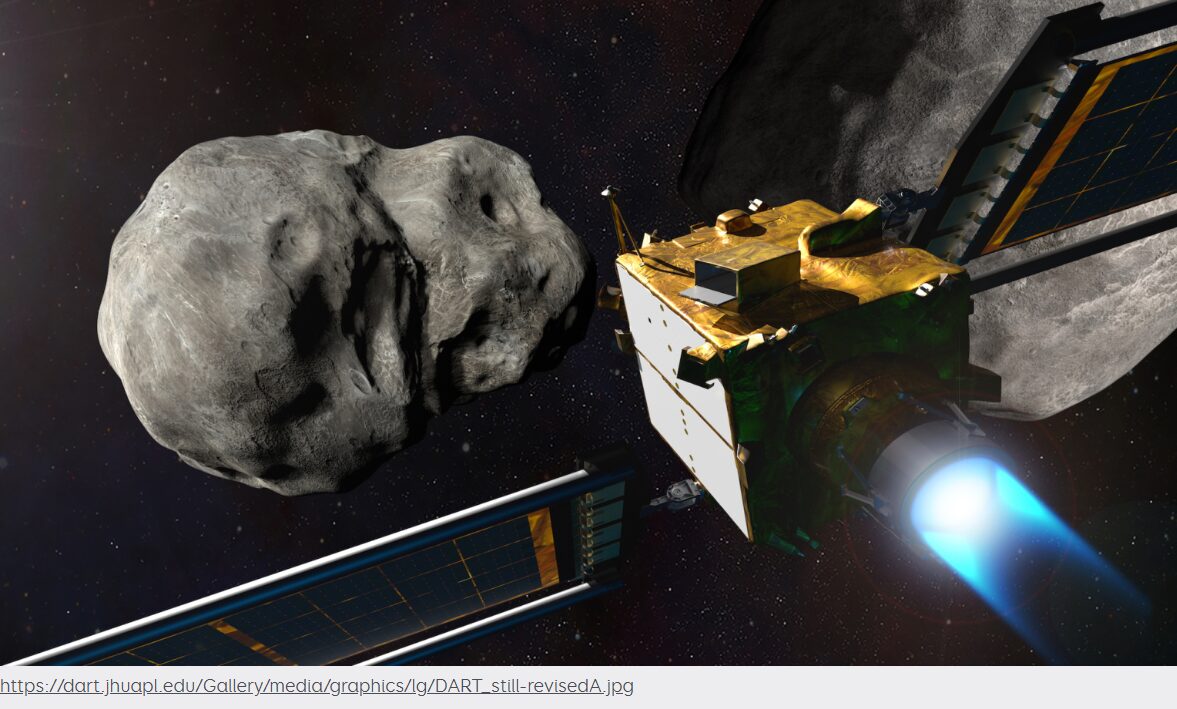
Hit the wrong spot and an asteroid returns on a collision course

Asteroid deflection could save Earth, or accidentally doom it, depending on where we aim the impact.

Scientists caution that asteroid deflection must be precise, as striking the wrong spot risks sending it through a gravitational keyhole that sets up a future collision with Earth. Using lessons from NASA’s DART mission, researchers are developing probability maps to guide safer impact strategies.

Selecting the right spot to smash a spacecraft into the surface of a hazardous asteroid to deflect it must be done with great care, according to new research presented at the EPSC-DPS2025 Joint Meeting this week in Helsinki...

Read More
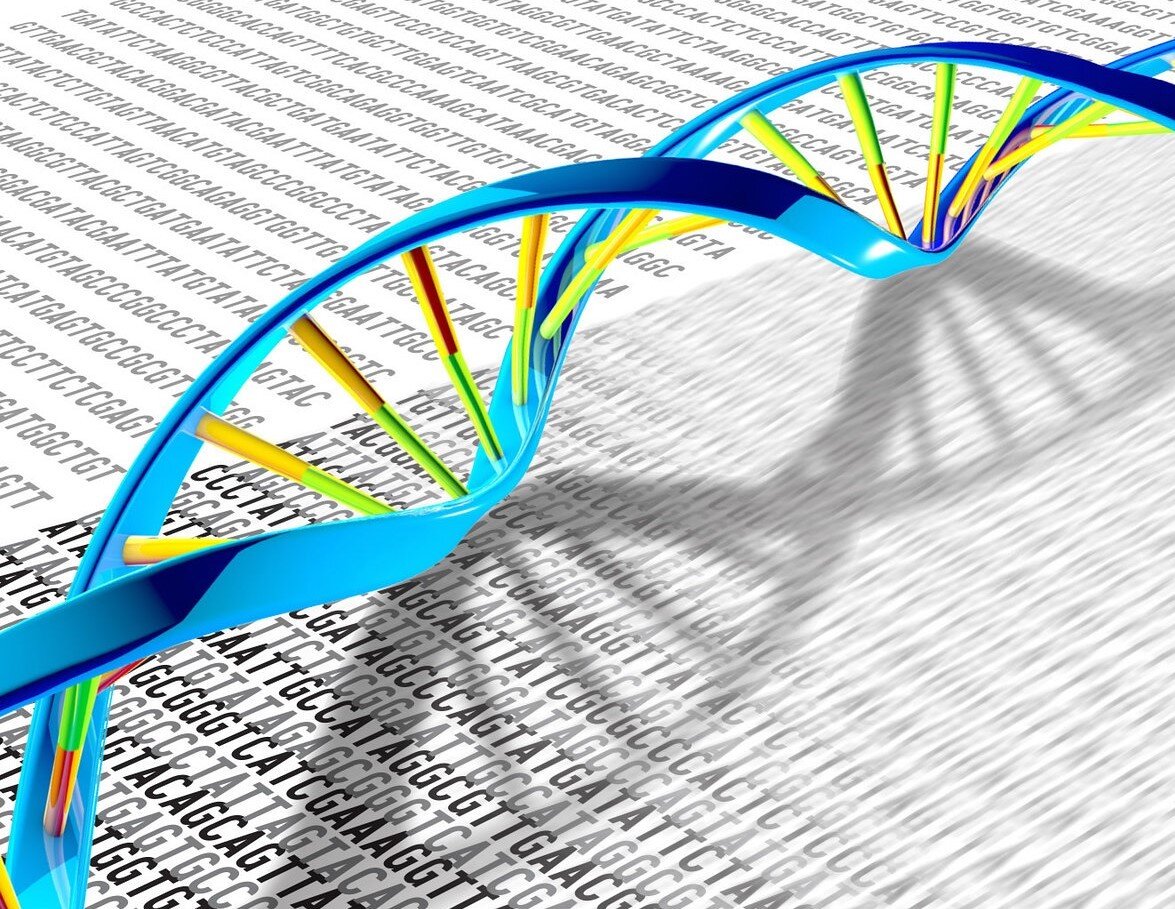
Rapamycin linked to DNA damage resilience in aging human immune cells

DNA
DNA, which has a double-helix structure, can have many genetic mutations and variations. Credit: NIH

University of Oxford-led research finds low-dose rapamycin functions as a genomic protector in aging human immune cells, lowering DNA damage.

The mechanistic target of rapamycin (mTOR) is a central signaling pathway that regulates and coordinates cell growth, metabolism, and survival in response to environmental cues. It helps cells integrate signals from growth factors, nutrients, and stress to control whether they are in an anabolic (building up) or catabolic (breaking down) state.

Aging immune systems accumulate DNA damage linked to immunosenescence. Rapamycin is a drug that inhibits the mTOR pathway...

Read More

Light-based chip can boost power efficiency of AI tasks up to 100-fold

New light-based chip boosts power efficiency of AI tasks 100 fold
A newly developed silicon photonic chip turns light-encoded data into instant convolution results. Credit: H. Yang (University of Florida)

A team at the University of Florida has developed a new kind of computer chip that uses light with electricity to perform one of the most power-intensive parts of artificial intelligence—image recognition and similar pattern-finding tasks. Using light dramatically cuts the power needed to perform these tasks, with efficiency 10 or even 100 times that of current chips performing the same calculations. Using this approach could help rein in the enormous demand for electricity that is straining power grids while enabling higher performance AI models and systems.

Artificial intelligence (AI) systems are increasingly central to technology, powering ...

Read More

TRAPPIST-1e observations narrow down possibilities for atmosphere and surface water on elusive exoplanet

Transmission spectroscopy of the habitable zone planet TRAPPIST-1 e
Scientists call this event a transit, when valuable data can be gathered as the exoplanet passes between the star and the telescope and starlight illuminates the atmosphere, if one is present. NASA’s James Webb Space Telescope has made initial observations of planets b, c, d, and e during their transits, with additional observations of planet e underway. While the star’s frequent flares make it difficult to detect an atmosphere, each transit builds up more and more information for scientists to get a more complete picture of these distant worlds. Credit: NASA, ESA, CSA, J. Olmsted (STScI)

University of Bristol astrophysicists are helping shed new light on an Earth-sized exoplanet 40 light years away where liquid water in the form of a global ocean or icy expanse might exist on its surf...

Read More