Human brains explore more to avoid losses than to seek gains

Human brains explore more to avoid losses than to seek gains
Paradigm and learning behavior in loss versus gain conditions. Credit: Nature (2025). DOI: 10.1038/s41586-025-09466-1

Researchers at the Weizmann Institute of Science traced a neural mechanism that explains why humans explore more aggressively when avoiding losses than when pursuing gains. Their work reveals how neuronal firing and noise in the amygdala shape exploratory decision-making.

Human survival has its origins in a delicate balance of exploration versus exploitation. There is safety in exploiting what is known, the local hunting grounds, the favorite foraging location, the go-to deli with the familiar menu...

Read More
Solar breakthrough — hotter panels mean better storage

Solar breakthrough—hotter panels mean better storage
Schematic of PEC cell setup composed of a c-Si device based on a pn+-junction and coated with a 10 nm Pt layer as a photocathode, a Hg/HgSO4 electrode as a reference electrode, and a carbon rod as the counter electrode. Credit: The Journal of Chemical Physics (2025). DOI: 10.1063/5.0283536

Scientists have uncovered a surprising advantage in next-generation solar technology—the hotter it gets, the better it can store energy. Traditionally, heat has been seen as the enemy of solar power. Standard solar panels lose efficiency as temperatures rise.

But a new study, published in The Journal of Chemical Physics, shows that in special “solar-plus-storage” devices, heat can actually boost performance by speeding up the internal chemical reactions that store energy.

The team studied ...

Read More

Astronomers uncover a hidden world on the solar system’s edge

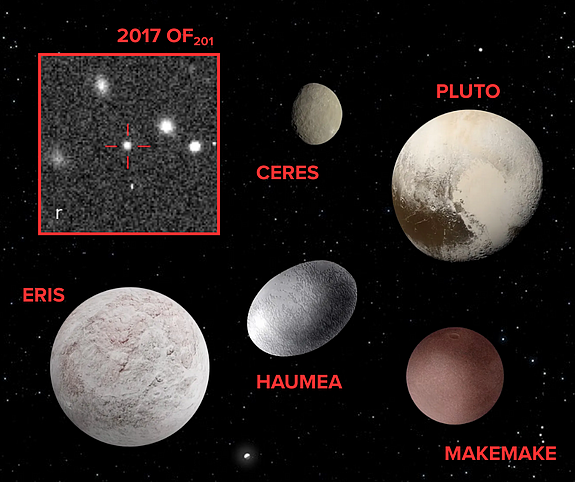
Astronomers have uncovered a massive new trans-Neptunian object, 2017 OF201, lurking at the edge of our solar system. With an orbit stretching 25,000 years and a size that may qualify it as a dwarf planet, this mysterious world challenges long-held assumptions about the “empty” space beyond Neptune. Its unusual trajectory sets it apart from other distant bodies and may even cast doubt on the controversial Planet Nine hypothesis.

A small team led by Sihao Cheng, Martin A. and Helen Chooljian Member in the Institute for Advanced Study’s School of Natural Sciences, has discovered an extraordinary trans-Neptunian object (TNO), named 2017 OF201, at the edge of our solar system.

The TNO is potentially large enough to qualify as a dwarf planet, the same category as the much more we...

Read More

Lithium-metal batteries can charge in 12 minutes for an 800km drive

Lithium-metal batteries charge in 12 minutes for 800 km drive
Credit: KAIST

Korean researchers have ushered in a new era for electric vehicle (EV) battery technology by solving the long-standing dendrite problem in lithium-metal batteries. While conventional lithium-ion batteries are limited to a maximum range of 600 km, the new battery can achieve a range of 800 km on a single charge, a lifespan of over 300,000 km, and a super-fast charging time of just 12 minutes.

A research team from the Frontier Research Laboratory (FRL), a joint project between Professor Hee Tak Kim from the Department of Chemical and Biomolecular Engineering, and LG Energy Solution, has developed a “cohesion-inhibiting new liquid electrolyte” original technology that can dramatically increase the performance of lithium-metal batteries...

Read More