Optoelectronics research could bring holograms to your smartphone and closer to everyday use

New research from the University of St Andrews paves the way for holographic technology, with the potential to transform smartdevices, communication, gaming and entertainment.

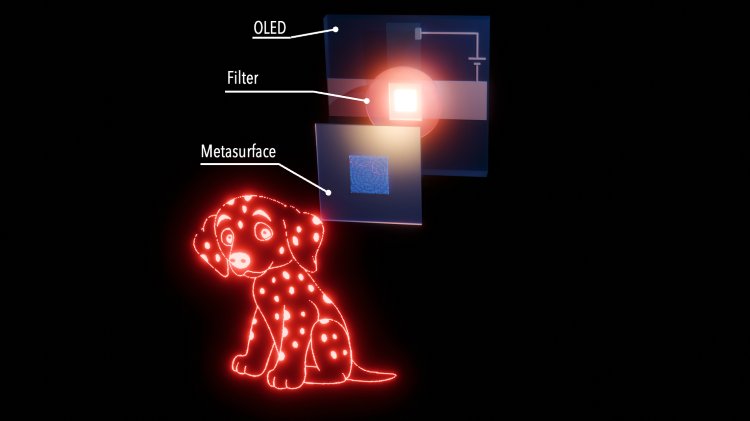
In a study published in Light: Science & Applications, researchers from the School of Physics and Astronomy created a new optoelectronic device from the combined use of holographic metasurfaces (HMs) and organic light-emitting diodes (OLEDs).

Until now, holograms have been created using lasers. However, researchers have found that using OLEDs and HMs gives a simpler and more compact approach that is potentially cheaper and easier to apply, overcoming the main barriers to hologram technology being used more widely.

Organic light-emitting diodes are thin film devices widely used to make the colored pixels...

Read More

White dwarf stars could create surprisingly common long-lived habitable zones

A comparison between the white dwarf IK Pegasi B (centre), its A-class companion IK Pegasi A (left) and the Sun (right). This white dwarf has a surface temperature of 35500 K (Credit : RJ Hall)

A new study by Manuel Barrientos and colleagues from the University of Oklahoma reveals that between 0.6% and 2.5% of white dwarfs in our solar neighborhood undergo dramatic cooling delays that could extend habitable zones for billions of additional years. The secret lies in an element known as neon-22, which, after carbon and oxygen, is the most abundant element inside white dwarfs.

When white dwarfs contain at least 2.5% neon-22 by mass, they undergo a process called “distillation” as their cores crystallize...

Read More

The Higgs boson just revealed a new secret at the Large Hadron Collider

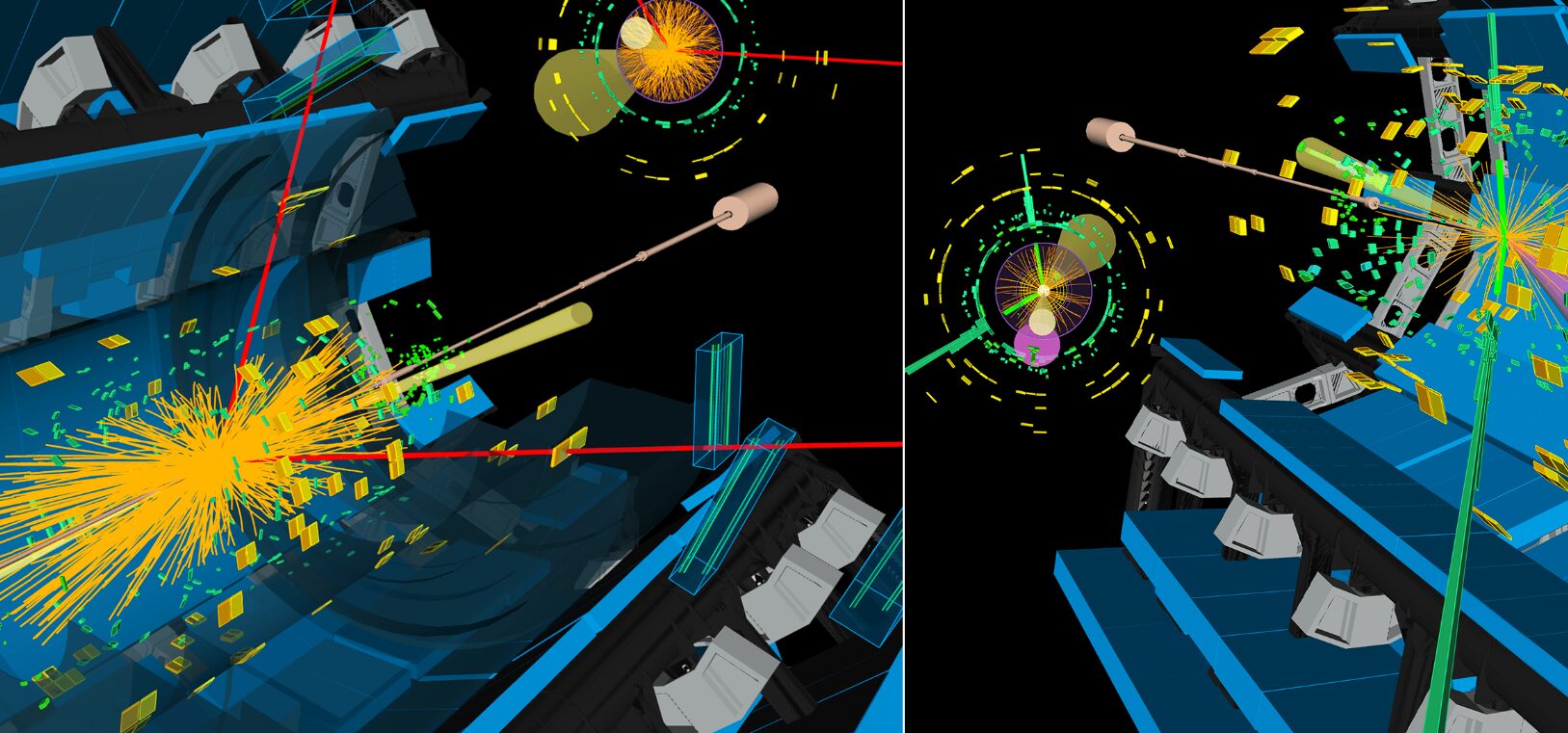
Scientists at CERN’s ATLAS experiment have uncovered compelling evidence of Higgs bosons decaying into muons, an incredibly rare event that could deepen our understanding of how particles acquire mass. They also sharpened their ability to detect the even rarer Higgs decay into a Z boson and a photon—a process that might reveal hidden physics beyond the Standard Model.

The ATLAS Collaboration finds evidence of Higgs-boson decays to muons and improves sensitivity to Higgs-boson decays to a Z boson and a photon.

Since the discovery of the Higgs boson in 2012, physicists have made major strides in exploring its properties...

Read More

Astronomers capture breathtaking first look at a planet being born

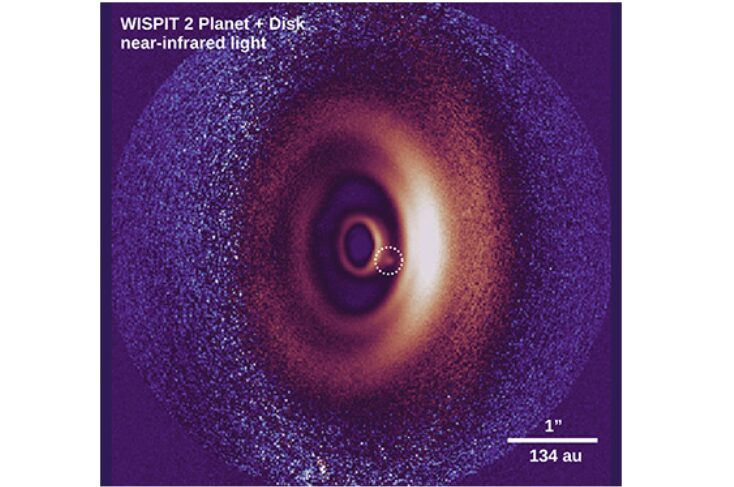
WISPIT2b, a gas giant forming around a young Sun-like star, has been directly imaged for the first time inside a spectacular multiringed disk. Still glowing and actively accreting gas, the planet offers a unique opportunity to study planetary birth and evolution.

An international team of astronomers, co-led by researchers at University of Galway, has made the unexpected discovery of a new planet.

Detected at an early stage of formation around a young analog of our own Sun, the planet is estimated to be about 5 million years-old and most likely a gas giant of similar size to Jupiter.

The study, which was led by Leiden University, University of Galway and University of Arizona, has been published in the international journal Astrophysical Journal Letters.

The ground-breaking...

Read More