

Scientist...
Read More


May 28, 2025,
 Astronomy/Space
Scientist...
Read More
December 4, 2020,
Biology/Biotechnology, Health/Medical, Physics
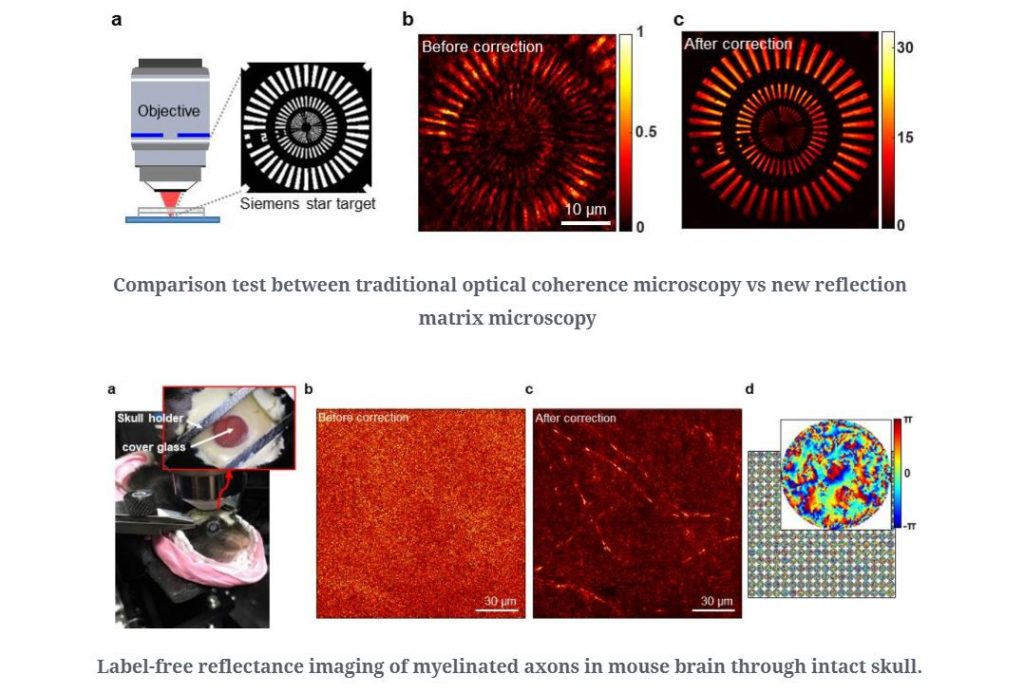
The microscope uses a combination of hardware and software-based adaptive optics to reconstruct object image – reflective matrix microscope.
Non-invasive microscopic techniques such as optical coherence microscopy and two-photon microscopy are commonly used for in vivo imaging of living tissues. When light passes through turbid materials such as biological tissues, two types of light are generated: ballistic photons and multiply scattered photons. The ballistic photons travel straight through the object without experiencing any deflection and hence is used to reconstruct the object image. On the other hand, the multiply scattered photons are generated via random deflections as the light passes through the material and show up as speckle noise in the reconstructed image...
Read More

Recent Comments