
B. fragilis tagged posts

Bacterial enzyme and nanoparticle discoveries hold promise for treating gut pain

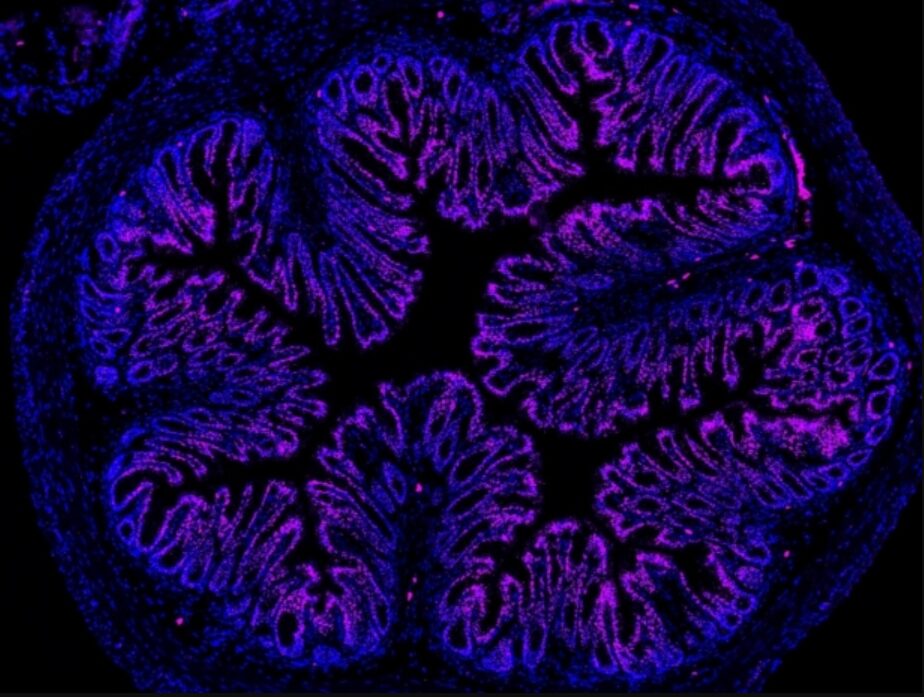
Fluorescent nanoparticles (purple) carrying a drug to treat pain accumulate in the cells of a mouse colon. Credit: Bunnett Lab

Abdominal pain is a hallmark of many digestive disorders, including inflammatory bowel disease and irritable bowel syndrome. In an effort to develop targeted treatments for gut pain, scientists have discovered a new enzyme in gut bacteria and are using nanoparticles to deliver drugs inside cells.

Currently, there are no treatments specifically for gut pain, and existing painkillers are often insufficient at managing symptoms. These drugs—including opioids, NSAIDs, and steroids—also come with side effects, some of which directly harm the digestive system.

In two new studies published in Cell Host & Microbe and Proceedings of the National Academy of Sci...

Read More
Research in Mice shows how Diet Alters Immune System Function through a Gut Microbe

Design Cells/iStock / Getty Images Plus

Research in mice demonstrates how diet alters a gut microbe molecule that, in turn, prompts immune cells to downregulate inflammation. The study elucidates molecular mechanism behind long-standing belief that diet, microbiota, and immunity influence one another in myriad ways. If affirmed in larger animals and humans, the findings could inform the design of small-molecule drugs that regulate immune response to treat inflammatory conditions.

The cliché “you are what you eat” has been used for hundreds of years to illustrate the link between diet and health. Now, an international team of researchers has found the molecular proof of this concept, demonstrating how diet ultimately affects immunity through the gut microbiome.

The work, conducte...

Read More

Gut Bacteria might be an Indicator of Colon Cancer Risk

gut bacteria
Credit: CC0 Public Domain

A study published today in the journal Cell Host & Microbe reported that the increased presence of certain bacteria in a gut biome indicates a greater likelihood that colon polyps will become cancerous.

In his research, William DePaolo, associate professor at the University of Washington School of Medicine, tracked 40 patients who had undergone routine colonoscopies and had biopsies taken near the polyps to identify bacteria present at relatively higher levels compared with those of patients who were polyp-free. All the patients were between the ages 50 and 75, and 60% were women.

“The rising incidence of colorectal cancer is a major health concern, but little is known about the composition and role of microbiota associated with precancerous polyps,” the...

Read More
