
building blocks of life tagged posts

Building blocks of life discovered in Bennu asteroid rewrite origin story

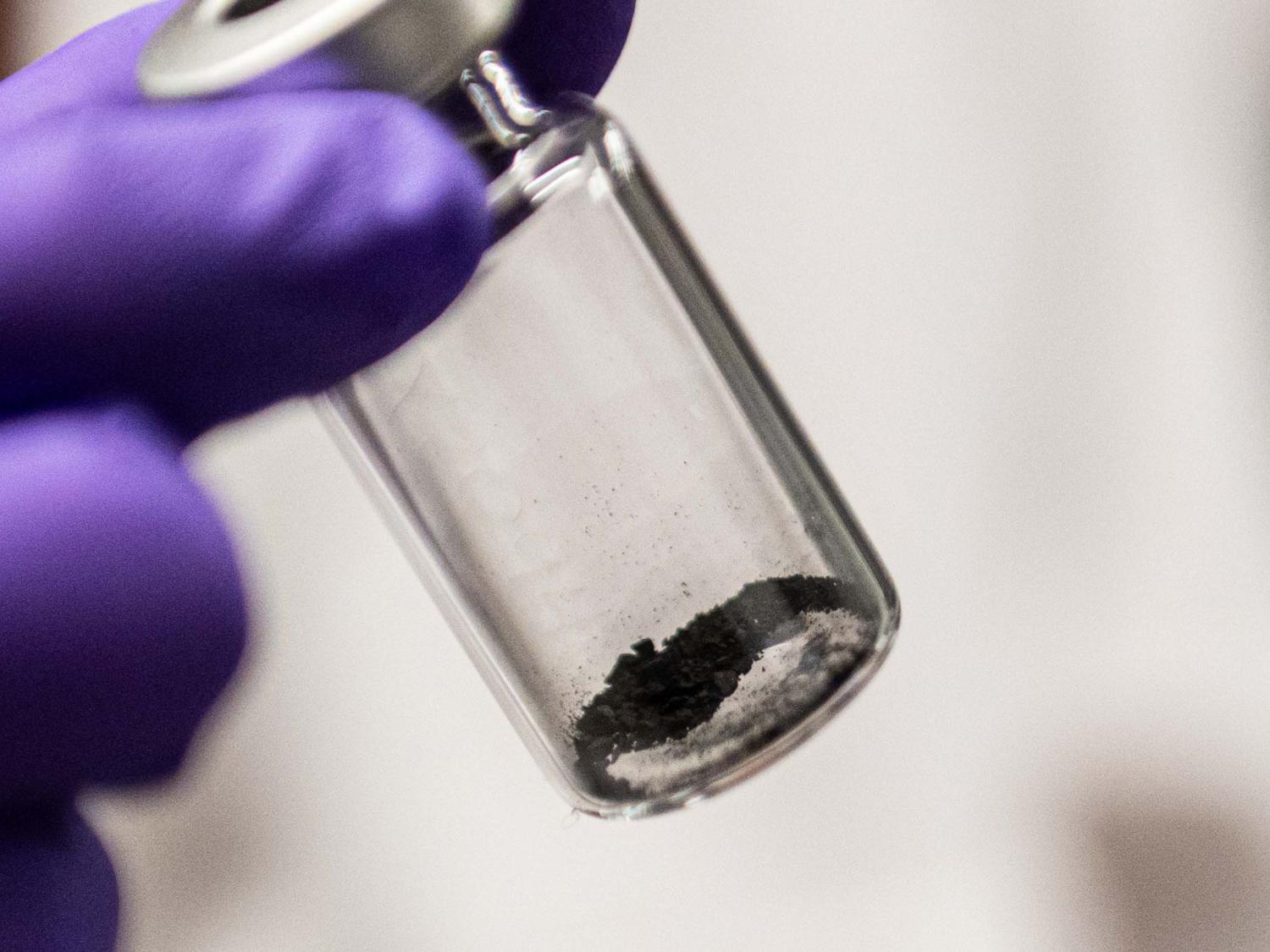
A gloved hand holds a vial with dust
Analyzing a precious bit of space dust no bigger than a teaspoon, the Penn State team used custom instruments capable of measuring isotopes, slight variations in the mass of atoms. Credit: Jaydyn Isiminger / Penn State. Creative Commons

Amino acids, the building blocks necessary for life, were previously found in samples of 4.6-billion-year-old rocks from an asteroid called Bennu, delivered to Earth in 2023 by NASA’s OSIRIS-REx mission. How those amino acids—the molecules that create proteins and peptides in DNA—formed in space was a mystery, but new research led by Penn State scientists shows they could have originated in an icy-cold, radioactive environment at the dawn of Earth’s solar system.

According to the researchers, who published new findings in the Proceedings of th...

Read More

A student made cosmic dust in her lab—what she found could help us understand how life started on Earth

This student made cosmic dust in her lab—what she found could help us understand how life started on Earth
Cosmic dust swirling around the Helix nebula, ejected from an ageing star similar to the sun. Credit: NASA

A Sydney Ph.D. student has recreated a tiny piece of the universe inside a bottle in her laboratory, producing cosmic dust from scratch. The results shed new light on how the chemical building blocks of life may have formed long before Earth existed. Linda Losurdo, a Ph.D. candidate in materials and plasma physics in the School of Physics, used a simple mix of gases—nitrogen, carbon dioxide and acetylene—to mimic the harsh and dynamic environments around stars and supernova remnants.

By subjecting these gases to intense electrical energy, she generated carbon-rich “cosmic dust” similar to the material found drifting between stars and embedded in comets, asteroids and meteor...

Read More

Life’s Building Blocks observed in Spacelike environment

Low-energy electron impact mediates the creation of new complex organic molecules, such as ethanol, in astrophysical/planetary model ices containing methane and oxygen; while some of the new species desorb as ions, many remain in the surface ices. Credit: The photo of Jupiter's moon Europa, inserted for the Platinum (Pt) substrate (bottom of the graphic), is credited to NASA.

Low-energy electron impact mediates the creation of new complex organic molecules, such as ethanol, in astrophysical/planetary model ices containing methane and oxygen; while some of the new species desorb as ions, many remain in the surface ices. Credit: The photo of Jupiter’s moon Europa, inserted for the Platinum (Pt) substrate (bottom of the graphic), is credited to NASA.

Where do the molecules required for life originate? A new study shows that a number of small organic molecules can form in a cold, spacelike environment full of radiation. Investigators at the University of Sherbrooke in Canada have created simulated space environments in which thin films of ice containing methane and oxygen are irradiated by electron beams...

Read More
