Chiron tagged posts

Move over Mercury—Chiron is in retrograde: What even is Chiron?

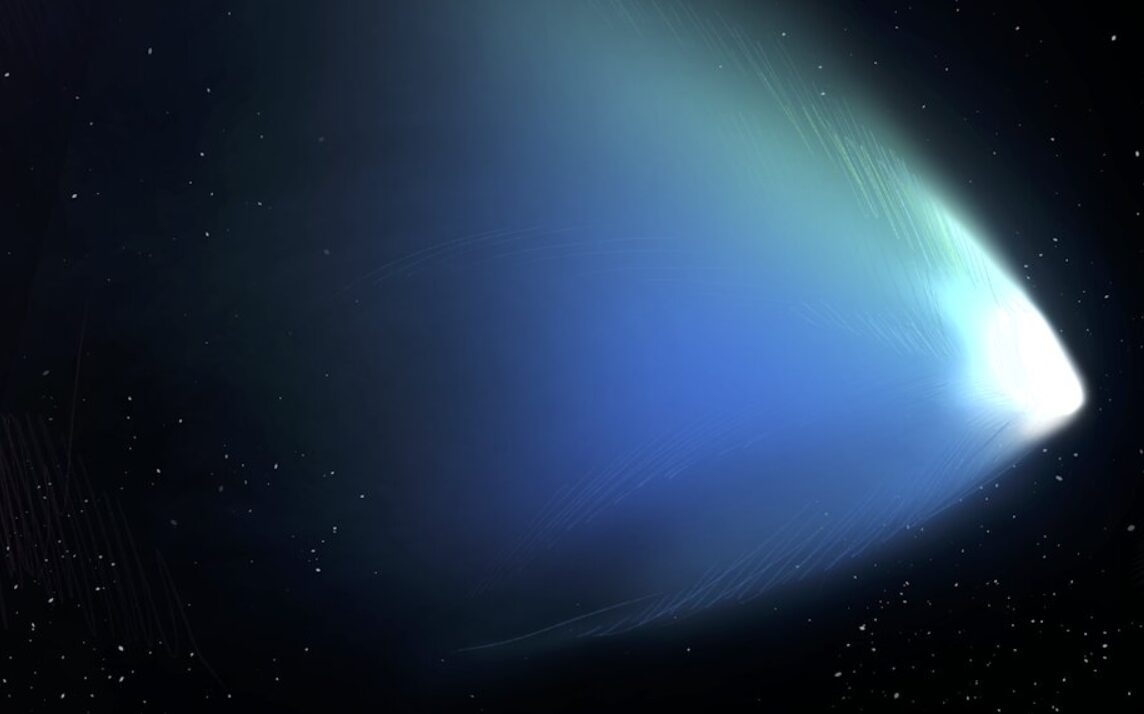
An artist’s impression of Chiron and its coma of gas. William Gonzalez Sierra / UCF

You might have seen an interesting phrase popping up in your social media feeds lately: “Chiron is in retrograde.” If you’re anything like me, you’ve never heard of Chiron before—and I’m a professional astronomer.

So what is Chiron, and what does it mean to be in retrograde? The short answer is that Chiron is an asteroid-slash-comet orbiting somewhere past Jupiter and Saturn. And until January 2026, it’s going to look like it’s going backwards in the sky. If you can spot it.

But there’s a bit more to the story.

What is Chiron?
Chiron’s official name is (2060) Chiron. First things first: it’s pronounced “kai-ruhn,” with a hard K sound.

It was discovered by astronomer Charles Kowal in 1977...

Read More

Origin of Minor Planets’ Rings revealed

Visualization of Chariklo and its rings ( left; ESO/L. Calçada/M. Kornmesser/Nick Risinger). Visualization of the rings as seen from Chariklo's surface (right ESO). Credit: ESO/L. Calçada/Nick Risinger (skysurvey.org)

Visualization of Chariklo and its rings ( left; ESO/L. Calçada/M. Kornmesser/Nick Risinger). Visualization of the rings as seen from Chariklo’s surface (right ESO). Credit: ESO/L. Calçada/Nick Risinger (skysurvey.org)

A team of researchers has clarified the origin of the rings recently discovered around 2 minor planets known as centaurs, and their results suggest the existence of rings around other centaurs (minor planets that orbit between Jupiter and Neptune, their current or past orbits crossing those of the giant planets). It is estimated that there are around 44,000 centaurs with diameters >1 km.

Until recently it was thought that the 4 giants such as Saturn and Jupiter were the only ringed celestial bodies within our solar system...

Read More