
cosmic dust tagged posts

A student made cosmic dust in her lab—what she found could help us understand how life started on Earth

This student made cosmic dust in her lab—what she found could help us understand how life started on Earth
Cosmic dust swirling around the Helix nebula, ejected from an ageing star similar to the sun. Credit: NASA

A Sydney Ph.D. student has recreated a tiny piece of the universe inside a bottle in her laboratory, producing cosmic dust from scratch. The results shed new light on how the chemical building blocks of life may have formed long before Earth existed. Linda Losurdo, a Ph.D. candidate in materials and plasma physics in the School of Physics, used a simple mix of gases—nitrogen, carbon dioxide and acetylene—to mimic the harsh and dynamic environments around stars and supernova remnants.

By subjecting these gases to intense electrical energy, she generated carbon-rich “cosmic dust” similar to the material found drifting between stars and embedded in comets, asteroids and meteor...

Read More
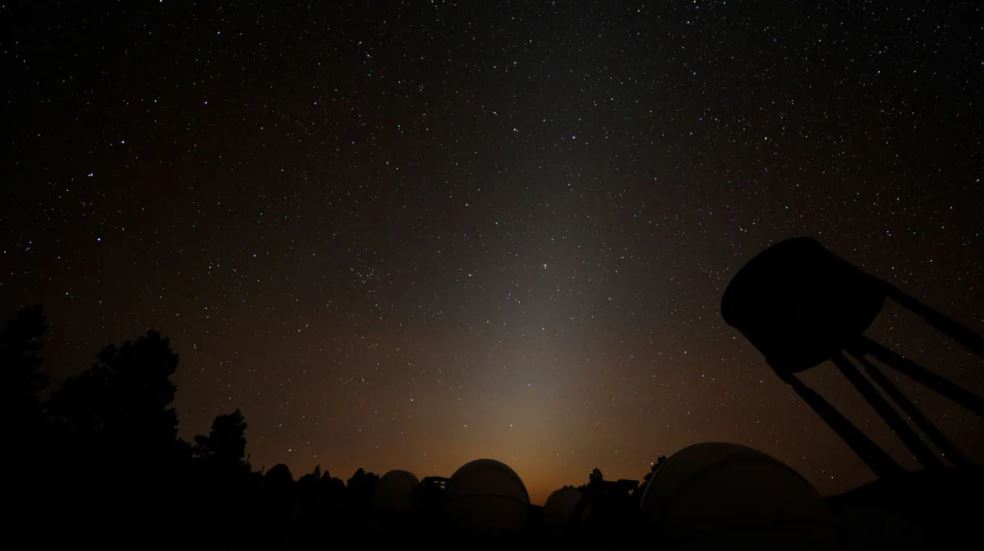
Cosmic Dust may be Key Source of Phosphorus for Life on Earth

Sunlight reflects off tiny, interplanetary dust particles, creating the faint column of glowing light seen against the stars in this image. New research suggests that cosmic dust might be an important source of phosphorus for life on Earth. Credit: MalcolCC BY 3.0
Source: Journal of Geophysical Research: Space Physics

When Earth formed 4.5 billion years ago, any phosphorus that was present likely sank into the molten core because of the element’s distinct chemical properties. However, phosphorus is essential for life; it is found in DNA, RNA, and other important biological molecules. So it is probable that the phosphorus that made life possible was delivered to Earth’s surface from extraterrestrial origins, and previous studies have suggested meteorites as potential sources.

Now, P...

Read More

Cosmic Dust demystified

Milky Way (stock image). A team of researchers has developed a new experimental Meteoric Ablation Simulator (MASI) that can help answer questions about cosmic dust and how it impacts Earth and everything on it. Credit: © sripfoto / Fotolia

Milky Way (stock image). A team of researchers has developed a new experimental Meteoric Ablation Simulator (MASI) that can help answer questions about cosmic dust and how it impacts Earth and everything on it. Credit: © sripfoto / Fotolia

University of Leeds team has developed a new experimental Meteoric Ablation Simulator (MASI) that can help answer questions about cosmic dust and how it impacts Earth and everything on it. The study of the evaporation of cosmic dust particles in the upper atmosphere has, until now, relied heavily on theoretical calculations. Evidence provided by field radar and optical observations of meteoroids is contradictory in relation to the height where each of the metals in the particles will ablate as they fall through the atmosphere...

Read More
