

Unexpected new insights into how COVID-19 infects ce...
Read More


August 15, 2023,
 Biology/Biotechnology, Health/Medical
Unexpected new insights into how COVID-19 infects ce...
Read More
August 10, 2023,
Biology/Biotechnology, Health/Medical
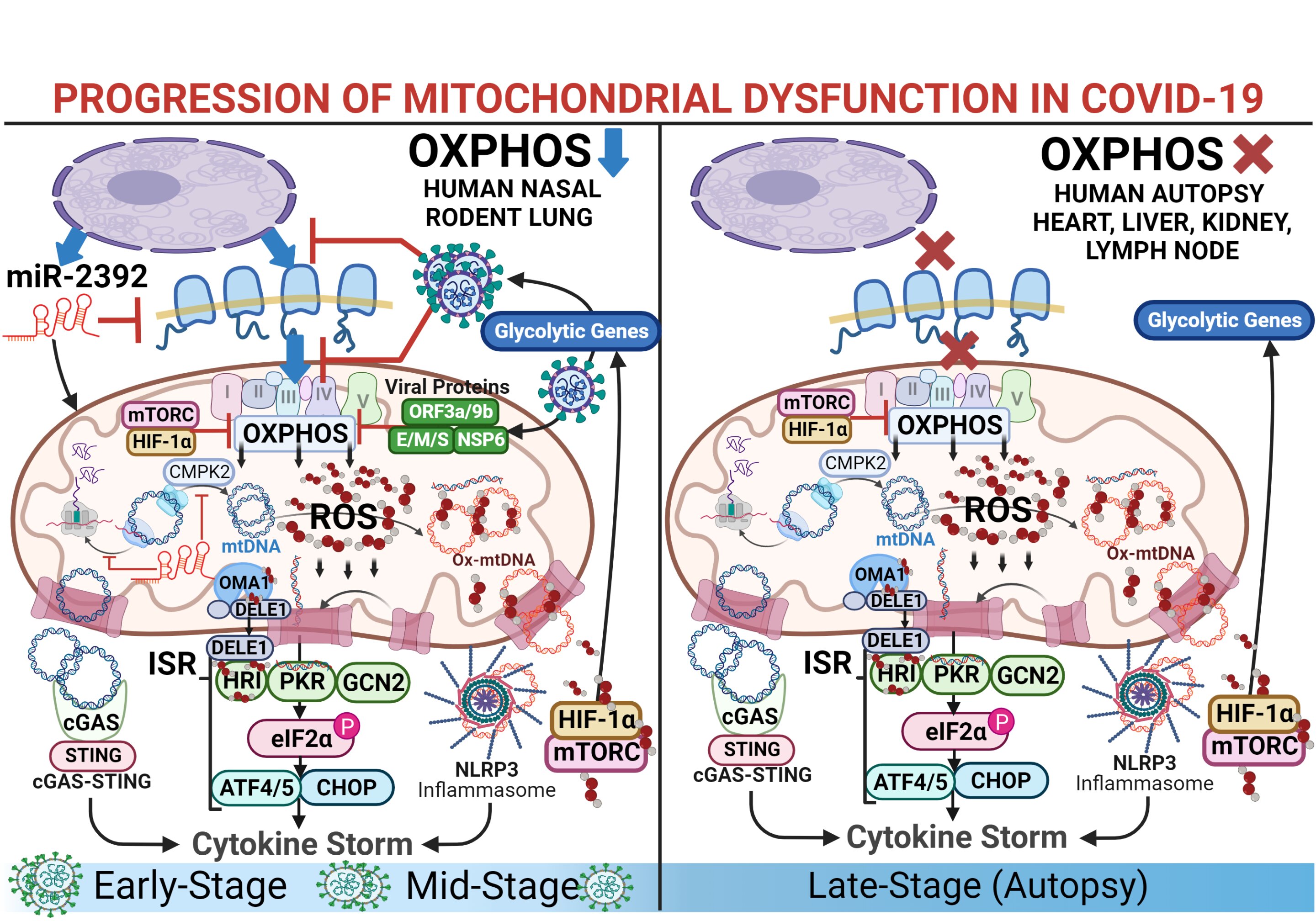
Since the beginning of the COVID-19 pandemic caused by the SARS-CoV-2 virus, researchers have been trying to determine why this virus creates such negative long-term effects compared with most coronaviruses.
Now, a multi-institutional consortium of researchers led by a team at Children’s Hospital of Philadelphia (CHOP) and the COVID-19 International Research Team (COV-IRT) has found that the genes of the mitochondria can be ne...
Read More
May 10, 2023,
Biology/Biotechnology, Health/Medical

COVID-19, the disease resulting from SARS-CoV-2 infection, is associated with highly variable clinical outcomes that range from asymptomatic disease to death. For those with milder infections, COVID-19 can produce respiratory infection symptoms (cough, congestion, fever) and sensory phenotypes such as headache and loss of sense of smell.
In more severe cases, SARS-CoV-2 infection can affect nearly every organ and result in strokes from vascular occlusion, cardiovascular damage and acute renal failure. A substantial number of actively infected patients suffering from both mild and severe infections experience sensory-related symptoms, such as headache, visceral pain, Guillain-Barre syndrome, nerve pain and inflammation...
Read More
April 11, 2023,
Uncategorized
A team led by researchers at Weill Cornell Medicine, the University of Wisconsin-Madison; Scripps Research and the University of Chicago has identified an antibody that appears to block infection by all dominantvariants of the virus that causes COVID-19, including Omicron, the most recent. Their discovery could lead to more potent vaccines and new antibody-based treatments.
In a study published March 6 in the Journal of Clinical Investigation, senior author Dr. Patrick Wilson, the Anne E...
Read More

Recent Comments