
EEG tagged posts

Frequently distracted? Your brain rhythms may be to blame

ADHD
Credit: Pixabay/CC0 Public Domain

Scientists may have new answers to why pop-ups or notifications grab our attention. Turns out our attention is on a cycle, shifting seven to 10 times per second. This rhythmic occurrence may be crucial for survival, as it prevents us from becoming overly focused on one thing in our environment. It could help us to see a car backing up in a parking lot while we search for where we parked, or to duck to avoid a low-hanging tree branch on a walk while watching a kid ride a bike.

However, these windows that shift our attention could also make us more susceptible to distractions, especially in modern times...

Read More
Brain training game offers new hope for drug-free pain management

PainWaive in action
The headset transmits the player’s brain activity data to the app, which responds by changing the color of the water around the jellyfish, providing the player with real-time feedback on their mental state.Image: Elva Darnell

A trial of an interactive game that trains people to alter their brain waves has shown promise as a treatment for nerve pain — offering hope for a new generation of drug-free treatments.

The PainWaive technology, developed by UNSW Sydney researchers, teaches users how to regulate abnormal brain activity linked to chronic nerve pain, offering a potential in-home, non-invasive alternative to opioids.

A recent trial of the technology, led by Professor Sylvia Gustin and Dr Negin Hesam-Shariati from UNSW Sydney’s NeuroRecovery Research Hub, has delivered promisin...

Read More

Portable, Non-invasive, Mindreading AI turns Thoughts into Text

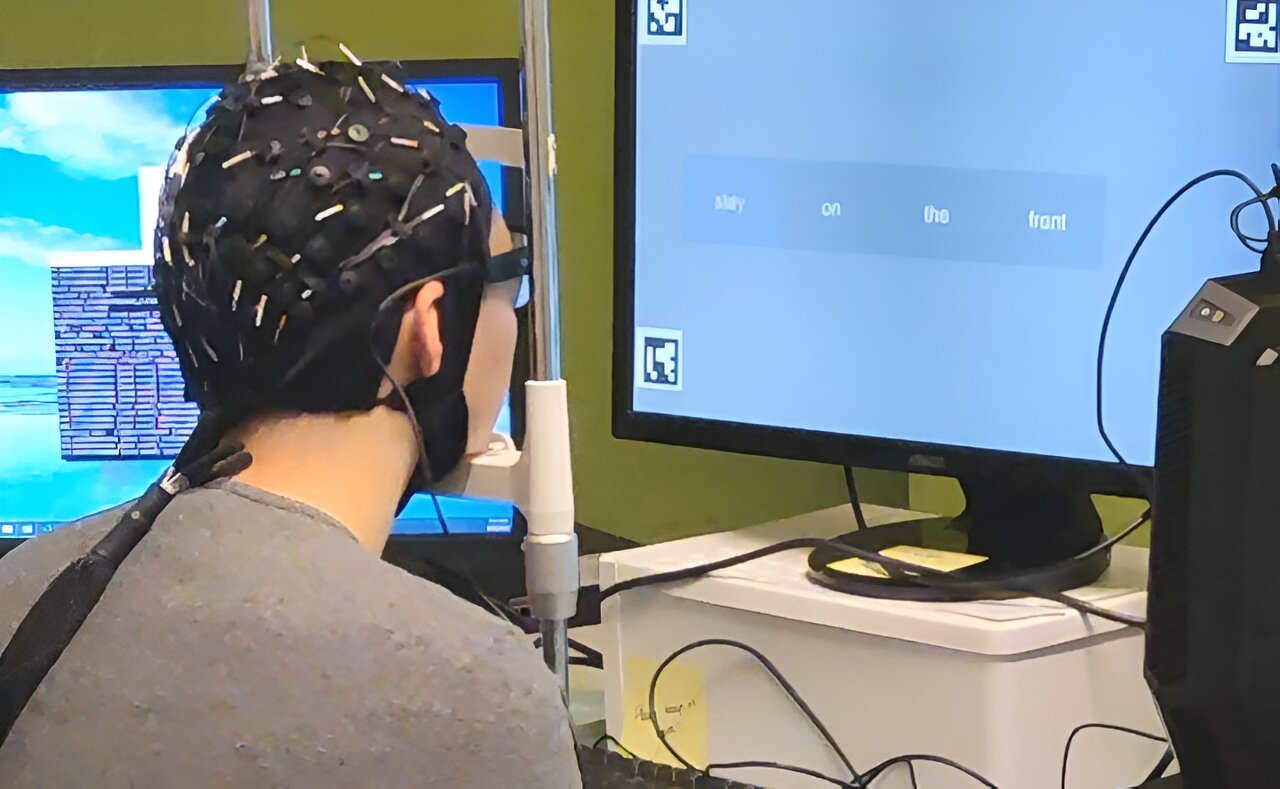
Portable, non-invasive, mind-reading AI turns thoughts into text
UTS researcher tests DeWave technology. Credit: University of Technology Sydney

In a world-first, researchers from the GrapheneX-UTS Human-centric Artificial Intelligence Centre at the University of Technology Sydney (UTS) have developed a portable, non-invasive system that can decode silent thoughts and turn them into text.

The technology could aid communication for people who are unable to speak due to illness or injury, including stroke or paralysis. It could also enable seamless communication between humans and machines, such as the operation of a bionic arm or robot.

The study has been selected as the spotlight paper at the NeurIPS conference, an annual meeting that showcases world-leading research on artificial intelligence and machine learning, held in New Orleans on 12 De...

Read More

Artificial Neural Networks Decode Brain Activity during performed and imagined Movements

In order to achieve better brain signal transmission quality, the researchers apply contact gel. Credit: Michael Veit

In order to achieve better brain signal transmission quality, the researchers apply contact gel. Credit: Michael Veit

Several groups from the Freiburg excellence cluster BrainLinks-BrainTools led by neuroscientist Dr. Tonio Ball are showing how ideas from computer science could revolutionize brain research. They illustrate how a self-learning algorithm decodes human brain signals that were measured by an electroencephalogram (EEG). It included performed movements, but also hand and foot movements that were merely thought of, or an imaginary rotation of objects...

Read More
