epigenetic changes tagged posts

Epigenetic changes regulate gene expression, but what regulates epigenetics?

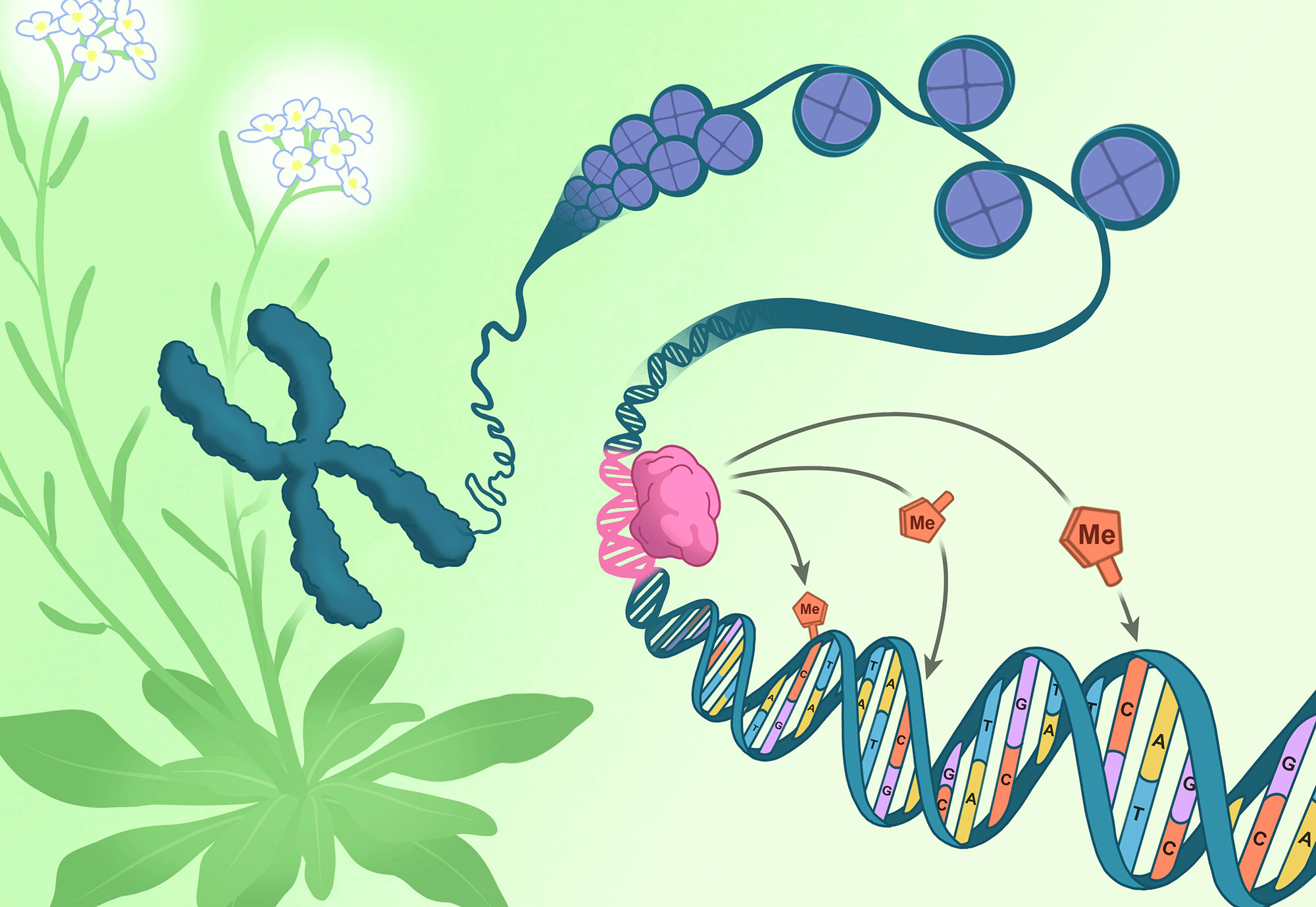
A chromosome pulled from the flowers of Arabidopsis thaliana (green and white) unspools to reveal DNA (blue) coiled around packaging-proteins called histones (purple). The direction of epigenetic changes by genetic features begins as the RIM transcription factor (pink) docks on a corresponding DNA sequence (pink). Once docked, the RIM transcription factor directs methylation machinery to tack methyl groups (orange) onto specific nearby cytosines (orange).
Click here for a high-resolution image.
Credit: Salk Institute

All the cells in an organism have the exact same genetic sequence. What differs across cell types is their epigenetics—meticulously placed chemical tags that influence which genes are expressed in each cell...

Read More

Cellular Reprogramming Slows Aging in Mice

Highlights •Partial reprogramming erases cellular markers of aging in mouse and human cells •Induction of OSKM in progeria mice ameliorates signs of aging and extends lifespan •In vivo reprogramming improves regeneration in 12-month-old wild-type mice

Highlights •Partial reprogramming erases cellular markers of aging in mouse and human cells •Induction of OSKM in progeria mice ameliorates signs of aging and extends lifespan •In vivo reprogramming improves regeneration in 12-month-old wild-type mice

In mice carrying a mutation leading to premature aging, reprogramming of chemical marks in the genome, ie epigenetic marks, reduced many signs of aging in the mice and extended their lifespan on average from 18 weeks to 24. The study suggests epigenetic changes drive the aging process, and that those changes may be malleable. “We did not correct the mutation that causes premature aging in these mice,” says Juan Carlos Izpisua Belmonte, a professor in the Salk Institute of Biological Science’s Gene Expression Laboratory...

Read More