

EV tagged posts

A hormone can access the brain by ‘hitchhiking’ on extracellular vesicles, researchers discover

brain
Credit: CC0 Public Domain

Researchers at Touro University Nevada have discovered that tiny particles in the blood, called extracellular vesicles (EVs), are a major player in how a group of hormones are shuttled through the body. Physical exercise can stimulate this process.

The findings, published in the journal Proceedings of the National Academy of Sciences, open the door to deeper understanding of hormone circulation and access to the brain, how exercise may trigger changes in energy balance, mental health, and immune function, and circulation of certain drugs.

Blood and other body fluids are teeming with EVs—tiny particles that exist outside of cells...

Read More
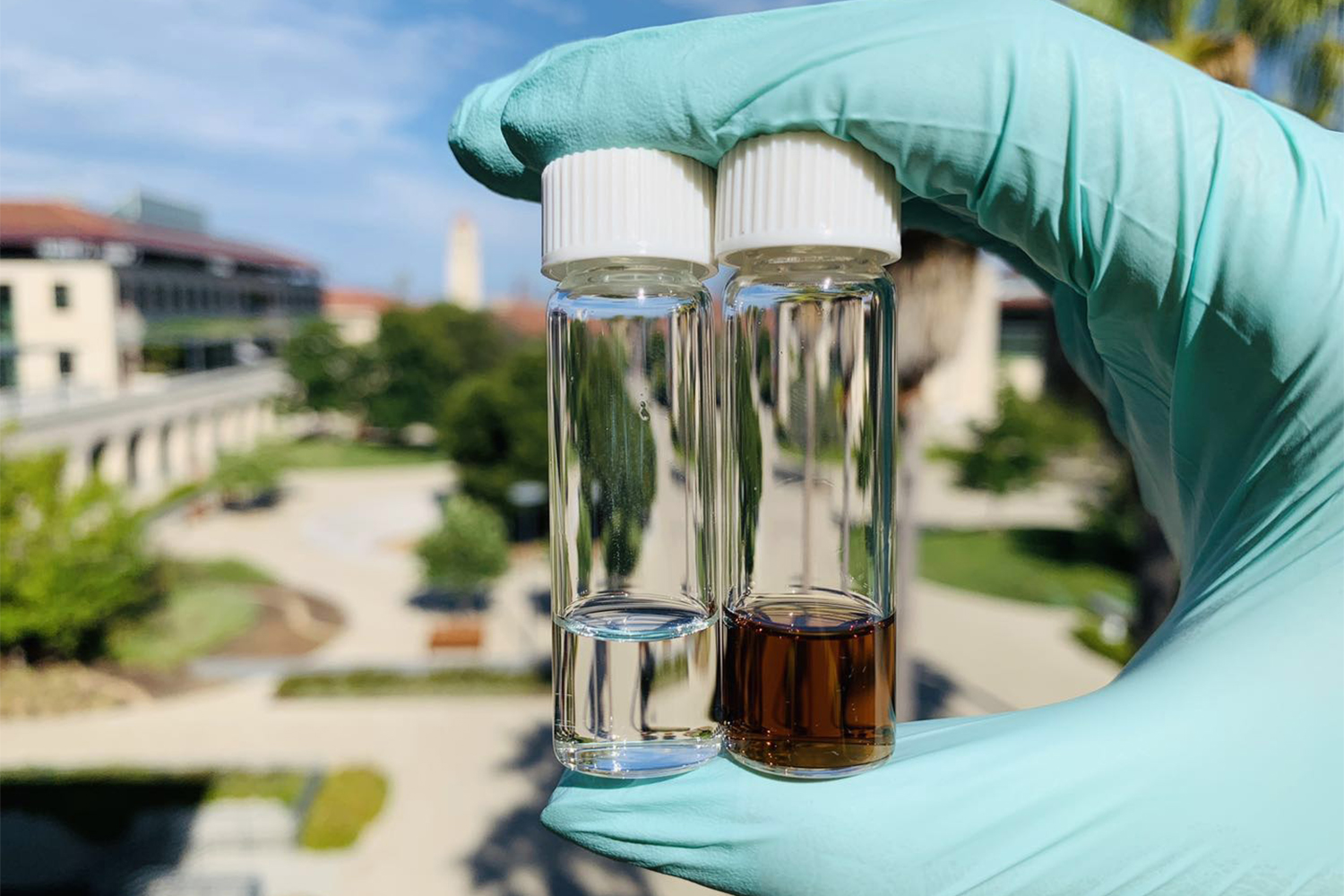
New Battery Electrolyte may boost the performance of Electric Vehicles

A conventional (clear) electrolyte on the left and the novel Stanford electrolyte of the right. (Image credit: Zhiao Yu)

A new lithium-based electrolyte invented by Stanford University scientists could pave the way for the next generation of battery-powered electric vehicles.

In a study published June 22 in Nature Energy, Stanford researchers demonstrate how their novel electrolyte design boosts the performance of lithium metal batteries, a promising technology for powering electric vehicles, laptops and other devices.

“Most electric cars run on lithium-ion batteries, which are rapidly approaching their theoretical limit on energy density,” said study co-author Yi Cui, professor of materials science and engineering and of photon science at the SLAC National Accelerator Laboratory...

Read More
