
Gut microbiome tagged posts

Turning the gut microbiome into a longevity factory

New research finds that low doses of the antibiotic cephalordine induces the cps operon in bacteria, visualized in red. This operon is responsible for synthesizing colanic acids, resulting in attenuation of age-related metabolic changes. Credit: Meng Wang

A team of researchers has found a way to turn the bacteria living in the digestive tracts of animals into factories that can produce compounds that promote longevity in their hosts—showing a potential new drug development strategy.

Janelia Senior Group Leader Meng Wang and her team study longevity and were interested in seeing how they could transfer their research findings about longevity-promoting compounds into practical applications.

One idea they had was to induce the body’s gut microbiota—a collection of bacteria in th...

Read More
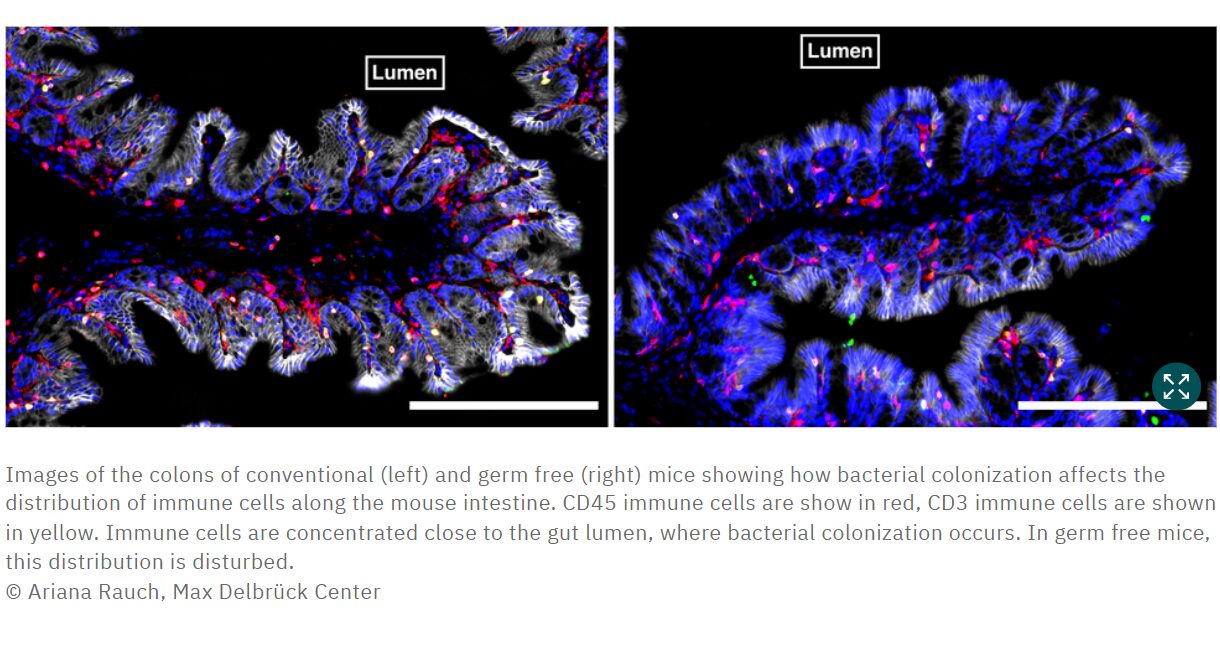
Gut Microbiome Influences Location of Immune Cells, study finds

Researchers at the Experimental and Clinical Research Center of Max Delbrück Center and Charité — Universitätsmedizin Berlin (ECRC) have found that different anatomical sections of the gastrointestinal tracts of mice carry different compositions of microbial communities. Moreover, the specific makeup of the microbiota can influence the type and abundance of immune cells in any particular region. The study, which was published in Gut Microbes, maps the complex spatial organization of immune cells and microbial communities, providing a tool for studying the interaction between gut microbes and inflammatory diseases.

Previous research has hinted at the existence of “hotspots” along the GI tract where specific immune cells and microbes might interact more intensely.

But no one ha...

Read More

Study reveals Relationship of Gut Microbiome on Children’s Brain Development and Function

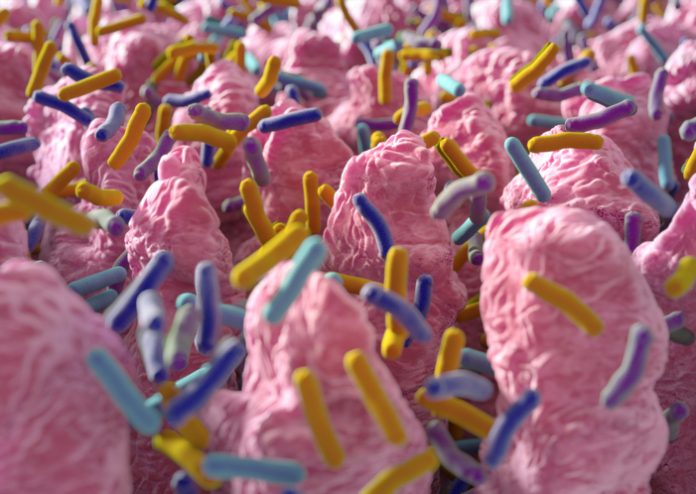
Intestinal villi. Small finger-like projections that extend into the lumen of the small intestine. Gut bacteria, flora, microbiome. 3d illustration.
Credit: ChrisChrisW/Getty Images

Emerging evidence implicates the gut microbiome in cognitive outcomes and neurodevelopmental disorders, but the influence of gut microbial metabolism on typical neurodevelopment has not been explored in detail. Researchers from Wellesley College, in collaboration with other institutions, have demonstrated that differences in the gut microbiome are associated with overall cognitive function and brain structure in healthy children.

This study—published Dec. 22 in Science Advances—is a part of the Environmental Influences on Child Health Outcome (ECHO) Program. This study investigates this relationship in 381 healthy children, all part of The RESONANCE cohort in Providence, Rhode Island, offering novel insights into early childhood development.

T...

Read More

Major Depressive Disorder linked to interplay of Gut Microbiome and Blood Metabolome

gut
Credit: Pixabay/CC0 Public Domain

An international team of medical researchers has found a link between major depressive disorder (MDD) and an interplay between the gut microbiome and the blood metabolome. For their study, reported in the journal JAMA Psychiatry, the group analyzed data in the UK Biobank.

Some prior research has suggested there may be a link between MDD and conditions surrounding the gut biome, but little work has been done to prove a connection, and existing studies were too small to show any true connections. In this new effort, the researchers attempted to conduct a far more broad study of any such connections by studying data in the UK Biobank—a massive database of health and genetic information for nearly a half-million patients in the U.K.

The researchers...

Read More