
H2 tagged posts

Scientists use lightning to make ammonia out of thin air

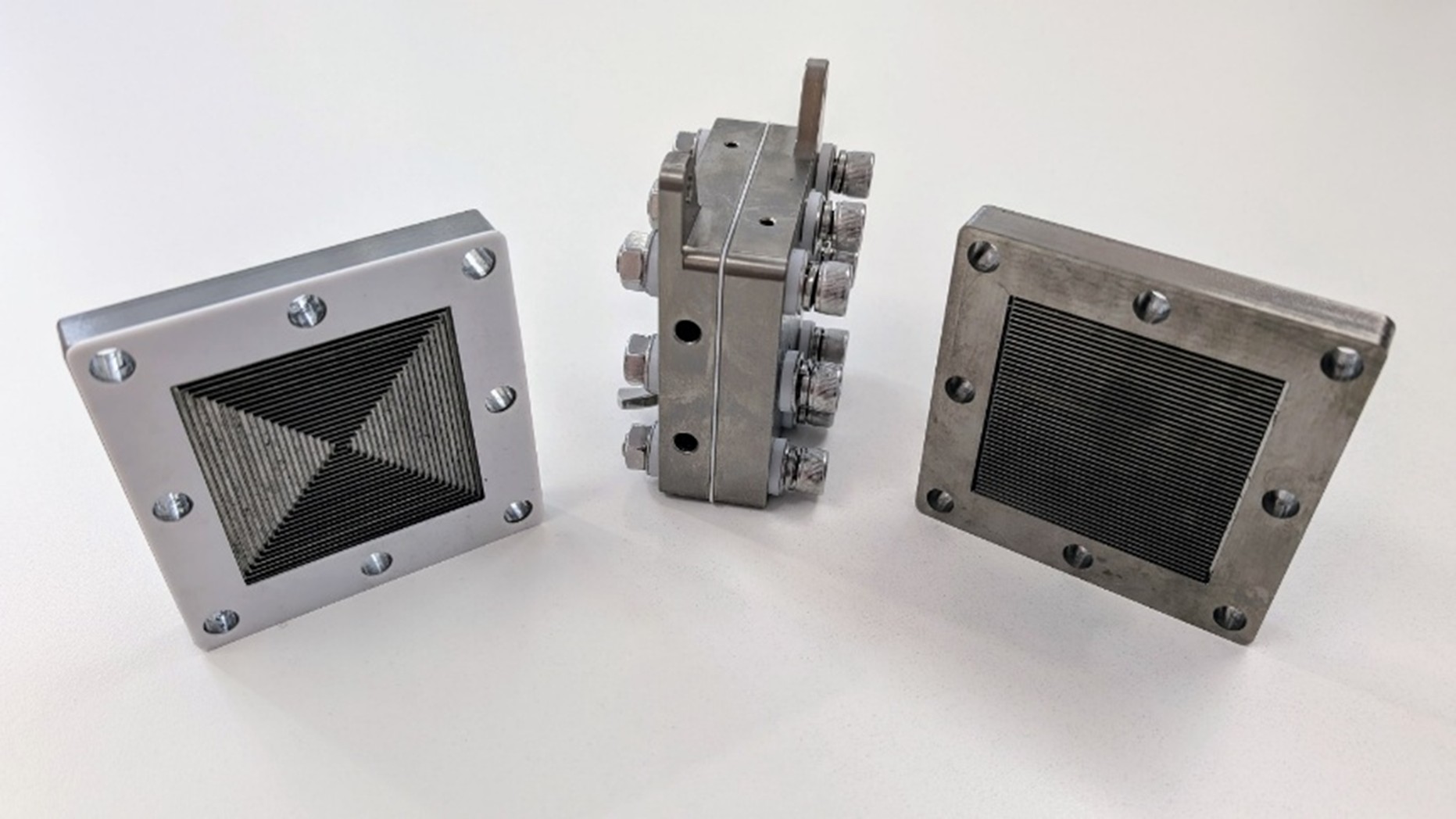
Electrolyser, the key equipment used for the conversion to ammonia
The membrane-based electrolyser, key to where the conversion to gaseous ammonia happens. Credit. PJ Cullen

University of Sydney researchers have harnessed human-made lightning to develop a more efficient method of generating ammonia—one of the world’s most important chemicals. Ammonia is also the main ingredient of fertilizers that account for almost half of all global food production.

The research was published in Angewandte Chemie International edition.

The team have successfully developed a more straightforward method to produce ammonia (NH3) in gas form. Previous efforts by other laboratories produced ammonia in a solution (ammonium, NH4+), which requires more energy and processes to transform it into the final gas product.

The current method to generate ammonia, the Hab...

Read More
This triple-layer sunlight catalyst supercharges green hydrogen by 800%

The material can effectively capture the sunlight so that the energy therein can be used for hydrogen production through the photochemical water splitting reaction.Photographer:Olov Planthaber

Researchers in Sweden have developed a powerful new material that dramatically boosts the ability to create hydrogen fuel from water using sunlight, making the process eight times more effective than before. This breakthrough could be key to fueling heavy transport like ships and planes with clean, renewable energy.

The chemical reaction to produce hydrogen from water is several times more effective when using a combination of new materials in three layers, according to researchers at Linköping University in Sweden...

Read More

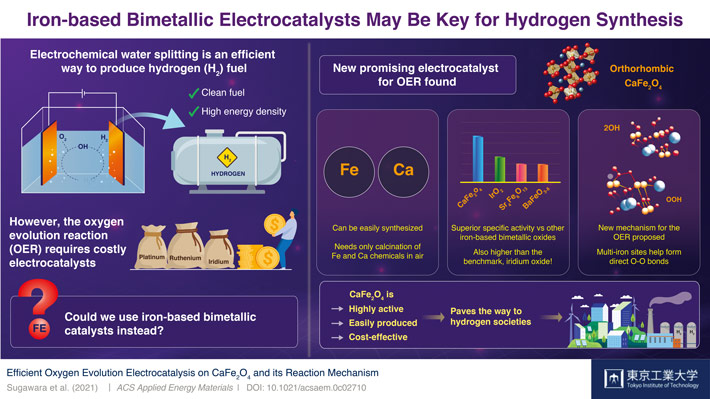
Dethroning Electrocatalysts for Hydrogen Production with Inexpensive Alternative Material

Dethroning Electrocatalysts for Hydrogen Production with Inexpensive Alternative Material

Today, we can say without a shadow of doubt that an alternative to fossil fuels is needed. Fossil fuels are not only non-renewable sources of energy but also among the leading causes of global warming and air pollution. Thus, many scientists worldwide have their hopes placed on what they regard as the fuel of tomorrow: hydrogen (H2). Although H2 is a clean fuel with incredibly high energy density, efficiently generating large amounts of it remains a difficult technical challenge.

Water splitting — the breaking of water molecules — is among the most explored methods to produce H2. While there are many ways to go about it, the best-performing water splitting techniques involve electrocatalysts made from expensive metals, such as platinum, ruthenium, and iridium...

Read More

Inner Complexity of Saturn Moon, Enceladus, revealed

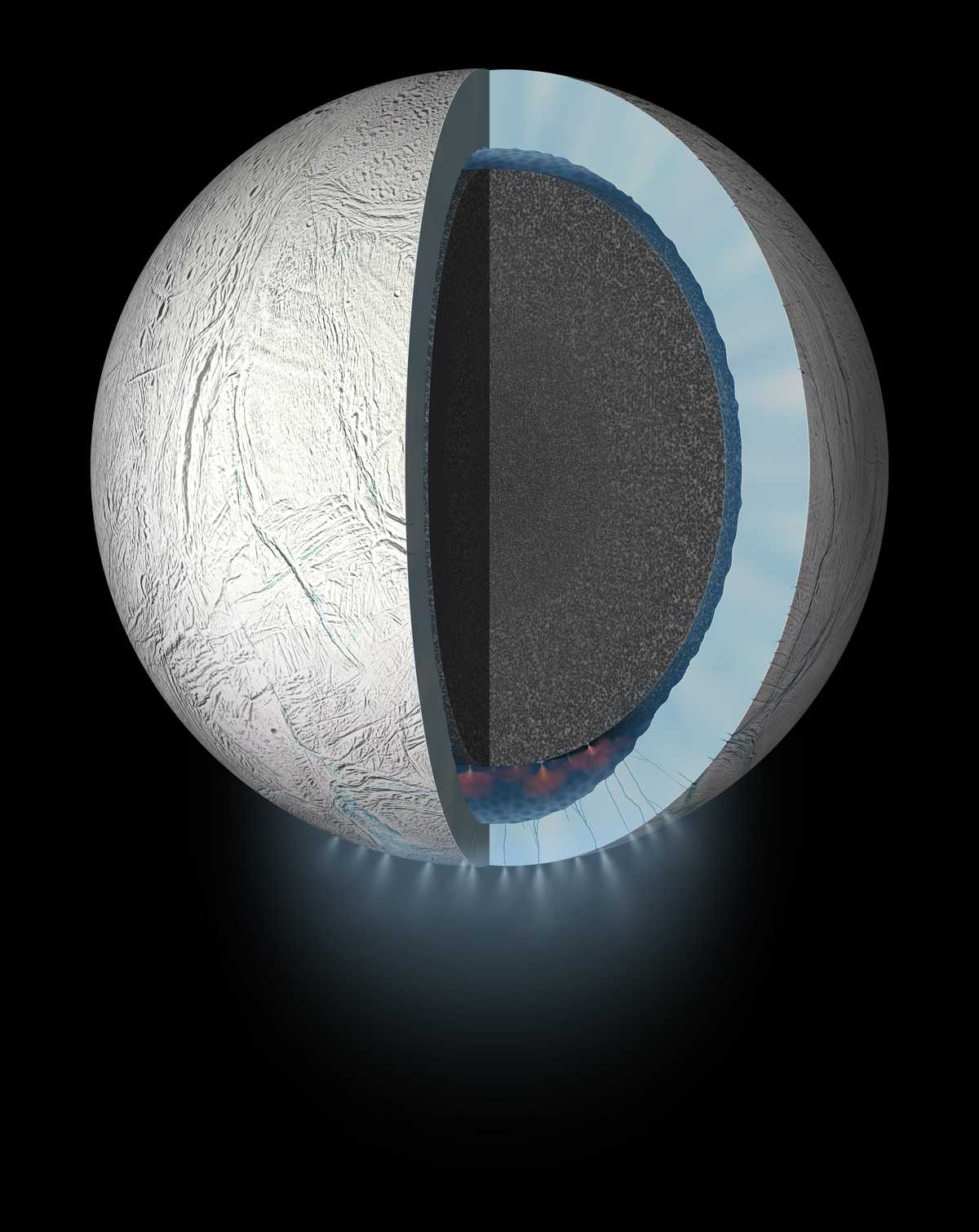
Artistic representation of Enceladus's core with plumes coming from the bottom of the planet
Courtesy of NASA/JPL-Caltech Using new geochemical models, SwRI scientists found that CO2 in Enceladus’ ocean may be controlled by chemical reactions at the seafloor. Integrating this finding with previous discoveries of H2 and silica suggests geochemically diverse environments in the rocky core. This diversity has the potential to create energy sources that could support life.

Enceladus’ subsurface ocean composition hints at habitable conditions. A Southwest Research Institute team developed a new geochemical model that reveals that carbon dioxide (CO2) from within Enceladus, an ocean-harboring moon of Saturn, may be controlled by chemical reactions at its seafloor...

Read More
