
HiRISE tagged posts

Scientists may have found the best place for humans to land on Mars

Hidden ice beneath Mars’ surface may mark the spot where humanity first sets foot on the Red Planet. A newly identified region on Mars may hold the key to future human landings. Researchers found evidence of water ice less than a meter beneath the surface, close enough to be harvested for water, oxygen, and fuel. The location strikes a rare balance between sunlight and cold, helping preserve the ice. It could also offer clues about whether Mars once supported life.

Before humans can make the long trip to another world, scientists must identify a safe and practical place to land. New research led by a University of Mississippi scientist suggests one region on Mars may meet many of the requirements for future human missions.

Erica Luzzi, a planetary geologist and postdoctoral re...

Read More
Mon, It’s Springtime on Mars, and the Dunes are Defrosting

Ice covered dunes in Kaiser Crater on Mars. Credit: NASA/JPL/University of Arizona.

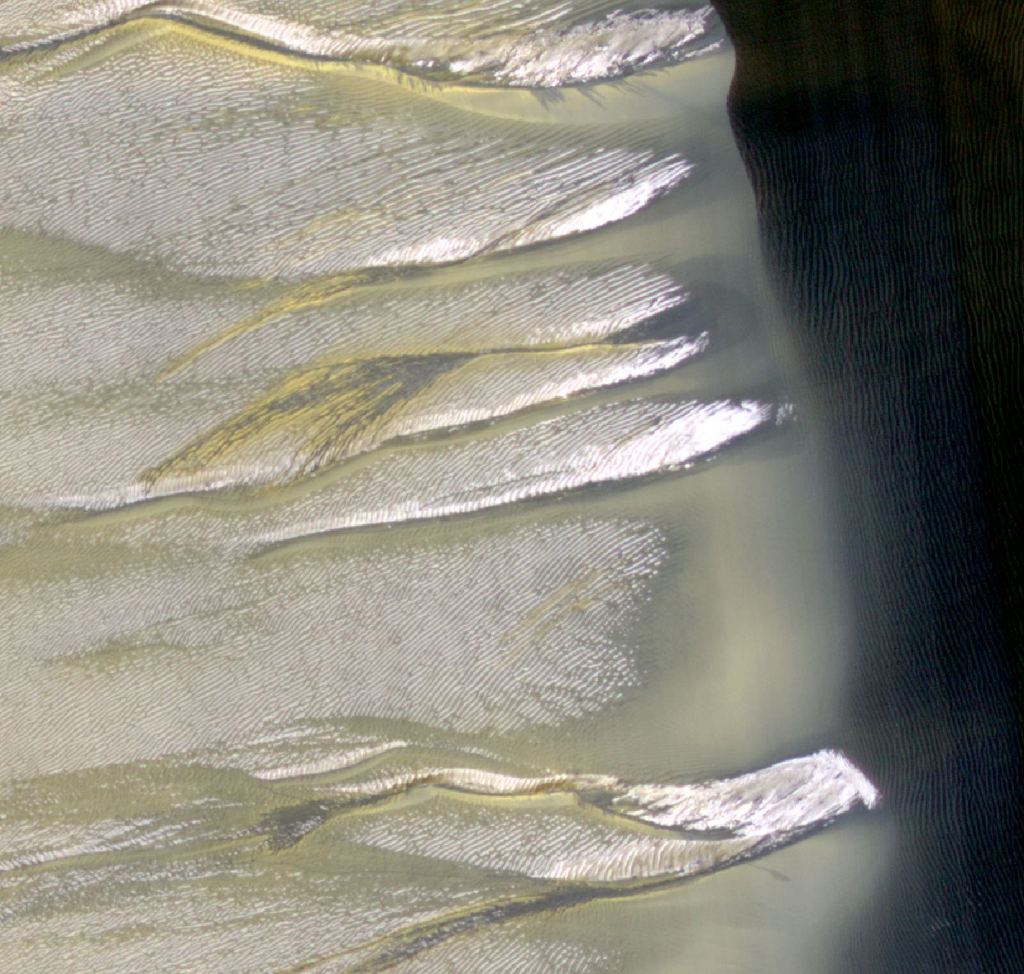
In Mars’ northern hemisphere, springtime has arrived, and observations from the HiRISE (High Resolution Imaging Experiment) onboard the Mars Reconnaissance Orbiter has captured partially defrosted dunes on the western slope of dunes inside Kaiser Crater.

In the winter, the dark sand dunes are covered in a blanket of white seasonal ice, which you can see in the image below. But this image actually shows the beginning of Martian springtime, where the sunny side of the dunes had just begun to thaw. The lead image shows even further thawing, with the darker dunes showing through.

“Bright patches of frost (white in enhanced color) are clearly visible and are made up of water and carbon dioxide ices,” w...

Read More
