holography tagged posts

New holography-inspired reconfigurable surface developed for wireless communication

New holography-inspired reconfigurable surface for wireless communication
Overall schematic of holographic-inspired self-controlled RIS. Credit: https://www.nature.com/articles/s41928-025-01482-3 Credit: Zhu et al.

Reconfigurable intelligent surfaces (RIS) are engineered structures comprised of several elements known as ‘meta-atoms,’ which can reshape and control electromagnetic waves in real-time. These surfaces could contribute to the further advancement of wireless communications and localization systems, as they could be used to reliably redirect, strengthen and suppress signals.

In conventional applications of RIS for wireless communication, each meta-atom is controlled by a system known as the ‘base-station,’ which is connected to the surface via electrical cables...

Read More

Holographic Displays offer a Glimpse into an Immersive Future

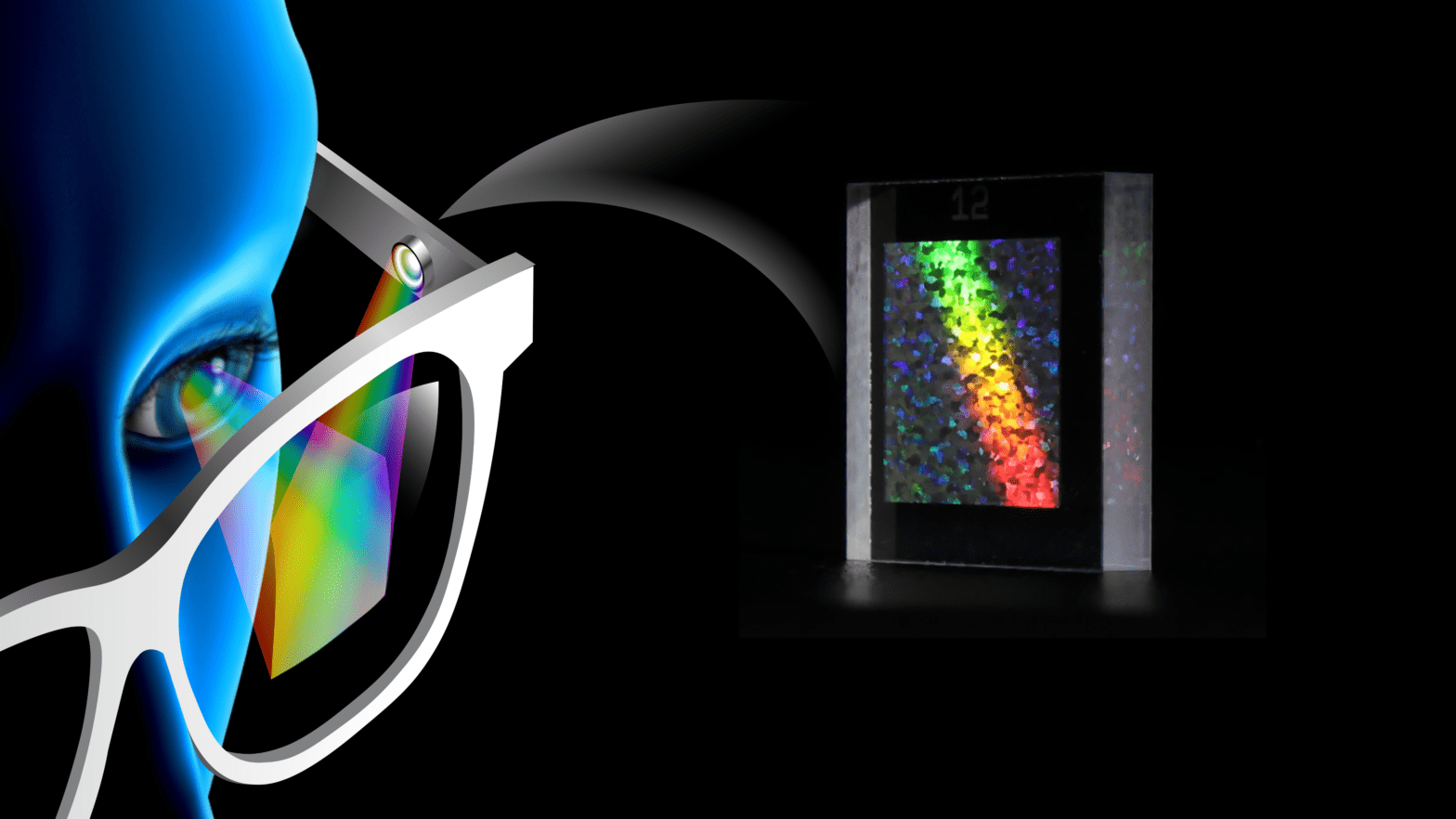
A figure wearing holographic displays glasses, a chip on the leg of the eyeglasses beaming colored light onto the inside of the lens of the glasses.

Researchers at Princeton and Meta have created a tiny optical device that makes holographic images larger and clearer. Small enough to fit on a pair of eyeglasses, the device could enable a new kind of immersive virtual reality display. Illustration by Liz Sabol, photo by Nathan Matsuda

Researchers have invented a new optical element that brings us one step closer to mixing the real and virtual worlds in an ordinary pair of eyeglasses using high-definition 3D holographic images.

Holographic images have real depth because they are three dimensional, whereas monitors merely simulate depth on a 2D screen. Because we see in three dimensions, holographic images could be integrated seamlessly into our normal view of the everyday world.

The result is a virtual and augmented reality disp...

Read More

Scientists Apply Revolutionary 30 Year-Old Principle and Find Black Holes Could Be Like Holograms

What researchers have done is apply the theory of the holographic principle to black holes. In this way, their mysterious thermodynamic properties have become more understandable: focusing on predicting that these bodies have a great entropy and observing them in terms of quantum mechanics, you can describe them just like a hologram: they have two dimensions, in which gravity disappears, but they reproduce an object in three dimensions.

According to new research, black holes could be like a hologram, where all the information is amassed in a 2D surface able to reproduce a 3D image.

We can all picture that incredible image of a black hole that traveled around the world about a year ago...

Read More

Researchers find Quantum Gravity has No Symmetry

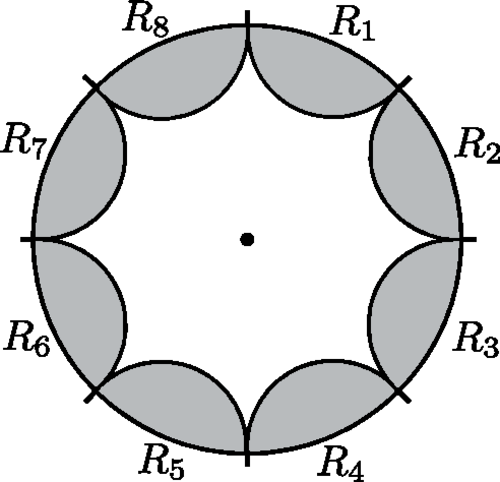
A diagram used to prove that quantum gravity cannot have any global symmetry. Symmetry, if existed, could act only on the shaded regions in the diagram and causes no change around the black spot in the middle. The shaded regions can be made as small as we like by dividing the boundary circle more and more. Thus, the alleged symmetry would not act anywhere inside of the circle. Contradiction. (Credit: Harlow and Ooguri)

Using holography, researchers have found when gravity is combined with quantum mechanics, symmetry is not possible. A new study by a pair of researchers in the US and Japan has found that, when gravity is combined with quantum mechanics, symmetry is not possible.

“Many physicists believe that there must a beautiful set of laws in Nature and that one way to quantify ...

Read More