IBD tagged posts

Novel antibiotic targets IBD—and AI predicted how it would work before scientists could prove it

Two researchers pose in a university laboratory.
McMaster graduate student Denise Catacutan (left) and assistant professor Jon Stokes (right) have discovered a new antibiotic — and they leveraged cutting-edge AI to determine how it works.

Researchers at McMaster University and the Massachusetts Institute of Technology (MIT) have made two scientific breakthroughs at once: they not only discovered a brand-new antibiotic that targets inflammatory bowel diseases (IBD), but also successfully used a new type of AI to predict exactly how the drug works. To their knowledge, this is a global first for the AI.

Detailed in the journal Nature Microbiology, the discovery unveils a promising new treatment option for millions of people affected by Crohn’s disease and other related conditions, while also showcasing important new applications fo...

Read More

Researchers may have solved decades-old mystery behind benzodiazepine side effects

A research team led by Virginia Commonwealth University and Columbia University has gained novel insights into a protein suspected to be involved in benzodiazepine-related inflammation. (Getty Images)

Benzodiazepines like Valium and Xanax are often prescribed to treat anxiety, insomnia and seizures. While these drugs can be effective as a short-term treatment, researchers are trying to better understand the impact of benzodiazepines after extended use.

Some experts believe long-term use of the medication may influence inflammation levels in our bodies, as previous research has shown that benzodiazepines may increase the risk of developing or worsening inflammatory conditions, like lung inflammation and inflammatory bowel disease...

Read More

Gut Bioelectricity provides a Path for ‘Bad’ Bacteria to Cause Diseases

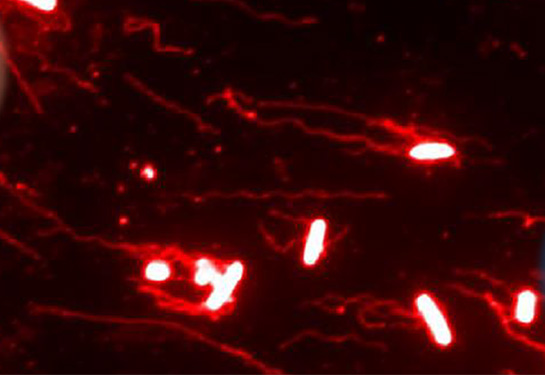
The electrical field-guided migration of S. Typhimurium as shown by immunostaining

Study discovers an electric current in the gut that attracts pathogens like Salmonella. Researchers have discovered a novel bioelectrical mechanism that pathogens like Salmonella use to find entry points in the gut lining that would allow pathogens to pass and cause infection.

How do bad bacteria find entry points in the body to cause infection?

This question is fundamental for infectious disease experts and people who study bacteria. Harmful pathogens, like Salmonella, find their way through a complex gut system where they are vastly outnumbered by good microbes and immune cells. Still, the pathogens navigate to find vulnerable entry points in the gut that would allow them to invade and infect the body.

A team of UC Davis Health researchers has discovered a novel bioelectric...

Read More

Putting the Brakes on Chronic Inflammation

Gregory Sonnenberg IBD
An overactive immune response can result in autoimmune diseases including inflammatory bowel disease, psoriasis, rheumatoid arthritis and multiple sclerosis. Credit: Ella Marushchenko and Kate Zvorykina (Ella Maru Studio)

Scientists at Weill Cornell Medicine discovered a previously unknown link between two key pathways that regulate the immune system in mammals — a finding that impacts our understanding of chronic inflammatory bowel diseases (IBD). This family of disorders severely impacts the health and quality of life of more than 2 million people in the United States.

The immune system has many pathways to protect the body from infection, but sometimes an overactive immune response results in autoimmune diseases including IBD, psoriasis, rheumatoid arthritis and multiple scler...

Read More