
inflammation tagged posts

Suffering from Psoriasis? Blame this Trio of Proteins

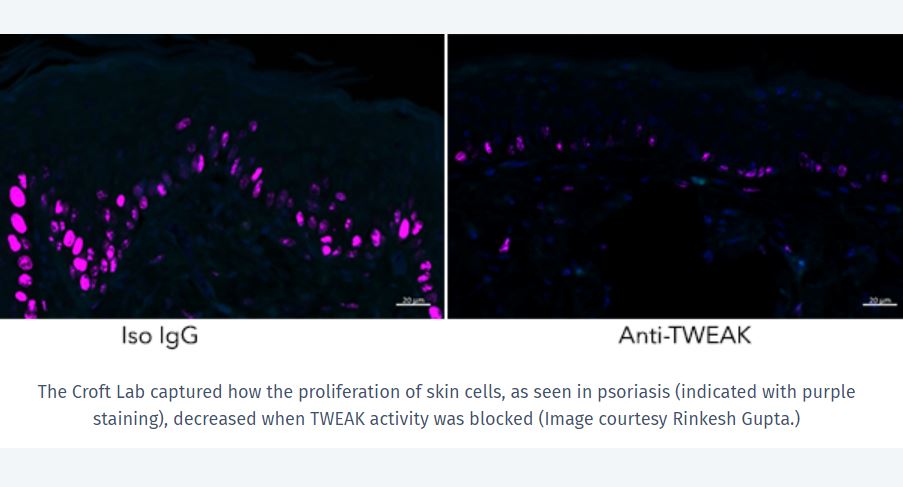
New study shows there may be a way to help even more psoriasis patients. About 7.5 million Americans suffer from psoriasis, an autoimmune disease that shows up as patches of red, inflamed skin and painful, scaly rashes. Although there are effective treatments for psoriasis, not everyone responds to these therapies — and for many, the relief is temporary.

“These therapies don’t reduce disease by 100 percent, and they don’t cure the disease” says La Jolla Institute for Immunology (LJI) Professor Michael Croft, Ph.D. “And if you take patients off those drugs, the disease almost always comes back.”

Now Croft and his team in LJI’s Center for Autoimmunity and Inflammation have discovered how a key protein called TWEAK damages skin cells in psoriasis patients...

Read More
Link between Crohn’s disease and Fatty Tissue in the Gut revealed

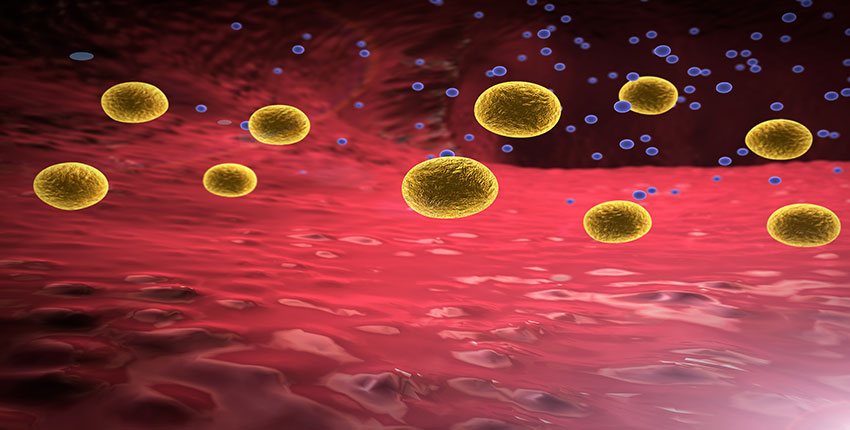
Illustration of intestine with creeping fat

New research led by University of Limerick in Ireland has revealed a direct link between fatty tissue and Crohn’s disease. The study, carried out by researchers at UL along with a team from University Hospital Limerick, is suggesting for the first time that Crohn’s disease, which is an inflammatory bowel condition, may in fact be a fatty intestine condition.

The research, published in leading journal Scientific Reports, has been described as “an exciting starting point” for the further exploration of Crohn’s disease, which affects thousands of people every year in Ireland and internationally.

The study involved body composition analysis of patients with Crohn’s disease using equipment hosted on the UL campus, with the UL team collaborating with gastroenterology and surgical spec...

Read More

Fat-Dissolving Bile Acids may help regulate Gut Immunity and Inflammation

fat cells in stomach
The acids that break down fat in our intestines may also play a role in gut immunity and inflammation
Image: Ugreen/iStock / Getty Images Plus

Could bile acids—the fat-dissolving juices churned out by the liver and gallbladder—also play a role in immunity and inflammation? The answer appears to be yes, according to two separate Harvard Medical School studies published in Nature.

The findings of the two studies, both conducted in mice, show that bile acids promote the differentiation and activity of several types of T cells involved in regulating inflammation and linked to intestinal inflammatory conditions. They also reveal that gut microbes are critical for converting bile acids into immune-signaling molecules.

The work suggests possible therapeutic pathways for modulating ...

Read More

Hydrogels Control Inflammation to Help Healing

An illustration shows how effective a selection of custom-designed peptide hydrogels are in controlling inflammation. The gels developed at Rice University serve as scaffolds for new tissue and show promise for treating wounds and cancer and for delivering drugs. The hydrogels are designed to dissolve in the body as they are replaced by natural, functional tissue. Illustration by Tania Lopez-Silva

Scientists model how synthetic gels can tune body’s inflammatory response. Hydrogels for healing, synthesized from the molecules up by Rice University bioengineers, are a few steps closer to the clinic.

Rice researchers and collaborators at Texas Heart Institute (THI) have established a baseline set of injectable hydrogels that promise to help heal wounds, deliver drugs and treat cancer...

Read More
